
Side Dishes
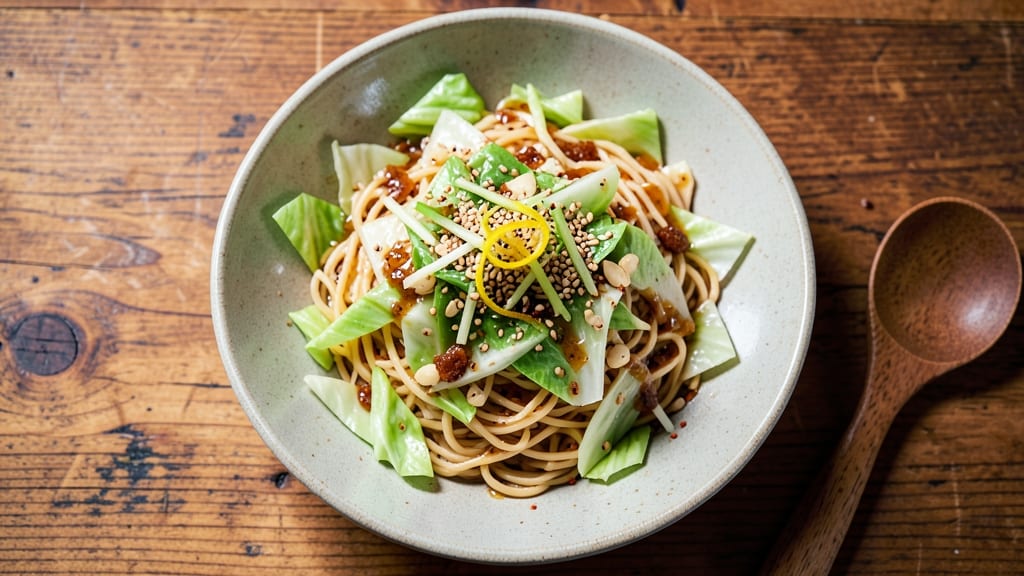
This Chinese cabbage salad recipe with ramen noodles transforms a simple side into a bold, umami-packed fusion dish that balances crisp textures and rich flavors.
The secret lies in stir-frying fresh cabbage with garlic and ginger until just tender, then tossing it with chewy ramen noodles, sesame seeds, and a tangy soy-vinegar dressing.
I developed this after craving something that combined my love of crunchy Asian salads with the hearty satisfaction of noodles—it’s the perfect transition from light appetizer to satisfying main.
The magic happens in the contrast: crispy cabbage holds its shape while the noodles soften into slippery perfection, all bound together by a dressing that’s both sweet and savory.
We’ll use ramen noodles for their signature chew and umami depth, but you can swap in soba or udon for a gluten-free or lighter option. The key is timing—cook the noodles al dente, then shock them in ice water to stop the cooking while keeping them tender.
This ensures every bite delivers that satisfying mix of textures.
What makes this dish truly special is how it adapts to your mood: serve it cold as a refreshing salad with extra crunch, or warm with a quick sear in a hot wok for a restaurant-style noodle dish.
The umami from the noodles and soy sauce pairs beautifully with the cabbage’s natural sweetness, while sesame and chili flakes add layers of complexity. It’s the kind of dish that feels both comforting and exciting—ideal for weeknight dinners or meal prep.
Pair it with a crisp green tea to cut through the richness or a light miso soup to round out the meal. The beauty of this recipe is its flexibility: double the dressing for leftovers, swap in bell peppers for extra crunch, or add sliced mushrooms for deeper umami.
Let’s bring this fusion dish to life—it’s easier than it looks, and the results are unforgettable.
Ingredients for chinese cabbage salad recipe ramen noodles
Fresh cabbage, chewy ramen, and bold umami flavors—this fusion dish delivers restaurant-quality crunch in minutes.
| Ingredient | Amount | Notes |
|---|---|---|
| Chinese Cabbage (Napa Cabbage) 🥬 | 12 oz | Outer leaves removed, quartered lengthwise |
| Ramen Noodles 🍜 | 7 oz | Fresh or dried, any flavor profile |
| Garlic Cloves 🧄 | 4 cloves | Thinly sliced for aromatic base |
| Fresh Ginger 🌿 | 1 tbsp | Finely grated, aromatic freshness |
| Sesame Seeds 🥜 | 1 tbsp | Toasted for nutty crunch |
| Sesame Oil 🫒 | 1 tbsp | Toasted sesame oil for aroma |
| Rice Vinegar 🍶 | 3 tbsp | Seasoned rice vinegar preferred |
| Soy Sauce 🥢 | 2 tbsp | Light soy sauce for balance |
| Honey 🍯 | 1 tbsp | Substitute maple syrup for vegan |
| Vegetable Oil 🫒 | 2 tbsp | High smoke point for stir-frying |
| Red Chili Flakes 🌶️ | ½ tsp | Adjust to taste for heat |
| Salt 🧂 | ½ tsp | Kosher salt for seasoning |
| Black Pepper 🌶️ | ¼ tsp | Freshly cracked for depth |
| Green Tea (optional) ☕ | 1 cup | Chilled for serving suggestion |
The Chinese cabbage is the star—look for heads with crisp, vibrant leaves at Whole Foods or your local Asian market. Napa cabbage works best, but regular green cabbage in a pinch. The ramen noodles? Fresh ramen from the refrigerated section has the best texture, but dried works too—just cook them al dente and shock in ice water. For extra umami, I grab Marukyu brand ramen when I can, but any flavor profile works. Toast your sesame seeds in a dry pan for 30 seconds before adding to the salad—they’ll release their nutty aroma and pack more flavor punch.
No sesame oil? Toasted peanut oil works in a bind, though it’ll taste different. Short on honey? Agave or maple syrup keeps it vegan-friendly. The dressing ratio is key—start with the measurements, then adjust to taste. Need more crunch? Toss in shredded carrots or bell peppers. For heat, swap chili flakes for fresh chili oil or sriracha. The cabbage should stay crisp, so don’t overcook it—just until it’s tender-crisp with bright green centers. And trust me on the ice water bath for the noodles—it stops the cooking instantly while keeping them tender.
This salad keeps beautifully for 3 days in the fridge, though the cabbage gets softer over time. Double the dressing if you’re prepping ahead—it actually tastes better the next day as flavors meld. For a warm version, sear the noodles in a hot wok for 30 seconds after tossing. The green tea pairing is optional but brilliant—its crispness cuts through the richness. Store leftovers in airtight containers with parchment between layers to maintain crispness. Freezing isn’t recommended—the cabbage turns mushy, but the noodles and dressing freeze well separately for up to 3 months.
Why You'll Love This Recipe
- No-Chop Nightmare: I’ll admit it—shredding cabbage used to stress me out. But here, you just slice the Napa thinly (or buy pre-shredded) and toss it with the noodles raw. The crunch stays perfect, no wilting, and honestly? The garlic-ginger dressing does all the flavor work for you.
- Umami Bomb: That moment when the sesame seeds toast in the pan and the garlic sizzles—chef’s kiss. The ramen’s salty broth soaks into the cabbage like a sponge, while the fresh ginger keeps it bright. It’s the kind of dish where every bite tastes like you put in effort (but you didn’t).
- Lunchbox Hero: Between us, this is my go-to for packed lunches. Cold or at room temp, it holds up for days. Toss in a fried egg or leftover grilled chicken, and suddenly you’ve got a meal that’s actually exciting to unpack. My college-aged kid still steals my portions.
- Pantry Magic: You’re looking at a $5 meal that feeds four. Ramen noodles? Check. Cabbage stays fresh for weeks. Garlic and ginger last months. Toast the seeds in the same pan you cook the noodles—zero extra dishes. It’s the kind of recipe that makes you feel like a genius when your wallet thanks you.
Step-by-step instructions for Chinese cabbage ramen noodle salad
Here's how to balance crisp-tender cabbage with chewy ramen and bold umami flavors.
Blanch and Cool the Ramen Noodles
Bring a pot of water to a rolling boil and add the 7 oz ramen noodles. Cook according to package directions until al dente—usually 3-4 minutes for fresh noodles, 2 minutes for dried. Drain immediately and rinse under cold water to stop cooking and remove excess starch. This prevents the noodles from becoming mushy.
Transfer the noodles to a large mixing bowl and toss with 1 tbsp sesame oil and 1 tbsp sesame seeds. Let them cool completely while you prepare the cabbage—this ensures they maintain their chewy texture rather than turning soggy. I like to spread them on a wire rack for 5 minutes to speed up cooling while keeping them separate.
Prep and Massage the Chinese Cabbage
Remove the outer leaves from the 12 oz Chinese cabbage and quarter it lengthwise. Discard the thick core and slice each quarter into thin, bite-sized pieces—about ¼-inch thick. Place them in a clean mixing bowl and sprinkle with 0.5 tsp salt and 0.25 tsp black pepper. This is where the magic happens: massage the cabbage with your hands for 2-3 minutes until it releases moisture and becomes pliable.
The salt breaks down the cabbage fibers, creating that signature slippery texture we love in Asian salads. You'll see the leaves soften and shrink slightly—this is normal and exactly what we want. Drain any excess liquid that pools in the bowl after massaging, as we don't want a watery salad.
Stir-Fry the Aromatic Base
Heat 2 tbsp vegetable oil in a large skillet over medium-high heat until shimmering. Add the 4 cloves thinly sliced garlic and 1 tbsp finely grated fresh ginger, cooking for 30-45 seconds until fragrant but not browned. The garlic should sizzle gently—if it starts to color, reduce the heat slightly. Remove from heat immediately after cooking.
Let the garlic-ginger mixture cool for 1 minute, then transfer it to the bowl with the massaged cabbage. Add 2 tbsp soy sauce, 3 tbsp rice vinegar, 1 tbsp honey, and 0.5 tsp red chili flakes. Toss everything together thoroughly, coating the cabbage evenly with the dressing. The cabbage will absorb the flavors quickly, so work efficiently here.
Combine and Chill for Maximum Flavor
Add the cooled ramen noodles to the cabbage mixture and toss gently but thoroughly. The noodles should be evenly distributed throughout the cabbage. Taste and adjust seasoning—you might want to add a splash more rice vinegar for brightness or a touch of honey for sweetness. The salad should balance umami, tangy, and slightly sweet notes.
Cover the bowl and refrigerate for at least 30 minutes (up to 2 hours) to let the flavors meld. This chilling time is crucial—it allows the cabbage to soften slightly while keeping its crunch, and the noodles to absorb the dressing perfectly. The longer it chills, the more cohesive the flavors become.
Serve with Optional Green Tea
Give the salad one final toss before serving to redistribute any juices. The texture should be a perfect contrast: crisp cabbage, chewy ramen, and nutty sesame seeds. Garnish with additional sesame seeds if desired, and serve immediately while still chilled.
For an authentic touch, pour 1 cup chilled green tea over the top just before serving. The tea adds a refreshing contrast to the rich umami flavors. This salad keeps well in the refrigerator for 2 days, making it perfect for meal prep—just give it a good stir before serving to restore that fresh texture.
Pro Tips For Making Chinese Cabbage Salad Recipe Ramen Noodles
- Shock the Cabbage: Toss raw napa cabbage with ½ teaspoon salt and let it sit for 10 minutes before rinsing—this softens the tough stems and draws out excess water so your salad stays crisp, not soggy. (Yes, even if you’re impatient like me, resist the urge to skip this.)
- Cook Noodles Halfway: Boil ramen noodles for 2 minutes less than package instructions, then shock in ice water to stop cooking. They’ll finish cooking in the dressing and stay chewy, not mushy. I learned this the hard way after serving a bowl of sad, limp noodles.
- Grate Ginger Thin: Use a microplane or fine grater for ginger—thin, even shavings melt into the dressing without clumping or overpowering the dish. Thick chunks? They’ll sit like tiny rocks in your mouth. (Trust me, you’ll notice.)
- Toast Seeds Last: Sprinkle sesame seeds over the hot bowl right before eating—they’ll crisp instantly and add crunch without burning. Toasting them in the pan first? They’ll turn bitter faster than you can say “oops.”
Perfect pairings for these flavors
Crisp Sides
Pair this salad with quick-pickled cucumbers to add a bright, tangy contrast. Thinly slice 1 English cucumber and soak in ½ cup rice vinegar, 1 tbsp sugar, and ½ tsp salt for 20 minutes.
The acidity cuts through the umami richness of the ramen and cabbage beautifully. 🥒
Warm Complements
Serve alongside steamed edamame for a protein boost. Toss ½ cup shelled edamame with ½ tsp sea salt and a drizzle of toasted sesame oil. The warm, buttery edamame balances the chilled salad's crispness while adding a satisfying texture. For extra depth, sprinkle with furikake seasoning.
Protein Additions
Boost the meal with grilled shrimp or crispy tofu. Toss 8 oz shrimp with 1 tsp soy sauce and ½ tsp garlic powder, then grill for 2-3 minutes per side until pink.
The shrimp's sweetness complements the salad's tangy dressing perfectly. For a vegetarian option, press and pan-fry ½ block firm tofu until golden and crumbly.
Beverage Pairings
A jasmine iced tea with a hint of lemon is my go-to pairing. Brew 2 tea bags in 2 cups hot water, let cool, then chill with ice. The floral notes of jasmine tea enhance the salad's umami flavors without overpowering them.
For an alcoholic option, a light sake (chilled) or dry Riesling adds a crisp, clean finish that highlights the dish's fresh ingredients. 🍶
Garnish Upgrades
Add thinly sliced scallions and cilantro for freshness. Slice 3 scallions into ¼-inch pieces and chop ¼ cup cilantro finely. Toss them in just before serving to keep the herbs vibrant. For a smoky touch, sprinkle with crushed wasabi peas—their heat and crunch elevate the salad's complexity. 🌿
Meal Prep Extras
Prep quick miso soup to serve alongside. Mix 1 tbsp white miso paste with 1 cup hot dashi broth and 1 tsp grated daikon. Add 1 tsp tofu and 1 tsp scallions for a light, comforting companion.
The soup's umami depth complements the salad's tangy-sweet dressing, creating a balanced, satisfying meal. ⚡
Nutrition facts
Frequently asked questions
Can I use regular green cabbage instead of Chinese cabbage?
Yes, but the texture will be slightly different. Regular green cabbage has a denser, more fibrous structure that won't soften as much during massaging. For best results, slice it thinner (⅛-inch) and massage for 5 minutes to break down the fibers. The flavor will still be great, but you'll lose that signature slippery texture.
How do I keep the cabbage extra crispy?
Massage the cabbage for only 2 minutes (not the full 3 minutes) and avoid overcrowding the bowl. After draining excess liquid, spread the cabbage on a wire rack for 10 minutes before adding the dressing. Chill the salad for only 20 minutes instead of 30 minutes to preserve maximum crunch. Serve immediately after tossing with noodles.
What if I don't like ramen noodles? What are good substitutes?
Try udon noodles (thicker, chewier texture) or soba noodles (buckwheat-based, gluten-free option). For a lighter version, use rice noodles or even shirataki noodles (low-carb). Cook substitutes according to package directions, then shock in ice water just like ramen. The key is keeping them al dente to maintain texture contrast.
Can I make this salad ahead of time?
Yes, but with some adjustments. Prepare the dressing and store it separately. Massage the cabbage, drain well, and store it in an airtight container with parchment paper between layers for 2 days. Cook the noodles fresh and toss with the dressing just before serving. For the warm version, cook noodles and cabbage separately, then assemble and sear together for 30 seconds before serving.
Why does my salad taste bland after chilling?
Chilling often mutes flavors, so taste and adjust before serving. Add ½ tsp more soy sauce or 1 tsp honey for depth, or squeeze in ½ lime for brightness. If the cabbage absorbed too much dressing, drizzle with an extra ½ tbsp sesame oil and toss. The noodles might also need more seasoning—sprinkle with extra chili flakes or toasted sesame seeds for punch.