
Salads
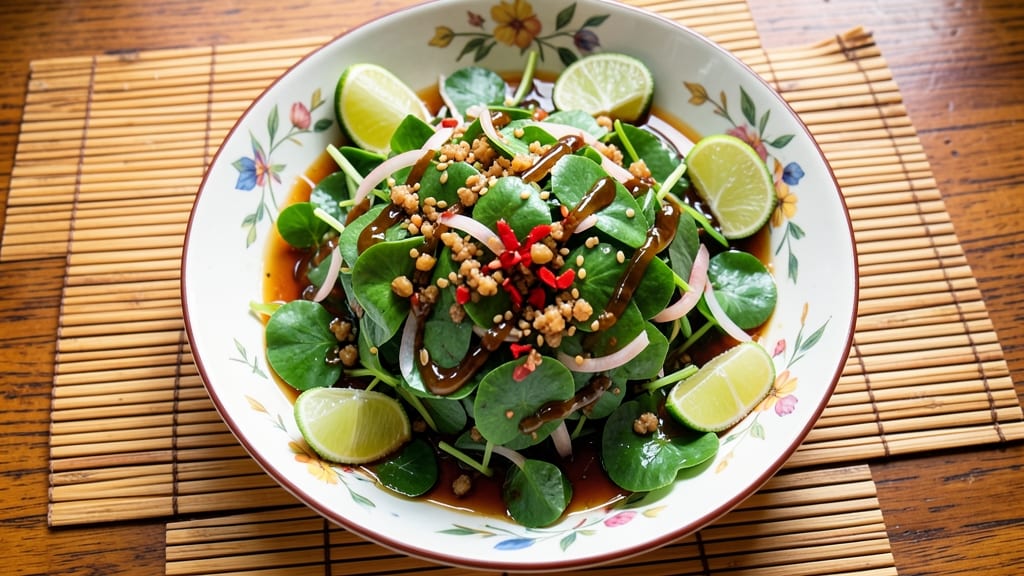
This Burmese pennywort salad recipe brings the vibrant flavors of Myanmar to your table with its signature tangy tamarind dressing and refreshing herbal crunch. The dish showcases the delicate, slightly bitter leaves of pennywort—common in Burmese cuisine—paired with garlic, shallots, and a bright citrusy dressing that balances its earthy notes.
What makes this salad special is how it transforms simple ingredients into a harmonious bite that’s both light and deeply satisfying.
The preparation is straightforward yet precise: fresh pennywort leaves are thoroughly washed to remove any dirt, then finely chopped for maximum texture.
A quick marinade of garlic, shallots, and tamarind paste infuses the leaves with aromatic depth, while a splash of lime juice and a touch of chili add brightness and a subtle kick.
This salad is traditionally served as a side with steamed rice, but its bold flavors make it a complete vegetarian dish on its own.
What you’ll achieve is a salad that’s crisp, tangy, and packed with herbal freshness—each bite delivers a perfect balance of sweet, sour, and spicy. The tamarind dressing clings to the pennywort leaves, creating a vibrant, flavorful experience that’s as visually appealing as it is delicious.
Whether you’re serving it as a side or a main, this recipe delivers authentic Burmese taste with minimal effort.
For extra crunch, consider toasting peanuts or adding shredded coconut, both of which complement the salad’s herbal notes beautifully. The dish keeps well in the refrigerator for up to two days, making it perfect for meal prep. Let’s bring the flavors of Myanmar to your kitchen!
Ingredients for burmese pennywort salad
Fresh pennywort leaves and tangy tamarind create this Burmese salad's signature flavor balance.
| Ingredient | Amount | Notes |
|---|---|---|
| Fresh Pennywort Leaves 🌿 | 8 oz | Thoroughly washed and dried |
| Garlic Cloves 🧄 | 4 cloves | Minced for aromatic depth |
| Shallots 🧅 | 3 whole | Finely chopped, skin on |
| Tamarind Paste 🍯 | ¼ cup | Unsweetened, for tangy base |
| Fresh Lime Juice 🍋 | ¼ cup | From 2-3 limes, freshly squeezed |
| Red Chili Flakes 🌶️ | 1 tsp | Adjust for spice preference |
| Coconut Oil 🥥 | 1 tbsp | For light dressing finish |
| Peanuts 🥜 | ¼ cup | Toasted, roughly chopped |
| Shredded Coconut 🥥 | ¼ cup | Optional for tropical crunch |
| Sea Salt 🧂 | ½ tsp | Fine grain preferred |
| Green Onions 🧅 | 3 whole | Sliced thin for garnish |
| Steamed Jasmine Rice 🍚 | 2 cups | For serving as base |
| Sesame Seeds 🌱 | 1 tsp | Toasted for garnish |
Pennywort leaves are the star—find them at Asian markets or order online. Look for vibrant green leaves with no yellowing. Freshness is key—they should feel crisp, not wilted. If you can't find pennywort, watercress or arugula work in a pinch (though texture will differ). For tamarind paste, Thai Kitchen brand is reliable, but check the ingredients—some versions contain added sugar. The shallots should be firm with papery skins; no soft spots. Toast your peanuts in a dry pan for 3-4 minutes until golden—they add serious crunch.
No tamarind paste? Lime juice plus 1 tsp maple syrup mimics the tang, though it won't be identical. Short on peanuts? Toasted cashews or sunflower seeds work too. For extra heat, swap chili flakes for fresh Thai chilies (minced)—but start with half the amount. The coconut oil finish is optional but adds richness; avocado oil is a neutral alternative. If you're prepping ahead, store the dressing separately until serving to keep the pennywort crisp. The rice? Jasmine rice is traditional, but basmati works fine if that's what you've got.
This salad keeps best in the fridge for up to 2 days, but the peanuts and coconut will soften over time. Store the dressing separately and toss just before serving. For extra crunch, toast fresh peanuts right before eating. The lime juice will darken the pennywort slightly over time—no big deal, just stir well when serving. Garnish with sesame seeds right before eating so they stay crisp. Portion into jars for meal prep—dressing on the bottom, leaves on top, so everything stays fresh.
Why You'll Love This Recipe
- I swear by this trick: just tear the pennywort leaves by hand—no knife skills required. The shallots and garlic get a quick pulse in the mortar, and suddenly you’ve got a punchy dressing without any fuss. (Yes, even on a Tuesday night.)
- No-Chop Needed: I swear by this trick: just tear the pennywort leaves by hand—no knife skills required. The shallots and garlic get a quick pulse in the mortar, and suddenly you’ve got a punchy dressing without any fuss. (Yes, even on a Tuesday night.)
- Tamarind Zing: That tangy tamarind paste—it’s the secret weapon. One spoonful brightens the whole dish, cutting through the earthy pennywort while the lime keeps it fresh. Honestly, the balance is ridiculously good, like a perfect sour punch without overpowering.
- Meal Prep MVP: This salad keeps for days in the fridge, so I make a big batch on Sundays. It’s my go-to for lunches, potlucks, or even a side for grilled meats. (Between us, it’s also the only thing my picky teenager will eat raw.)
Step-by-step instructions for Burmese pennywort salad
Here's how to assemble this vibrant salad with perfect balance of tangy, spicy, and herbal notes.
Prepare the Pennywort Leaves
Start by examining the 8 oz fresh pennywort leaves. Look for any thick stems and remove them by pinching at the base. I like to stack a few leaves together and roll them gently to make cutting easier—this keeps them intact. Use a sharp knife to slice the leaves into thin ribbons, about ¼-inch wide. You should end up with roughly 3 cups of chopped leaves.
Place the chopped leaves in a large bowl and immediately sprinkle with the ½ teaspoon sea salt. Toss gently to distribute the salt evenly. Let the leaves sit for 5 minutes while you prepare the dressing—this helps soften them slightly and enhances their natural flavor. Don't skip this step; it makes a noticeable difference in texture and taste.
Make the Tangy Tamarind Dressing
In a small bowl, whisk together the ¼ cup tamarind paste and ¼ cup fresh lime juice until completely smooth. I use a fork for this because it's quick and effective. The mixture should be thick but pourable—if it's too stiff, add 1 teaspoon water at a time until it reaches the right consistency.
Next, add the 4 cloves minced garlic, 3 whole finely chopped shallots, and 1 teaspoon red chili flakes. Stir well to combine all ingredients thoroughly. Taste a small amount—you want a perfect balance of sweet, sour, and spicy. If needed, adjust by adding more lime juice for tang or chili flakes for heat. Set the dressing aside while you toast the peanuts.
Toast the Peanuts and Garnishes
Heat a dry skillet over medium heat. Add the ¼ cup peanuts and toast them for 3-4 minutes, stirring constantly until they turn a golden brown color and become fragrant. Remove from heat immediately and let them cool for 2 minutes—this prevents them from continuing to cook and becoming bitter.
While the peanuts toast, slice the 3 whole green onions thinly and set aside. Toast the 1 teaspoon sesame seeds in the same skillet (after wiping it clean) for 1 minute until they turn golden and smell nutty. Let them cool completely before adding to the salad. The toasted peanuts and sesame seeds add wonderful texture contrast to the soft pennywort leaves.
Assemble the Salad
Pour the tamarind dressing over the salted pennywort leaves and toss gently to coat evenly. The leaves should be well-dressed but not soggy—if they look too wet, add a few more leaves to absorb the excess liquid. Add the toasted peanuts and ¼ cup shredded coconut (if using) and toss again to distribute evenly.
Garnish with the sliced green onions and toasted sesame seeds just before serving. The bright green of the pennywort leaves, the golden brown peanuts, and the white shredded coconut create a beautiful visual contrast. Serve immediately over the 2 cups steamed jasmine rice—the warm rice helps balance the cool, tangy flavors of the salad.
Finish with Coconut Oil
Just before serving, drizzle each portion with ½ teaspoon coconut oil. This final touch adds richness and helps the salad cling together slightly. Toss gently once more to distribute the oil evenly. The coconut oil enhances the tropical flavors and makes each bite more satisfying.
This salad keeps well in the refrigerator for up to 2 days, but I recommend serving it fresh for the best texture. The flavors continue to develop as they sit, so it actually tastes better the next day! For extra freshness, add the peanuts and sesame seeds just before serving to maintain their crisp texture.
Pro Tips For Making Burmese Pennywort Salad
- STRIP THE STALKS: Pennywort leaves have tough stems that never soften—rip them out by hand before chopping. I used to waste time cutting through them, but pulling them apart takes 30 seconds and keeps the salad tender.
- MINCE GARLIC FINE: For this dish, garlic should disappear into the sauce, not sit as chunks. Use a knife to press and chop it into a paste—no blender needed. Overlooking this makes the flavor uneven.
- DILUTE TAMARIND GRADUALLY: Tamarind paste is sticky and potent. Mix it with lime juice first, then add water one teaspoon at a time until it’s smooth. Dumping it in all at once guarantees a clumpy, bitter mess.
- WAIT FOR LIME TO BLOOM: Let the lime juice sit with the sauce for 10 minutes before tossing it with the leaves. This lets the acid mellow out—adding it last makes the salad taste sharp and unfinished. Patience here makes the difference.
Wine and beer pairings for this recipe
Light White Wine
For this salad’s bright, tangy flavors, I reach for a crisp Burmese white wine like Shwe Kyet Kan—a local favorite made from grapes grown in Myanmar’s highlands. Its citrusy acidity mirrors the lime in the dressing, while subtle floral notes complement the pennywort’s herbal freshness.
If you can’t find Burmese wine, Thai Riesling or a dry Vietnamese white work beautifully—they both balance the salad’s spicy-sweet profile without overpowering it. Serve slightly chilled to enhance the refreshing contrast. 🍷
Craft Beer Pairings
A Burma-style pale ale with its malty sweetness and light hop bitterness is my go-to beer pairing. Brands like Myanmar Beer (yes, it’s a thing!) or Strange Brew’s Burmese IPA bridge the salad’s tangy dressing with the beer’s caramel notes.
For a non-Burmese option, try a light Japanese lager—its clean, crisp finish lets the salad’s flavors shine. Avoid heavy stouts or IPAs, as their bold flavors can clash with the delicate pennywort. 🍺
Tropical Cocktail Match
For a festive touch, serve this salad alongside a Burmese gin fizz—a local twist on the classic cocktail. Mix 1.5 oz gin (I love Myanmar’s Shan Gin), 0.5 oz tamarind syrup, 0.5 oz lime juice, and 0.25 oz honey, then top with soda water.
The gin’s botanical notes echo the pennywort, while the tamarind syrup deepens the dressing’s tang. Garnish with lime wheels and toasted sesame seeds to tie it all together. 🍹
Avoid Heavy Reds
Skip bold red wines or dark beers—they’ll overpower the salad’s delicate herbal and citrus notes. Even Pinot Noir can be too heavy, as its earthy tannins compete with the tamarind’s brightness. Instead, stick to light whites, pale ales, or tropical cocktails that let the salad’s flavors take center stage.
The key is harmony: your beverage should enhance, not dominate, the dish’s vibrant profile. ✨
Nutrition facts
Frequently asked questions
Where can I find fresh pennywort leaves for this recipe?
Look for pennywort at Asian grocery stores or specialty herb markets—they often carry it fresh or frozen. If unavailable, try watercress or arugula as substitutes (though texture will differ). Some online retailers specializing in Southeast Asian ingredients also sell pennywort. Always choose leaves that are vibrant green and crisp, not wilted or yellowing.
Can I make this salad ahead of time?
Yes, but store the dressing and pennywort leaves separately in airtight containers. Combine them just before serving to keep the leaves crisp. The salad actually tastes better the next day as flavors meld! For extra crunch, toast fresh peanuts right before eating. Store in the fridge for up to 2 days.
What if I don't have tamarind paste?
Mix ¼ cup lime juice with 1 tsp maple syrup for a similar tangy effect. For deeper flavor, add ½ tsp soy sauce to mimic tamarind's umami notes. The salad will be brighter but still delicious—just slightly less complex.
Is this salad spicy? Can I make it milder?
Yes, the chili flakes add heat, but you can easily adjust! Start with ½ tsp instead of 1 tsp, or omit completely. For extra flavor without heat, add ½ tsp ground coriander or a pinch of cumin. The tamarind dressing already provides plenty of tangy depth.
How does this salad pair with other dishes?
This salad works beautifully as a side with grilled fish or tofu, or as a main with steamed jasmine rice. For a complete Burmese meal, serve with shan tofu salad or moe gyoke (Burmese tea leaf salad). The tangy flavors also complement light seafood dishes like shrimp or crab.