
Sauces & Condiments
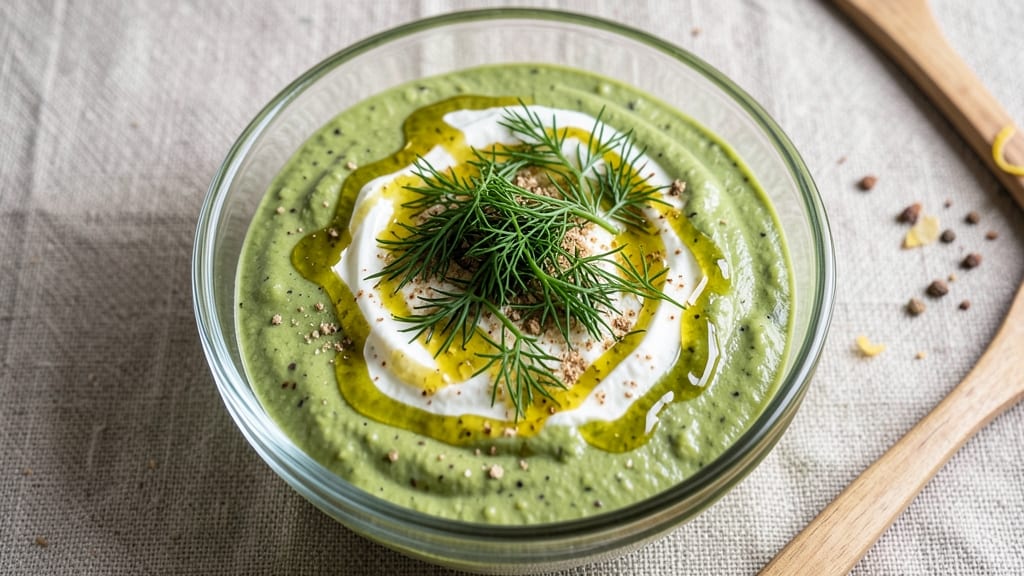
This avocado Greek yogurt salad dressing recipe delivers ultra-creamy richness with a bright, herb-infused zing that transforms any salad from bland to extraordinary.
The secret lies in blending ripe avocado with thick Greek yogurt for a velvety texture that clings perfectly to greens, while lemon juice and fresh herbs balance the richness with tangy freshness. Unlike store-bought dressings, this version stays fresh for days and requires just 5 minutes to whip together.
The magic happens when you emulsify the avocado and yogurt properly—no separation here. A splash of lemon juice not only adds brightness but also helps stabilize the dressing, while fresh dill and garlic powder contribute layers of flavor that elevate simple greens into a gourmet experience.
This dressing works equally well on grain bowls, wraps, or as a dip for crudités, making it a versatile staple for any meal.
What sets this recipe apart is its restaurant-quality creaminess without the heaviness of traditional creamy dressings. The avocado provides healthy fats that keep the dressing luscious, while Greek yogurt adds protein and a tangy depth.
The result? A dressing that's rich enough to satisfy cravings but light enough to complement delicate flavors like arugula or citrusy fruits.
Best of all, this dressing keeps beautifully in the fridge for up to 5 days, making it perfect for meal prep. Simply store it in an airtight container and give it a quick stir before using.
Whether you're dressing up a hearty salad or adding zing to a sandwich, this avocado Greek yogurt dressing is a game-changer that will become your new kitchen essential.
Ingredients for avocado greek yogurt salad dressing
Nine simple ingredients blend into a velvety dressing that transforms salads into gourmet experiences.
| Ingredient | Amount | Notes |
|---|---|---|
| Ripe Avocados 🥑 | 2 whole | Pitted, flesh scooped out |
| Plain Greek Yogurt 🥛 | 1 cup | Thick, unsweetened, full-fat |
| Fresh Lemon Juice 🍋 | 2 tbsp | Freshly squeezed, strained |
| Extra-Virgin Olive Oil 🫒 | ¼ cup | High-quality, fruity variety |
| Fresh Dill 🌿 | ¼ cup | Chopped, stems removed |
| Garlic Powder 🧄 | 1 tsp | Freshly ground preferred |
| Salt 🧂 | ½ tsp | Diamond Crystal kosher |
| Black Pepper 🌶️ | ¼ tsp | Freshly ground for best flavor |
| Apple Cider Vinegar 🍎 | 1 tbsp | For tangy depth |
The avocados are non-negotiable here—ripe but not mushy is key. Grab two at the store and give them a gentle squeeze; they should yield slightly to pressure. Whole Foods or your local farmers market usually carries the best quality, but any grocery store's produce section will work. The Greek yogurt should be thick and full-fat for that restaurant-quality creaminess—none of that watery stuff. If you're short on time, Fage 5% or Chobani plain are my go-tos, but any brand with high protein content will do. Fresh dill is ideal, but if you're using dried, cut the amount to one-third of what's listed.
No fresh dill? Fresh parsley or cilantro work in a pinch, though the flavor profile shifts slightly. Swap the apple cider vinegar for red wine vinegar or white vinegar if needed, but the acidity level matters—too little and the dressing won't emulsify properly. The olive oil should be extra-virgin; cheaper varieties can taste bitter. If you're making this ahead, add the lemon juice last to prevent the avocado from browning. For a nut-free version, skip the optional pine nuts and add an extra tablespoon of olive oil instead. The garlic powder can be swapped for fresh garlic if you prefer—just use half a clove, finely minced.
This dressing keeps beautifully in an airtight container for 5 days in the fridge, though the flavor actually improves after the first day as everything melds. To prevent the avocado from browning, press plastic wrap directly onto the surface before sealing. For meal prep, I like to portion it into small jars—2 tablespoons per serving—so I can grab it quickly. If it thickens over time, just stir in a splash of water or more olive oil to reach your desired consistency. Freezing isn't recommended as the texture changes, but it reheats beautifully if you accidentally make extra.
Why You'll Love This Recipe
- No Blender Needed: I swear by this—just mash the avocado right in the bowl with a fork. No pulsing, no straining, no cleanup beyond rinsing one spoon. The yogurt thickens it perfectly, so it clings to greens like a dream without turning into soup.
- Tangy Creamy Magic: That lemon juice cuts through the richness of the avocado, while the dill adds a bright, herby punch. It’s not too heavy, not too sweet—just that perfect balance of cool, zesty, and velvety that makes every bite of salad feel like a hug.
- Weeknight Workhorse: Drizzle it on grilled chicken, toss it with roasted veggies, or use it as a dip for pita chips. Honestly, I’ve even stirred it into taco bowls when I’m out of sour cream. It’s the one dressing that never lets me down, no matter what’s on the menu.
- Lasts All Week: Between us, this keeps in the fridge for five days without separating or tasting sad. I make a big batch on Sunday, and by Wednesday, it’s still my go-to for lunch. Plus, the avocado’s healthy fats mean you’re not just saving time—you’re saving money by not buying pricey bottled dressings.
Step-by-step instructions for avocado Greek yogurt salad dressing
This ultra-creamy dressing combines rich avocado with tangy yogurt for a velvety texture that elevates any salad.
Scoop and Mash the Avocados
Cut the 2 whole ripe avocados in half lengthwise, remove the pits, and scoop the flesh directly into a food processor. The avocados should be fully ripe—press gently on the skin to confirm they yield slightly to touch. Overripe avocados will create a mushy texture, while underripe ones won't blend smoothly.
Mash the avocado flesh with the pulse function until completely smooth, scraping down the sides of the bowl between pulses. This ensures even distribution of the avocado's natural oils, which are essential for creating that signature creamy texture. You want a completely homogeneous mixture with no visible chunks at this stage.
Blend Yogurt and Lemon Juice
Add the 1 cup plain Greek yogurt and 2 tablespoons fresh lemon juice to the food processor with the mashed avocados. Pulse the mixture 3-4 times until fully combined. The lemon juice serves a dual purpose—it brightens the flavor and helps stabilize the dressing by preventing the avocado from oxidizing too quickly.
At this point, you'll notice the mixture becomes thicker and more cohesive. The Greek yogurt provides a tangy base that balances the avocado's richness, while the lemon juice adds a refreshing acidity that cuts through the creaminess. The combination should look like a thick, pale green paste with no visible streaks of yogurt.
Incorporate Herbs and Seasonings
Add the 0.25 cup chopped fresh dill, 1 teaspoon garlic powder, 0.5 teaspoon salt, and 0.25 teaspoon black pepper to the processor. Pulse again until the herbs are finely chopped and evenly distributed throughout the mixture. The dill should be minced to the point where you can't identify individual pieces—this ensures a smooth texture without any herb bits.
Taste the mixture at this stage. You'll likely find it needs more acidity. This is where the 1 tablespoon apple cider vinegar comes in—add it now and pulse once more. The vinegar deepens the flavor profile and adds a subtle tang that prevents the dressing from tasting too heavy. The final mixture should be thick but pourable, with a vibrant green color and a smooth, velvety consistency.
Emulsify with Olive Oil
With the processor running, very slowly drizzle in the 0.25 cup extra-virgin olive oil through the feed tube. This gradual addition is critical—it allows the oil to emulsify properly with the avocado-yogurt base, creating that signature ultra-creamy texture. If you add the oil too quickly, the dressing will separate into two distinct layers.
Continue processing for an additional 30-45 seconds after all the oil has been incorporated. The mixture should become noticeably lighter in color and significantly smoother. You're looking for a dressing that coats the back of a spoon and holds its shape when drizzled. If it's still too thick, add 1-2 tablespoons of water to achieve your desired consistency.
Taste and Adjust
Transfer the dressing to a clean jar or airtight container. Give it a final taste and adjust the seasoning if needed. Most people find they need a bit more salt or lemon juice at this stage. Remember, the dressing will continue to develop in flavor as it sits, so don't be afraid to taste as you go.
The dressing should be creamy with a perfect balance of tangy, herby, and slightly sweet notes. It should coat your tongue with a velvety texture that lingers pleasantly. If you're using it immediately, it's ready to go. For best results, refrigerate and use within 3-4 days, shaking well before each use to re-emulsify any separated layers.
Pro Tips For Making Avocado Greek Yogurt Salad Dressing
- MASH THE AVOCADO FIRST: Ditch the blender for this one—use a fork to break up the avocado into the yogurt instead. You’ll get a smoother texture with fewer lumps, and the dressing won’t turn into a thick paste when you add the oil later. I learned this the hard way after three batches where I had to strain out avocado bits.
- USE FULL-FAT YOGURT: Skip the non-fat version—it’ll separate like a sad smoothie. Full-fat Greek yogurt (2% or higher) stays creamy and blends better with the avocado’s richness. Trust me, your dressing won’t curdle, and the flavor will be way more cohesive.
- LEMON JUICE IN STAGES: Don’t dump all the lemon juice at once. Start with half, taste it, then add the rest. Too much acid will turn your dressing into a tangy mess, while too little leaves it bland. I used to overdo it—now I adjust as I go.
- CHOP THE DILL FINE: If you’re using fresh dill, mince it very finely—almost like a paste. Big chunks sink to the bottom and make the dressing look uneven. A sharp knife and a few extra seconds here save you from a dressing that looks like it’s missing something. (Yes, even if you’re impatient like me.)
Essential equipment for this dish
Food Processor Must-Have
A high-quality food processor is essential for achieving that ultra-creamy texture. I swear by my Ninja BN601—it handles avocado and yogurt like a dream, blending everything smoothly without overheating. If you're on a budget, the Cuisinart DLC-2A is a solid alternative with a powerful motor.
The key is a sharp blade and a tall container to accommodate all ingredients comfortably. 💫
Measuring Tools
Precision matters when balancing flavors, so invest in a stainless steel measuring set like the OXO Good Grips. I use it for everything from the 2 tablespoons lemon juice to the ½ teaspoon salt.
A small liquid measuring cup (like the Pyrex 1-cup size) ensures accurate olive oil additions. For herbs, a microplane or sharp knife is perfect for finely chopping ¼ cup fresh dill—no herb bits in your dressing!
Storage Containers
An airtight container is non-negotiable for preserving freshness. I love Glasslock containers for their tight seals and stackability. For portion control, try small mason jars (like Ball 4-ounce jars)—they’re perfect for single servings.
Press plastic wrap directly onto the surface before sealing to prevent avocado browning. Label with the date to track freshness—this dressing keeps for 5 days when stored properly.
Emulsification Tools
If you’re blending by hand, a hand mixer (like the KitchenAid KHM5211CU) helps emulsify the oil gradually. For a smoother texture, a fine-mesh sieve catches any herb bits before serving.
Pro tip: Use a spoon or rubber spatula to scrape down the sides of your food processor between pulses—this ensures even blending and prevents dry spots in your dressing.
Acidity Adjusters
Citrus juicers and vinegar bottles are your best friends for balancing flavors. A handheld citrus juicer (like the OXO Good Grips) extracts 2 tablespoons lemon juice efficiently.
For vinegar, a small squeeze bottle lets you add 1 tablespoon apple cider vinegar precisely. Keep these tools handy—they’re game-changers for tweaking acidity on the fly.
Nutrition facts
Frequently asked questions
Can I make this dressing without a food processor?
Use a blender or even a fork in a bowl for a chunkier texture. For best results, mash the avocado first, then whisk in the Greek yogurt and lemon juice until smooth. Add the olive oil very slowly while whisking continuously to help emulsify. The texture won't be as velvety, but it'll still be delicious and creamy.
Why did my dressing separate?
Separation usually happens when oil isn't emulsified properly. To fix it, whisk vigorously or blend again for 10-15 seconds to recombine the layers. For future batches, add the olive oil more slowly while blending, or use 1 extra tablespoon lemon juice to help stabilize the mixture. Always store it in an airtight container to prevent separation.
How can I make this dressing spicier?
Add a pinch of cayenne pepper or a finely chopped ½ teaspoon red pepper flakes for heat. For a smoky kick, include ½ teaspoon smoked paprika along with the garlic powder. If you love fresh heat, blend in 1 teaspoon finely chopped jalapeño seeds and all—just be sure to remove the seeds first for milder flavor.
Can I substitute Greek yogurt with regular yogurt?
Regular yogurt works but won't be as thick or creamy. Use 1 cup plain whole-milk yogurt and add 1 extra tablespoon lemon juice to compensate for lower acidity. For best texture, strain the yogurt through a cheesecloth-lined sieve for 10 minutes to remove excess liquid before using. The flavor will be similar but slightly less tangy.
What's the best way to use up leftover dressing?
This versatile dressing works as a dip for pita chips, veggie sticks, or falafel. Use it as a marinade for grilled chicken or shrimp (30 minutes max). For a creamy pasta sauce, toss with cooked pasta and add a handful of fresh spinach. Even as a sandwich spread, it adds a creamy, herby zing to turkey or avocado wraps.