
Side Dishes
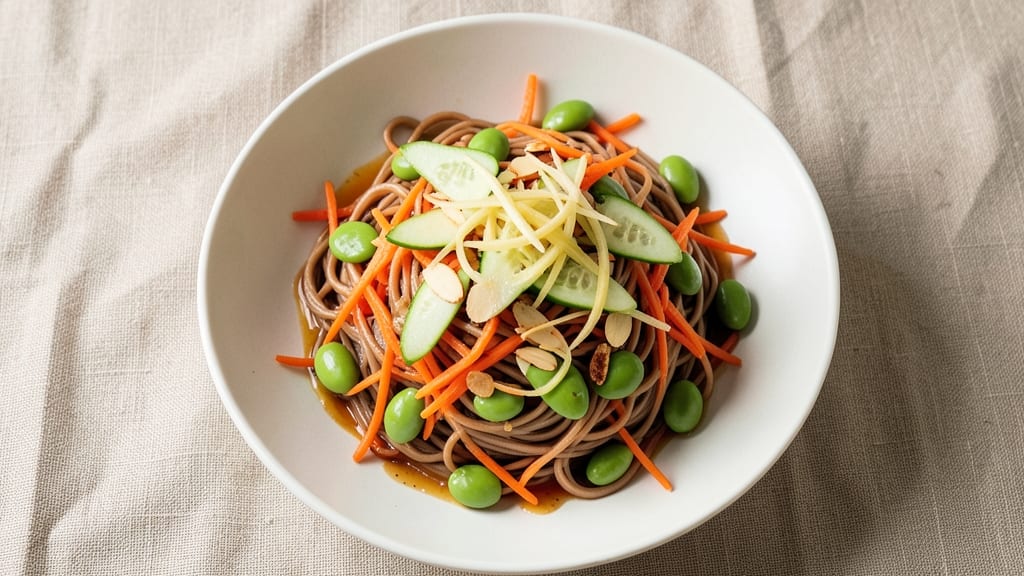
This Asian soba noodle salad recipe delivers a refreshing, protein-packed dish that balances crisp vegetables, nutty soba noodles, and a vibrant sesame-ginger dressing. The key lies in perfectly cooking the noodles—just 4 minutes in boiling water—then shocking them in ice water to maintain that satisfying bite.
I developed this recipe after craving something light yet satisfying, and it became my go-to for hot summer days or quick vegetarian meals.
The dressing is where the magic happens—a tangy-sweet blend of soy sauce, rice vinegar, sesame oil, and fresh ginger that coats every ingredient without overpowering. Toss in shredded carrots, cucumber, and edamame for crunch and color, then finish with toasted almonds for texture.
This isn’t just a side dish; it’s a complete, balanced meal with 15 minutes of active prep time and zero fuss.
What sets this salad apart is the contrast of temperatures: chilled noodles and veggies against the room-temperature almonds create a satisfying crunch with every bite. The dressing clings to the noodles while enhancing the natural flavors of the vegetables, making it a dish that’s as nutritious as it is delicious.
Serve it as a light lunch or a refreshing side to grilled proteins.
For extra flair, garnish with sesame seeds and sliced green onions before serving. The almonds add a satisfying crunch that keeps the salad exciting, while the dressing ties everything together with its perfect balance of sweet, savory, and umami.
Ready in under 20 minutes, this salad proves healthy eating can be effortless and delicious.
Ingredients for asian soba noodle salad
Light, nutty soba noodles meet crisp veggies and a zesty sesame-ginger dressing for a summer-ready vegetarian bowl.
| Ingredient | Amount | Notes |
|---|---|---|
| Dried Soba Noodles 🍜 | 8 oz | 100% buckwheat for nutty flavor |
| Shredded Carrots 🥕 | 1 ½ cups | Freshly grated for crisp texture |
| English Cucumber 🥒 | 1 whole | Peeled, seeded, thinly sliced |
| Shelled Edamame 🌱 | 1 cup | Frozen works perfectly, thawed |
| Toasted Almonds 🥜 | ½ cup | Sliced for texture contrast |
| Fresh Ginger 🌿 | 1 tbsp | Finely grated, fresh preferred |
| Rice Vinegar 💧 | ¼ cup | Seasoned preferred for balance |
| Toasted Sesame Oil 🫒 | 1 tbsp | For authentic aroma |
| Low-Sodium Soy Sauce 🥢 | 2 tbsp | Kikkoman preferred |
| Sesame Seeds 🌱 | 1 tbsp | Toasted lightly for garnish |
| Green Onions 🧅 | 3 whole | Thinly sliced, white parts removed |
| Honey 🍯 | 1 tbsp | For subtle sweetness |
| Sesame-Ginger Dressing 🍶 | ½ cup | Homemade blend (see notes) |
| Ice Water ❄️ | 2 cups | For noodle shock bath |
| Diamond Crystal Kosher Salt 🧂 | ½ tsp | For seasoning balance |
The soba noodles should be 100% buckwheat—anything labeled 'buckwheat soba' is a mix and lacks that authentic nutty flavor. Koyo or Nissin are my go-tos, but any reputable Asian market will have quality options. Fresh ginger is non-negotiable here; jarred paste lacks the bright punch. If you can't find fresh, double the amount of powdered ginger, but trust me on the fresh stuff. For the almonds, Trader Joe's sells pre-sliced toasted ones that save time—just check for no added salt. The edamame? Frozen is perfect; thaw and drain well before tossing in.
No sesame oil? Toasted peanut oil at half the amount works in a pinch, though it'll lack that nutty depth. Running short on rice vinegar? Apple cider vinegar with 1 tsp sugar mimics the mild sweetness. The honey can be swapped for maple syrup if you prefer vegan. For the carrots, a mandoline slicer creates those perfect ribbons, but a sharp knife works too—just be patient. The cucumber should be English-style; its thin skin is tender enough to eat. If you can't find it, peel and seed a regular cucumber. The dressing keeps for 5 days in the fridge, so make extra for quick lunches.
Store prepped veggies in airtight containers with a paper towel to absorb moisture—keeps them crisp for 3 days. The almonds stay fresh for 2 weeks in a sealed container, but toast fresh for best crunch. The dressing separates slightly; just give it a quick shake before using. This salad reheats surprisingly well—toss with a splash of water and microwave for 30 seconds if you're meal prepping. I always make double batches; leftovers taste even better the next day as flavors meld.
Why You'll Love This Recipe
- No Boil Required: I just rinse the soba noodles under cold water—no waiting for a pot to boil. That crisp-tender texture? It’s the secret to this salad staying fresh for days.
- Crunchy-Creamy Magic: The shredded carrots and cucumber stay delightfully crisp, while the toasted almonds add a buttery crunch. Honestly, that first bite is ridiculously satisfying.
- Lunchbox Hero: Pack it for work or school—it holds up perfectly in containers. Between us, my kids actually eat their veggies when they’re mixed into this salad.
- Budget Meal Maker: Soba noodles and edamame stretch into a filling meal for less than $5. I’ll be real: this is my go-to when I need something hearty without breaking the bank.
Step-by-step instructions for Asian soba noodle salad
Here's how to assemble this refreshing, crunchy salad with perfect al dente noodles and vibrant flavors.
Prepare the Soba Noodles with Precision
Bring a large pot of water to a rolling boil and add the 8 oz dried soba noodles. Cook according to package directions for al dente texture—typically 4-5 minutes—but check at 3 minutes since buckwheat noodles cook faster than wheat-based noodles. They're done when they float and have a slight bite.
Drain immediately and transfer the noodles to a large bowl. Here's the secret: pour the 2 cups ice water over the hot noodles to stop cooking instantly and prevent mushiness. Toss gently with your hands or a spoon to distribute the water evenly. This shock treatment preserves their texture perfectly.
Assemble the Fresh Vegetable Components
While the noodles cool, prepare the vegetables. In a separate large bowl, combine the 1.5 cups shredded carrots, 1 cup shelled edamame (thawed if frozen), and 1 whole English cucumber (thinly sliced). Add the 3 whole green onions (thinly sliced) and 0.5 cup toasted almonds. Toss everything together lightly—just enough to distribute the almonds evenly without breaking the edamame.
This is where the texture contrast matters most. The crisp carrots and cucumber should remain firm, while the edamame adds protein and the almonds bring satisfying crunch. Don't overmix or you'll soften the vegetables prematurely.
Combine Noodles and Vegetables
Add the cooled soba noodles to the vegetable mixture and toss gently but thoroughly. Sprinkle with 0.5 tsp Diamond Crystal kosher salt and 1 tbsp fresh ginger (finely grated). The salt enhances all flavors while the ginger adds a bright, aromatic kick that ties everything together.
At this stage, the salad should look vibrant with layers of color from the carrots, cucumber, and edamame. The noodles should be evenly distributed throughout—this ensures each bite has perfect texture balance. Taste at this point to check seasoning before adding the dressing.
Dress the Salad to Perfection
In a small bowl, whisk together the 0.5 cup sesame-ginger dressing, 0.25 cup rice vinegar, 2 tbsp low-sodium soy sauce, 1 tbsp honey, and 1 tbsp toasted sesame oil. Pour this dressing over the noodle mixture and toss gently but completely to coat every strand and vegetable piece.
The dressing should glisten slightly on the noodles—this indicates even distribution. If some areas look dry, add 1-2 teaspoons of ice water to loosen the dressing. The acidity from the vinegar and sweetness from the honey should balance beautifully with the nutty soba noodles and earthy vegetables.
Garnish and Serve Immediately
Transfer the salad to a large platter or individual bowls. Sprinkle with 1 tbsp sesame seeds and additional green onion slices for both visual appeal and extra flavor dimension. The sesame seeds add a final nutty crunch while the green onions provide a fresh, oniony bite that cuts through the richness.
Serve immediately while the noodles are still crisp and the vegetables retain their crunch. This salad holds up well for about 30 minutes before serving, but the texture will degrade slightly as it sits. Pair with miso soup or grilled fish for a complete Japanese-inspired meal.
Pro Tips For Making Asian Soba Noodle Salad
- COOK NOODLES AL DENTE: Soba breaks down fast—pull them when they’re still slightly firm, around 2 minutes in boiling water. Overcooking turns them mushy, and you’ll end up with a sad, gluey mess. Drain immediately and rinse with cold water to stop cooking and remove excess starch.
- SHRED CARROTS UNIFORM: Use a mandoline or the thinnest blade on a box grater for even strips—thick ones stay crunchy while thin ones soften too fast. If you’re eyeballing it, aim for matchstick thickness. Uneven shreds mean uneven texture in your salad.
- TOAST ALMONDS LOW: Watch the heat—medium-low is your friend. Toasting almonds too hot burns them before they’re crisp, and you’ll taste bitter regret. Shake the pan every 30 seconds until they’re golden, not brown. A few seconds longer than you think.
- ADD EDAMAME LAST: Toss shelled edamame in at the very end—it’ll turn mushy if mixed in too early with the dressing. Keep them cold and bright green. If you’re prepping ahead, store them separately and add them right before serving.
Make-ahead tips for this asian soba noodle salad
Prep Ahead Strategy
Start by prepping the dressing first—it keeps for 5 days in the fridge, so make extra for quick lunches. Whisk together 0.5 cup sesame-ginger dressing, 0.25 cup rice vinegar, 2 tbsp soy sauce, 1 tbsp honey, and 1 tbsp sesame oil.
Store in an airtight container to preserve freshness. 💡
Noodle Prep Shortcut
Cook and shock the 8 oz soba noodles first, then store them in an airtight container with 1 tbsp sesame oil to prevent sticking. They’ll stay fresh for 2 days in the fridge—just toss with dressing and veggies when ready. This saves 15 minutes of prep time on busy days!
Veggie Prep Tips
Shred carrots and slice cucumbers in advance, storing them separately in airtight containers with paper towels to absorb moisture. They’ll stay crisp for 3 days. Keep edamame and almonds in separate containers—they’re best when added fresh for texture contrast. 🥕
Dressing Assembly
Combine all dressing ingredients in a jar with a tight lid. Shake before each use to redistribute flavors. If the dressing separates, just give it a quick stir—it’ll come together smoothly. This step can be done 24 hours ahead, making assembly a breeze.
Final Assembly
When ready to serve, toss the prepped noodles with veggies, then add the dressing. Garnish with sesame seeds and green onions just before serving to keep everything fresh. This salad holds for 30 minutes at room temperature, perfect for meal prep.
Reheating Leftovers
If you have leftovers, microwave them for 30 seconds with a splash of water to revive texture. Toss with extra sesame oil to restore that restaurant-quality crunch. I always make double batches—this salad tastes even better the next day! ✨
Nutrition facts
Frequently asked questions
Can I use regular wheat noodles instead of soba?
While you can substitute wheat noodles, you'll lose the authentic nutty flavor that makes soba special. For a similar texture, try brown rice noodles or whole wheat spaghetti—but expect a milder taste. If you're avoiding gluten, stick with 100% buckwheat soba noodles, which are naturally gluten-free.
How do I make this recipe vegan?
This recipe is already vegetarian, but for a fully vegan version, simply replace the honey with 1 tbsp maple syrup or agave. Check your soy sauce to ensure it's vegan (some contain fish-based additives). The edamame and almonds are naturally vegan, so no other substitutions are needed!
Why does my soba noodle salad get soggy?
Soggy noodles usually happen from overcooking or not shocking them properly. Cook noodles for exactly 4 minutes (or package instructions), then immediately plunge them into ice water. Also, store prepped ingredients separately in airtight containers with paper towels to absorb moisture—this keeps everything crisp for hours!
Can I add protein to this salad?
For extra protein, try adding ½ cup cooked quinoa, ½ cup chickpeas, or 4 oz grilled tofu. For meat lovers, sliced grilled chicken or shrimp work beautifully. Just add them after tossing with the dressing to prevent overcooking or sogginess.
What's the best way to store leftovers?
Store the salad in an airtight container for up to 3 days, but keep the dressing separate until ready to eat. To revive texture, microwave leftovers for 30 seconds with a splash of water, then toss with extra sesame oil. The flavors actually improve overnight as everything melds together!