
Salads
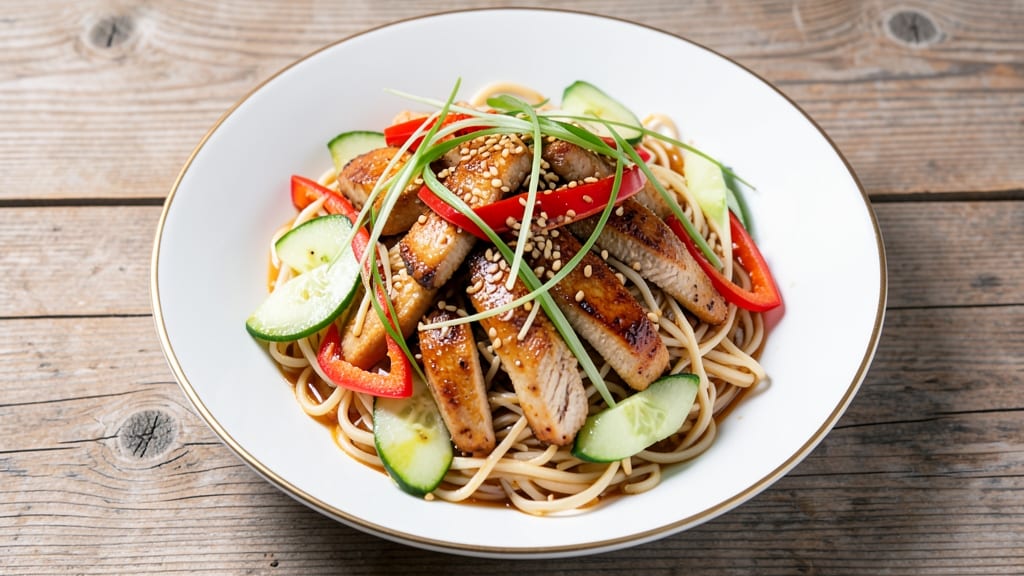
This Asian chicken noodle salad recipe delivers restaurant-quality flavors in a single bowl, combining tender chicken, chewy noodles, and a vibrant sesame-ginger dressing with a crunchy peanut topping.
The secret lies in balancing textures—crisp vegetables, silky noodles, and perfectly cooked chicken—all tied together with an aromatic dressing that’s both savory and slightly sweet.
What makes this dish special is the sesame-ginger dressing, which infuses every bite with bright, umami-rich flavors. I marinate the chicken in a simple soy-ginger mixture to ensure it stays juicy, while the noodles are cooked to an ideal al dente texture for maximum bite.
The crunchy peanut topping adds a satisfying contrast, making each forkful a perfect harmony of textures.
Ready in just 30 minutes, this salad is perfect for meal prep or a quick weeknight dinner. The dressing can be made ahead, and the ingredients come together effortlessly, ensuring you’ll have a fresh, flavorful meal without spending hours in the kitchen.
Serve it chilled or at room temperature for the best experience.
Whether you’re craving a light lunch or a refreshing dinner, this recipe delivers bold Asian-inspired flavors with a modern twist. The combination of protein, noodles, and vibrant toppings makes it a complete, satisfying dish that’s sure to become a staple in your rotation.
Ingredients for asian chicken noodle salad
Restaurant-quality flavors start with these fresh, vibrant ingredients—juicy chicken, chewy noodles, and a dressing that packs sesame-ginger punch.
| Ingredient | Amount | Notes |
|---|---|---|
| Boneless Chicken Breast 🍗 | 1 ½ lb | Thinly sliced, marinated |
| Ramen Noodles 🍜 | 8 oz | Uncooked, broken in half |
| Sesame Oil 🫒 | 2 tbsp | Toasted for aroma |
| Low-Sodium Soy Sauce 🍶 | ½ cup | For marinade and dressing |
| Fresh Cucumber 🥒 | 2 cups | Julienned, skin on |
| Red Bell Pepper 🌶️ | 1 whole | Thinly sliced, seeds removed |
| Green Onions 🧅 | ½ cup | Chopped, white and green parts |
| Fresh Ginger 🌿 | 1 tbsp | Grated, peeled |
| Peanut Butter 🥜 | ¼ cup | Creamy, unsweetened |
| Sesame Seeds 🌱 | 2 tbsp | Toasted, for topping |
| Lime Juice 🍋 | ¼ cup | Freshly squeezed |
| Honey 🍯 | 2 tbsp | For dressing balance |
| Vegetable Oil 🫒 | 1 tbsp | For stir-frying chicken |
| Salt 🧂 | 1 tsp | Adjust to taste |
| Black Pepper 🌶️ | ½ tsp | Freshly ground |
The chicken needs to stay juicy, so boneless, skinless breasts are your best bet—thinly sliced and marinated for 20 minutes. Costco or Trader Joe's have great prices on chicken, but any grocery store will work. For the noodles, grab ramen or udon—just break them in half before cooking. The sesame oil is non-negotiable here; Laura Chen's toasted sesame oil from Asian markets has the best flavor, but the regular grocery store stuff works too. Look for that nutty aroma when you open the bottle—if it smells dull, toss it.
No sesame oil? Toasted peanut oil at half the amount gets you close. Fresh ginger is ideal, but powdered ginger at one-third the amount works in a pinch. The peanut butter? Natural, unsweetened is key—none of that sweetened junk. For extra crunch, toast your sesame seeds in a dry pan for 30 seconds. The cucumber should be crisp—if it's soft, chill it for 10 minutes first. And if you're short on lime juice, lemon juice works 1:1, though it's not quite the same.
This salad keeps beautifully for 3 days in the fridge, but the dressing separates if stored too long—stir before serving. The chicken and noodles can be prepped ahead and tossed with dressing right before eating. For meal prep, portion the toppings separately so everything stays crisp. The peanut topping? Make a double batch—it disappears fast, and it's perfect on sandwiches too.
Why You'll Love This Recipe
- I swear by this trick: cook the chicken and noodles ahead, then toss everything together cold. The sesame oil and soy sauce blend in like a dream—no reheating, no fuss, just grab-and-go freshness when you’re starving.
- No-Cook Prep Magic: I swear by this trick: cook the chicken and noodles ahead, then toss everything together cold. The sesame oil and soy sauce blend in like a dream—no reheating, no fuss, just grab-and-go freshness when you’re starving.
- Umami Bomb Combo: That low-sodium soy sauce and sesame oil? They’re the secret weapons here. The chicken stays juicy, the noodles get a glossy sheen, and the cucumber adds that perfect crunch—like a tiny flavor explosion in every bite.
- Packable Picnic Perfection: Honestly, this is my go-to for lunch boxes or backyard BBQs. The noodles hold up great, the chicken stays tender, and it’s light enough to eat with your hands if you’re feeling wild. (Yes, even on a Tuesday night.)
Step-by-step instructions for Asian chicken noodle salad
Here's how to create a vibrant, crunchy, and perfectly balanced Asian-inspired salad that's fresh, flavorful, and ready in under 30 minutes.
Marinate and Cook the Chicken
Slice the 1.5 lb boneless chicken breast into thin strips, about ¼-inch thick. In a bowl, whisk together the 0.5 cup low-sodium soy sauce, 1 tbsp freshly grated ginger, 2 tbsp honey, and 1 tbsp vegetable oil. Add the chicken strips and toss to coat completely. Let it marinate for at least 15 minutes while you prepare the rest.
Heat a large skillet over medium-high heat until hot. Add the marinated chicken in a single layer, leaving space between pieces to avoid crowding. Cook for 3-4 minutes per side until the chicken is fully cooked and lightly browned. Remove from heat and let it cool slightly before slicing into bite-sized pieces. This marinade gives the chicken a sweet-savory depth that ties the whole dish together.
Prepare the Sesame-Ginger Dressing
In a small bowl, combine the 0.25 cup peanut butter, 0.25 cup lime juice, 2 tbsp honey, and 2 tbsp sesame oil. Whisk vigorously until smooth and creamy. This is the base of your dressing, and it's where the magic happens—peanut butter might seem unexpected, but it adds a rich, nutty balance to the bright citrus and ginger notes.
Slowly drizzle in the 0.5 cup low-sodium soy sauce while continuing to whisk. Add the remaining 1 tbsp grated ginger and mix until fully incorporated. Taste and adjust seasoning with additional soy sauce for saltiness or honey for sweetness. The dressing should be thick enough to coat a spoon but still pourable. Set aside while you finish the salad components.
Cook and Prepare the Noodles and Vegetables
Break the 8 oz ramen noodles in half and cook them according to package instructions until al dente. Drain immediately and rinse under cold water to stop the cooking process and remove excess starch. Toss the noodles with 1 tbsp vegetable oil to prevent sticking and keep them separate.
While the noodles cook, prepare the vegetables. Thinly slice the 2 cups fresh cucumber into julienne strips, keeping the skin on for texture. Remove seeds from the 1 whole red bell pepper and slice it into thin strips. Chop the 0.5 cup green onions, separating the white and green parts if you prefer different textures. These crisp vegetables will add freshness and crunch to balance the rich dressing and chicken.
Assemble the Salad
In a large bowl, combine the cooked noodles, sliced chicken, cucumber, red bell pepper, and green onions. Drizzle half of the sesame-ginger dressing over the mixture and toss gently to coat everything evenly. The noodles should be well-coated but still retain some individual strands for texture.
Transfer the salad to serving bowls and sprinkle with the 2 tbsp toasted sesame seeds. Drizzle the remaining dressing over the top and toss lightly again. The sesame seeds add a final nutty crunch that complements the peanut butter in the dressing. Serve immediately while the noodles are still warm and the vegetables are crisp.
Garnish and Serve
Divide the salad among plates and garnish with additional green onions and sesame seeds if desired. The contrast of warm noodles, cool vegetables, and rich dressing creates a perfect balance of flavors and textures. This dish is best enjoyed fresh, so don't let it sit too long before serving.
For extra flair, serve with a small side of extra dressing for dipping or drizzling. The combination of sweet, savory, tangy, and nutty flavors makes this salad incredibly satisfying and perfect for meal prep or a quick weeknight dinner. Each bite delivers a harmonious blend of textures and tastes that keeps everyone coming back for more.
Pro Tips For Making Asian Chicken Noodle Salad
- COOK CHICKEN UNTIL 165°F: Chicken breast is the star here, and undercooking it ruins everything—no one wants rubbery bites. Use a meat thermometer and pull it when it hits 165°F, even if it looks underdone. I’ve learned this the hard way after serving dry, chewy chicken that had me questioning my life choices.
- RINSE NOODLES WELL: That seasoning packet on ramen noodles is salty and artificial—skip it entirely. Boil the noodles for 2 minutes less than package instructions, then rinse them under cold water until they’re fully cooled. This keeps them from turning mushy and lets the sesame oil and soy sauce shine without competing flavors.
- SLICE CUCUMBER THINLY: Thick cucumber slices turn soggy fast in a salad. Use a mandoline or sharp knife to cut them paper-thin—this keeps them crisp and adds texture. Pro tip: Toss the slices in a little rice vinegar and sugar for 5 minutes before adding them to the salad; it’ll brighten them up and prevent bitterness.
- MARINATE CHICKEN IN SOY SAUCE: Plain grilled chicken in a salad tastes flat. Slice the chicken thinly, then toss it in a mix of low-sodium soy sauce, 1 tsp sesame oil, and a splash of honey (or sugar) for 10 minutes before cooking. This infuses flavor and keeps the chicken juicy—no dry, boring bites here.
Storing and reheating this dish
Fridge Storage Tips
Store your chicken noodle salad in an airtight container with a lid for up to 3 days in the refrigerator. The dressing may separate slightly, so give it a good stir before serving.
I like using glass Pyrex containers because they keep the salad fresh and make it easy to reheat later. Place the container on the middle shelf where temperatures stay most consistent. 🥗
Freezer-Friendly Prep
If you want to make this salad ahead for later, cook the chicken and noodles separately, then store them in freezer-safe bags with parchment paper between layers to prevent sticking. The dressing should be stored separately in a small container.
When ready to eat, thaw overnight in the fridge and toss everything together fresh. The texture of the noodles will be slightly softer after freezing, but the flavors stay vibrant. ❄️
Reheating Methods
For best results, reheat the salad in a microwave-safe bowl on medium power for 1-2 minutes, stirring halfway through. If the noodles seem dry, add 1-2 tablespoons of water or broth to restore moisture.
For a stovetop option, heat in a skillet over low heat with a splash of water, stirring constantly until warmed through. Avoid high heat—it can make the noodles mushy. 🔥
Preserving Crunch
To keep the cucumber and bell pepper crisp, store them separately from the dressing and chicken until ready to serve. If you're reheating the entire salad, add the veggies fresh after warming.
For extra crunch, toss the salad with 1-2 tablespoons of cold water right before serving—it helps revive the texture. The sesame seeds and green onions should always be added last to maintain their freshness. 💫
Make-Ahead Dressing
You can prepare the sesame-ginger dressing 2 days ahead and store it in a sealed jar in the fridge. The peanut butter and lime juice may separate, so whisk vigorously before using.
If the dressing thickens, thin it with 1 teaspoon of warm water to restore its pourable consistency. This is a great time-saver for busy mornings or meal prep Sundays. 💡
Serving Leftovers
Leftovers taste just as good cold as they do warm, making this salad perfect for lunchboxes or quick lunches. Pack individual portions in small glass containers with a tight lid to maintain freshness.
For a fun twist, serve with chopsticks or a fork and a small cup of extra dressing on the side. The contrast of warm noodles and cool veggies makes every bite satisfying. 🍜
Nutrition facts
Frequently asked questions
Can I use rotisserie chicken instead of fresh?
Rotisserie chicken works perfectly for this recipe—just remove any skin and shred the meat into bite-sized pieces. For extra flavor, toss the shredded chicken with 1 teaspoon soy sauce and ½ teaspoon grated ginger before adding it to the salad. The pre-cooked chicken saves time while keeping the dish just as flavorful.
What noodles work best for this recipe?
While ramen noodles are classic, you can swap in udon, soba, or even whole wheat spaghetti for a different texture. For best results, cook them to al dente (1-2 minutes less than package instructions) and rinse with cold water to prevent mushiness. Avoid overly soft noodles—they won't hold up well in the salad.
How can I make this salad spicier?
Add heat with a pinch of red pepper flakes or ½ teaspoon sriracha to the dressing. For extra kick, sprinkle chopped jalapeño or fresh chili over the top. If you love peanut sauce, stir in 1 teaspoon chili garlic sauce or a dash of gochujang when making the dressing.
Can I make this salad gluten-free?
Yes! Use tamari (gluten-free soy sauce) in place of regular soy sauce, and swap ramen noodles for rice noodles or gluten-free spaghetti. Double-check labels on peanut butter and sesame oil to ensure they're certified gluten-free. The flavor profile will stay the same, just with a lighter texture.
Why did my dressing separate?
This happens when peanut butter and lime juice aren't fully emulsified—just whisk vigorously before using. For a smoother texture, mix 1 teaspoon honey or maple syrup into the peanut butter first, then add the lime juice. Store-bought dressings often contain stabilizers, but homemade versions may need extra whisking to blend properly.