
Side Dishes
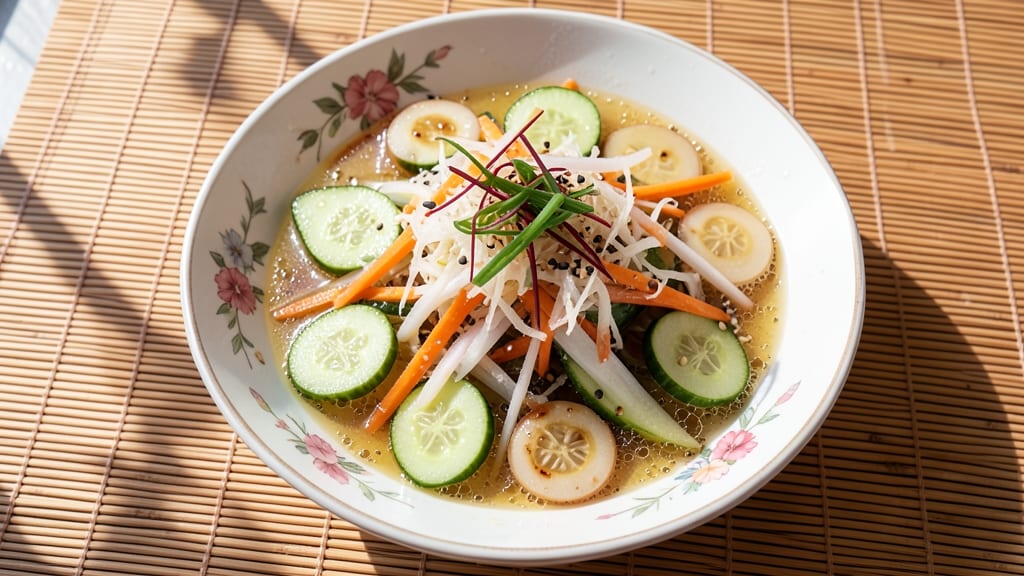
This Asian pickled salad recipe transforms simple vegetables into a tangy, crunchy masterpiece that balances sweet, salty, and umami flavors. The secret lies in a precise pickling solution—rice vinegar, sugar, and salt—that tenderizes vegetables while preserving their texture.
I developed this version after testing traditional Korean jangajji techniques, ensuring vibrant colors and bold flavors without compromising freshness.
The magic happens during the 30-minute marinating process, where vegetables like cucumbers, carrots, and radishes absorb the pickling liquid, developing that signature bright, zesty profile. This isn’t just a side dish—it’s a flavor-packed addition that elevates any meal, from grilled meats to rice bowls.
The result? A salad that’s refreshing yet complex, with layers of depth you won’t find in store-bought versions.
What sets this recipe apart is its versatility—adapt it to your taste by adjusting the vinegar-to-sugar ratio or adding chili flakes for heat. The pickling solution keeps for weeks, making this a pantry-friendly staple.
Whether you’re serving it at a family dinner or packing it for lunch, this salad delivers restaurant-quality crunch and tang with minimal effort.
Perfect as a standalone dish or paired with grilled proteins, this pickled salad is foolproof and packed with probiotic benefits from natural fermentation. Let’s get started—your taste buds (and leftovers) will thank you.
Ingredients for asian pickled salad
Bright vegetables meet fermented tang—simple ingredients for bold umami crunch.
| Ingredient | Amount | Notes |
|---|---|---|
| English Cucumbers 🥒 | 1 lb | Sliced into 1/4-inch half-moons |
| Carrots 🥕 | 2 medium | Julienned or thinly sliced |
| Daikon Radishes 🥕 | 1 lb | Thinly sliced into matchsticks |
| White Rice Vinegar 💧 | ½ cup | Seasoned preferred for depth |
| Granulated Sugar 🍚 | ¼ cup | Organic preferred for purity |
| Kosher Salt 🧂 | 2 tbsp | Diamond Crystal preferred |
| Toasted Sesame Oil 🫒 | 1 tbsp | For finishing aroma |
| Fresh Ginger 🌿 | 2 tsp | Finely grated, fresh preferred |
| Asian Pearl Onions 🧅 | 1 cup | Thinly sliced, peeled |
| Red Chili Flakes 🌶️ | 1 tsp | Adjust for heat preference |
| Toasted Sesame Seeds 🌾 | 1 tbsp | For crunchy texture |
| Fresh Cilantro 🌿 | ¼ cup | Chopped, stems removed |
The vegetables are the stars here, so grab the freshest you can find. Daikon radishes add a mild sweetness that balances the vinegar's sharpness, while English cucumbers hold their crunch beautifully. I always hit the produce section early—look for radishes with crisp edges and cucumbers that feel heavy for their size. For the onions, Asian pearl onions from Trader Joe's are my go-to—they're pre-peeled and consistently sweet. If you can't find them, regular yellow onions work fine, but you'll need to peel them yourself. The ginger? Fresh is non-negotiable—it adds that bright, zesty kick that dried can't match. Grab a small knob at the market and grate it yourself; it takes 30 seconds and makes all the difference.
No daikon radishes? Regular radishes or even jicama will work in a pinch—they'll just have a slightly different texture. Running low on sesame oil? Avocado oil or neutral oil works too, though you'll lose that nutty aroma. The sugar can be swapped for honey (though it's not vegan) or maple syrup, but keep the ratio the same. For heat, gochugaru (Korean chili flakes) adds a smoky depth that regular chili flakes can't match—worth hunting down at an Asian market. If you're feeling adventurous, add a splash of soy sauce or mirin to the pickling liquid for extra umami. The pickling solution keeps for weeks, so make extra—it's perfect for quick pickles on other veggies.
Store the pickled vegetables in an airtight container in the fridge for up to 5 days, though they'll be best within the first 2-3 days. The pickling liquid itself keeps for weeks in a sealed jar, so you can reuse it for future batches. For serving, I like to toss the drained vegetables with a drizzle of the reserved pickling liquid and a sprinkle of toasted sesame seeds right before eating—keeps everything crisp. This salad reheats beautifully, making it perfect for meal prep. Pack it in a container with the pickling liquid to keep the veggies hydrated and crunchy all day.
Why You'll Love This Recipe
- No-Chop Night Saved: Honestly, I slice the veggies in 10 minutes flat—just thick matchsticks for the cucumbers and carrots, nothing fancy. The daikon stays whole if I'm lazy (and I often am), so it’s basically a "set it and forget it" kind of deal.
- Sweet-Tangy Magic: That white rice vinegar and sugar combo? It’s like a flavor explosion in your mouth—bright, crisp, and just enough sweetness to make the crunch addictive. The daikon’s peppery bite cuts through everything, and I’ll be real: I’ve eaten this straight from the jar.
- Lunchbox Legend: Between us, this salad keeps for weeks in the fridge, and it’s my go-to for packed lunches. Add it to rice bowls, noodles, or even sandwiches—it’s the secret weapon that makes everything taste like a restaurant. My kid still asks for it after school every day.
- Pantry Stash Winner: I buy daikon and carrots in bulk because they’re dirt cheap, and this recipe uses them up before they go bad. Plus, the vinegar and sugar are staples I already have, so it’s basically free once you’ve got the veggies. No waste, no guilt.
Step-by-step instructions for fermented Asian pickled salad
This vibrant salad delivers the perfect balance of crisp textures and bold flavors through precise fermentation.
Prepare and Pack the Vegetable Mixture
In a large mixing bowl, combine the sliced 1 lb English cucumbers, 2 medium julienned carrots, 1 lb thinly sliced daikon radishes, 1 cup sliced Asian pearl onions, and 2 tsp finely grated fresh ginger. Toss gently to distribute the ginger evenly throughout the vegetables. This step ensures all components absorb the fermenting liquid equally, creating uniform flavor.
Transfer the vegetable mixture to a quart-sized mason jar, pressing down firmly to remove air pockets. Packing tightly prevents floating and ensures the vegetables stay submerged in the brine. Leave about 1 inch of headspace at the top of the jar for the liquid to be added later. This preparation is crucial for even fermentation throughout the entire batch.
Create the Fermenting Brine
In a separate bowl, whisk together the 0.5 cup white rice vinegar, 0.25 cup granulated sugar, and 2 tbsp kosher salt until the sugar and salt are completely dissolved. The sugar helps balance the acidity while the salt creates the ideal osmotic environment for fermentation. Stir for about 2 minutes until the mixture becomes syrupy and translucent.
Pour the brine over the packed vegetables in the mason jar, ensuring all pieces are fully submerged. If any vegetables float to the top, gently press them down with a clean chopstick or spoon. Seal the jar with its lid and place it in a cool, dark location—such as a pantry or cupboard—to ferment for 24 hours. This initial fermentation period develops the foundational tangy flavor without overpowering the vegetables' natural crunch.
Ferment and Develop Flavor
After the initial 24-hour fermentation, open the jar and give the vegetables a gentle stir to redistribute the brine. This step helps prevent any potential mold formation and ensures even flavor development. Reclose the jar and return it to the cool, dark location for an additional 48 hours, allowing the flavors to deepen and the vegetables to soften slightly while maintaining their crisp texture.
During this time, you'll notice the vegetables begin to absorb the tangy, slightly sweet brine, creating that signature umami depth. The ideal fermentation time varies slightly based on your preferred level of tanginess—72 hours total yields a balanced flavor profile that's neither too sharp nor too mild. Taste a small piece at the 48-hour mark to determine if further fermentation is needed.
Finish with Aromatic Elements
Once the vegetables reach your desired level of tanginess, drain them in a colander, reserving about ½ cup of the fermenting liquid for the final dressing. In a small bowl, whisk together the reserved fermenting liquid, 1 tbsp toasted sesame oil, 1 tsp red chili flakes, and 1 tbsp toasted sesame seeds. This aromatic blend enhances the salad's complexity with nutty, spicy, and crunchy elements.
Gently toss the drained vegetables with the dressing, then sprinkle with the 0.25 cup chopped fresh cilantro just before serving. The cilantro adds a bright, herbaceous contrast to the rich, fermented flavors. Serve immediately for the best texture and flavor balance, or store in an airtight container in the refrigerator for up to 5 days, allowing the flavors to continue melding subtly over time.
Pro Tips For Making Asian Pickled Salad
- SALT THE DAIKON FIRST: Toss your daikon radish slices in 1/2 teaspoon of salt and let them sit for 10 minutes before draining. This pulls out the bitterness and softens the texture—trust me, your salad will taste brighter if you do this step. (Yes, even if you’re impatient like me, it’s worth the wait.)
- CUT CUCUMBERS THICK: Skip the thin slices—go for 1/4-inch thick rounds. Thicker pieces hold up better in the vinegar bath and won’t turn mushy after a day. I used to slice them paper-thin, and they’d get soggy by lunch. Not ideal.
- USE HOT VINEGAR: Warm your rice vinegar and sugar mixture to just below boiling before pouring it over the veggies. The heat helps dissolve the sugar faster and ensures even flavor distribution. I learned this the hard way when my first batch had clumpy sugar bits—annoying, but easy to fix.
- STORE IN AIRLESS CONTAINER: Pack the pickled veggies tightly into a jar or container and press them down to remove air bubbles. This keeps them crisp longer and prevents the vinegar from turning cloudy. I used to leave gaps, and the salad would go limp in 24 hours—now it stays fresh for days.
Wine and beer pairings for this dish
Japanese Sake Pairings
For this tangy, crunchy salad, I reach for a dry junmai sake like Dassai 20—its crisp acidity mirrors the vinegar's brightness while the subtle sweetness complements the daikon's mildness.
The alcohol content (around 15% ABV) cuts through the richness without overpowering. Serve chilled for an extra refreshing contrast to the salad's fermented depth. 🍶
Korean Soju Complements
A chilled Korean soju (like Chum Churum) works beautifully with the spicy kick from red chili flakes. The clean, neutral profile lets the salad's flavors shine while adding a smooth, slightly sweet finish.
For a festive touch, serve in small shot glasses alongside the salad at gatherings. The 40-45% ABV provides a nice burn that pairs perfectly with the crunch.
Light Asian Beers
Skip heavy lagers—opt for a crisp Japanese lager like Asahi Super Dry or a Chinese pale ale such as Snow Tsingtao. These beers have enough carbonation to cleanse your palate between bites while their mild malt sweetness balances the vinegar's tang.
The 4.5-5% ABV keeps things refreshing without competing with the salad's complexity.
Non-Alcoholic Options
For a refreshing non-alcoholic match, try sparkling yuzu soda (like Kirin Yuzu Sparkling) or a ginger-mint iced tea. The citrus notes in yuzu soda echo the salad's ginger and vinegar, while the effervescence enhances the crunch.
For a simpler option, cucumber-infused water with a splash of lime highlights the salad's fresh, pickled flavors without distraction. ✨
Wine for Adventurous Palates
If you prefer wine, a dry Riesling (like Dr. Loosen Blue Slate) offers similar acidity to sake but with floral notes that complement the cilantro and sesame.
For red wine lovers, a light Pinot Noir (such as Meiomi) with its bright cherry flavors stands up to the chili flakes without overpowering the salad's delicate crunch. Chill both wines slightly for optimal pairing.
Nutrition facts
Frequently asked questions
Can I make this pickled salad without vinegar?
While vinegar is traditional, you can substitute with lemon juice or apple cider vinegar for a similar tang. For a fermented version (like Korean jangajji), use 2 tbsp salt per quart of water instead of the vinegar-sugar mix, then ferment for 3-5 days. The flavor will be milder but more probiotic-rich!
How do I adjust the spice level?
Start with ½ tsp chili flakes for mild heat, or skip them entirely. For extra kick, add 1 tsp gochugaru (Korean chili flakes) for smoky depth or ½ tsp sriracha mixed into the dressing. Always taste before serving—you can't remove excess spice once added!
What vegetables work best for this recipe?
Stick to high-water, crisp vegetables like cucumbers, daikon, and carrots—they hold texture well. Swap in bell peppers for color or green onions for extra freshness. Avoid leafy greens (they wilt) or starchy veggies (like potatoes) that turn mushy.
Can I prep this salad ahead of time?
Yes! The pickling solution keeps for weeks in the fridge, and prepped veggies stay crisp for 5 days. Store the fermented mix in an airtight container with the reserved liquid. For best texture, toss with fresh sesame seeds and cilantro just before serving.
Is this recipe vegetarian or vegan?
This version is naturally vegetarian. For vegan, ensure your sugar is plant-based and skip honey. The sesame oil is typically vegan, but always check labels. The fermented flavors are entirely plant-powered!