
Salads
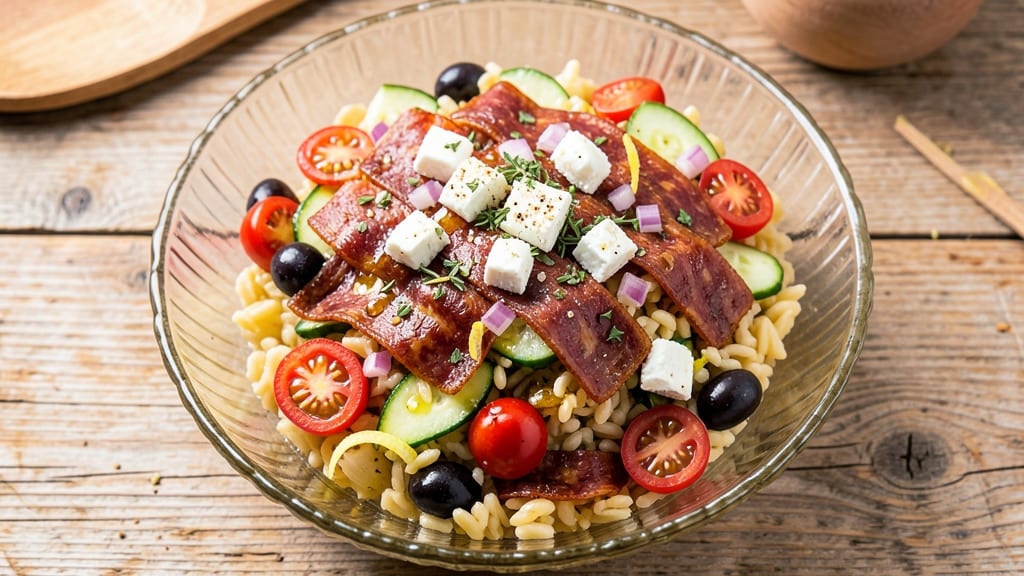
This Greek pasta salad with salami transforms a simple bowl into a Mediterranean masterpiece—where crisp orzo meets salty salami, briny olives, and bright vegetables in a tangy olive oil dressing.
The secret lies in perfectly cooked pasta that stays al dente, paired with just the right balance of salty, tangy, and herby flavors that make every bite irresistible.
I developed this recipe after craving something hearty yet refreshing, and the salami adds that savory kick that elevates it beyond ordinary pasta salads.
The beauty of this dish is its versatility—it works as a light lunch, picnic centerpiece, or even a side for grilled meats. The orzo absorbs the lemony olive oil dressing while staying firm, and the salami provides a satisfying bite that contrasts with the softness of feta and cucumbers.
Traditional Greek flavors like oregano and olives shine, but the salami gives it a modern twist that keeps it exciting.
What you’ll end up with is a colorful, crunchy, and deeply flavorful salad that’s packed with Mediterranean charm. The bright red of tomatoes, deep purple of olives, and golden orzo create a visually stunning dish, while the salami adds a salty, savory depth that ties everything together.
It’s the kind of salad that disappears quickly—guaranteed to be a crowd-pleaser at any gathering.
Perfect for meal prepping or serving fresh, this salad keeps well for up to 3 days in the fridge, making it an ideal option for busy weeks.
The dressing can be adjusted to your taste—more lemon for brightness or extra olive oil for richness—so you can customize it just the way you like. Let’s get started on this Mediterranean-inspired dish!
Ingredients for greek pasta salad recipe with salami
Bright Mediterranean flavors meet salty salami in this crowd-pleasing Greek pasta salad.
| Ingredient | Amount | Notes |
|---|---|---|
| Orzo Pasta 🍝 | 1 ½ cups | Uncooked, al dente preferred |
| Cherry Tomatoes 🍅 | 1 ½ cups | Halved, vine-ripened if possible |
| Kalamata Olives 🫒 | 1 cup | Pitted, sliced if large |
| Cucumber 🥒 | 1 medium | English or Persian, diced |
| Red Onion 🧅 | ½ cup | Thinly sliced, sharp variety |
| Feta Cheese 🧀 | 1 cup | Crumbled, 1/4-inch cubes |
| Salami 🍖 | 1 cup | Diced, spicy or sweet variety |
| Fresh Dill 🌿 | ¼ cup | Chopped, stems removed |
| Fresh Oregano 🍃 | 2 tbsp | Chopped, or 1 tsp dried |
| Extra-Virgin Olive Oil 🫒 | ½ cup | High-quality, fruity |
| Lemon Juice 🍋 | 3 tbsp | Freshly squeezed |
| Garlic Cloves 🧄 | 2 cloves | Minced, 1 tsp minced |
| Salt 🧂 | 1 ½ tsp | Kosher or sea salt |
| Black Pepper 🌶️ | ½ tsp | Freshly ground |
The orzo is the star here—look for the short-grain kind at Mediterranean markets or the pasta aisle. De Cecco or Barilla are my go-tos, but any good-quality orzo works. For the olives, Kalamata is non-negotiable—their briny flavor cuts through the richness of the feta and salami. If you can't find them, Castelvetrano olives are a decent substitute, but they're milder. The tomatoes? Cherry tomatoes are perfect for halving, but if you've got those big beefsteak tomatoes, use half a cup instead. The salami makes this dish—pick one with good fat content (like Calabrese or Soppressata), not the lean, dry kind.
No fresh dill? Dried dill at half the amount works, but honestly, the fresh stuff is worth hunting down. The oregano should be Greek oregano if you can find it—Mediterranean markets usually carry it. Short on lemon? Substitute white wine vinegar at the same amount, but you'll lose that bright citrus punch. The olive oil matters too—skip the cheap stuff. A good extra-virgin (like California Early Harvest or Italian Arbequina) makes all the difference. For the feta, crumble it yourself from a block—pre-shredded gets gummy. And if you're feeling fancy, toast the orzo in olive oil for 2 minutes before cooking for extra flavor.
This salad tastes even better the next day as flavors meld. Keeps for 3-4 days in the fridge, sealed in an airtight container. The dressing separates? Give it a quick shake before tossing. For meal prep, store components separately—dress the salad just before serving to keep orzo from getting mushy. The salami and feta can be prepped ahead too, so you're just mixing everything together when ready. Double the batch—it disappears fast at picnics and potlucks.
Why You'll Love This Recipe
- I swear by this trick: chop the cucumber, tomatoes, and onion once, then toss them straight in. The olives and salami add that salty, briny punch without extra effort—just stir and serve.
- No-Cook Add-Ins: I swear by this trick: chop the cucumber, tomatoes, and onion once, then toss them straight in. The olives and salami add that salty, briny punch without extra effort—just stir and serve.
- Salami Magic: That salami? It’s the star. Crumbled over the top or mixed in, it turns this into something hearty and satisfying, like a Greek salad got a protein upgrade. (Yes, even my picky husband eats it twice.)
- Lunchbox Hero: Between us, this keeps perfectly for 4 days in the fridge. Pack it cold for work lunches or toss it in a thermos for picnics—no sad, soggy pasta here. The orzo holds up like a champ.
Step-by-step instructions for Greek pasta salad with salami
Here's how to assemble this vibrant, protein-packed salad with bold Mediterranean flavors.
Cook the Orzo Pasta to Al Dente Perfection
Bring a large pot of water to a rolling boil and add 1.5 cups of orzo pasta along with 1.5 teaspoons of salt. Stir immediately to prevent sticking. Cook the orzo according to package instructions for al dente texture—usually about 8-10 minutes—but start checking at 7 minutes. You want it tender but still with a slight bite, not mushy. Drain in a colander and rinse briefly under cold water to stop the cooking process. Shake off any excess water and transfer to a large mixing bowl.
I like to give the orzo a quick shake in the colander before rinsing—this helps release any surface starch that could make the salad gummy. The rinse is crucial here; it prevents the orzo from becoming too soft as it sits with the other ingredients. Don't skip this step, even if it seems like overkill—it makes all the difference in texture.
Prepare and Combine the Fresh Vegetables
While the orzo cooks, halve 1.5 cups of cherry tomatoes and slice 1 medium cucumber into ¼-inch dice. Thinly slice ½ cup of red onion and pit and slice 1 cup of Kalamata olives if they're large. Add all these vegetables to the warm orzo bowl and toss gently to combine. The residual heat from the orzo will help soften the vegetables slightly as they sit.
For the cucumber, I like to remove any seeds and peel it if it's not an English variety—this prevents a bitter taste. The onions should be sliced as thinly as possible for even distribution throughout the salad. Add these ingredients while everything is still warm; this helps the flavors meld together more quickly and prevents the vegetables from releasing too much moisture that could make the salad watery.
Create the Flavorful Dressing and Combine
In a small bowl, whisk together ½ cup of extra-virgin olive oil, 3 tablespoons of lemon juice, 2 cloves of minced garlic, 2 tablespoons of chopped fresh oregano, ½ teaspoon of black pepper, and 1 teaspoon of salt. Pour this dressing over the orzo and vegetable mixture in the large bowl. Add 1 cup of crumbled feta cheese and 1 cup of diced salami to the bowl and gently fold everything together with a large spoon or your hands.
The dressing should coat the ingredients evenly but not make the salad soggy. If it seems too thick, add 1-2 tablespoons of water or lemon juice to loosen it. I like to fold gently at first, then give it a final mix before serving—this keeps the feta and salami pieces more intact. The acidity from the lemon will help balance the richness of the feta and salami while keeping everything bright and fresh.
Finish with Fresh Herbs and Rest
Stir in ¼ cup of chopped fresh dill and gently toss the salad one final time. Cover the bowl and let it rest in the refrigerator for at least 30 minutes before serving. This resting time allows all the flavors to meld together beautifully and gives the dressing time to absorb into the orzo and vegetables.
Here's the thing—resting is non-negotiable for this salad. The flavors develop and deepen during this time, creating that perfect balance of tangy, salty, and herby notes. If you're short on time, at least let it sit for 15 minutes uncovered at room temperature before serving. The salad will taste better if you wait, I promise.
Pro Tips For Making Greek Pasta Salad Recipe With Salami
- Rinse Orzo After Cooking: Orzo clumps like glue if you skip this, and no one wants a salad with pasta gummy spots. Drain it, then rinse under cold water for 10 seconds—just enough to stop the cooking and separate the grains. (Yes, even if it feels like overkill.)
- Cut Olives In Half: Whole Kalamata olives are a pain to eat in a salad, and they’ll just sink to the bottom. Halve them before mixing—it’s faster than you think, and the briny flavor spreads better. (Pro move: pit them too, if you’re feeling fancy.)
- Add Salami Last: Tossing salami in too early makes it soggy, and nobody wants limp, greasy slices. Keep it whole or in thick chunks, and fold it in right before serving—just 2 minutes before digging in. (Bonus: warm it slightly if you’re lazy.)
- Dice Onion Fine: Big chunks of red onion are an eyesore and overpower the dish. Dice it into 1/8-inch pieces so it blends in smoothly—your taste buds will thank you. (Use a sharp knife, or you’ll waste more time than you save.)
Essential equipment for perfect results
Orzo Cooking Essentials
Your orzo pasta deserves special attention—start with a large pot (at least 8-quart capacity) to prevent overflowing. I swear by a stainless steel pot like All-Clad or Cuisinart for even heat distribution.
Use a fine-mesh colander (I prefer OXO Good Grips) for draining, and keep a small bowl of ice water nearby to stop cooking immediately after draining. 🍝
For al dente perfection, invest in a pasta thermometer (Thermoworks makes a great one) to pull orzo at 135-138°F internal temperature. A wooden spoon helps toss while cooking—avoid metal utensils that can scratch the pot.
Pro tip: Toast the orzo in olive oil for 2 minutes before adding water to develop deeper nutty flavors.
Vegetable Prep Tools
Your knife skills matter—grab a sharp chef's knife (Wüsthof or Shun Premier) and a cutting board (I love Teakhaus bamboo). For cucumbers, a mandoline (Benriner) creates perfect ¼-inch dice in seconds.
A small bowl of water near your cutting board prevents onions from releasing too much sulfur while you slice them.
For olives, use a small paring knife to pit them efficiently. I keep a small bowl for pits and another for sliced olives to avoid cross-contamination. A microplane comes in handy for zesting lemon if you want extra brightness in your dressing. 🥒
Dressing Mixing Must-Haves
A small whisk (Cuisinart stainless steel) is perfect for emulsifying your dressing. I measure olive oil in a liquid measuring cup (clear glass works best) for precision.
A garlic press (OXO) makes mincing garlic effortless—no knife skills required. For herbs, a pair of kitchen shears trims dill stems quickly and cleanly.
Store your dressing ingredients in amber glass bottles (like Le Parfait) to protect olive oil from light degradation. A small mixing bowl (8-inch diameter) gives you enough space to whisk without spills. Keep a small spoon nearby to taste-test as you go—this helps balance flavors before combining everything.
Serving and Storage Gear
Serve your salad in individual glass bowls (like Pyrex) for easy meal prep. For gatherings, a large ceramic platter (I use Corelle) holds everything beautifully. Store leftovers in airtight containers (Rubbermaid Brilliance) with snap-on lids to maintain freshness.
When reheating, use a microwave-safe bowl and cover with a damp paper towel to prevent drying. For picnics, pack components separately in bento boxes—keep dressing in a small leak-proof container (Ziploc makes great ones) and mix just before eating. 🧂
Nutrition facts
Frequently asked questions
Can I use regular pasta instead of orzo?
You can, but orzo is ideal because its shape holds the dressing beautifully while staying firm. If using regular pasta, try short shapes like penne or farfalle and cook them 1 minute less than package instructions to prevent mushiness. The salad will still taste great, but the texture will differ slightly.
How do I prevent the orzo from getting soggy?
Rinse the cooked orzo under cold water immediately after draining to stop cooking, then shake it in the colander to remove excess moisture. Store the salad in an airtight container and keep dressing separate until ready to serve. For best results, assemble the salad no more than 2 hours before eating.
What's the best way to store leftovers?
Store the salad in an airtight container in the fridge for up to 3 days. For longer storage, keep components separate—store the orzo, veggies, and cheese in one container and the dressing in another. Mix just before serving to maintain crispness. The flavors actually improve overnight!
Can I make this salad without salami?
Substitute with grilled chicken, canned tuna, or crumbled bacon for a different flavor profile. The key is maintaining the salty, protein-rich element. If you want to keep it vegetarian, add roasted red peppers or artichoke hearts for texture.
How can I make this salad spicier?
Add ½ teaspoon of red pepper flakes to the dressing or sprinkle with chopped jalapeños before serving. For heat lovers, try spicy salami instead of regular. The lemon in the dressing helps balance any extra spice, so you can go bold without overpowering the dish!