
Salads
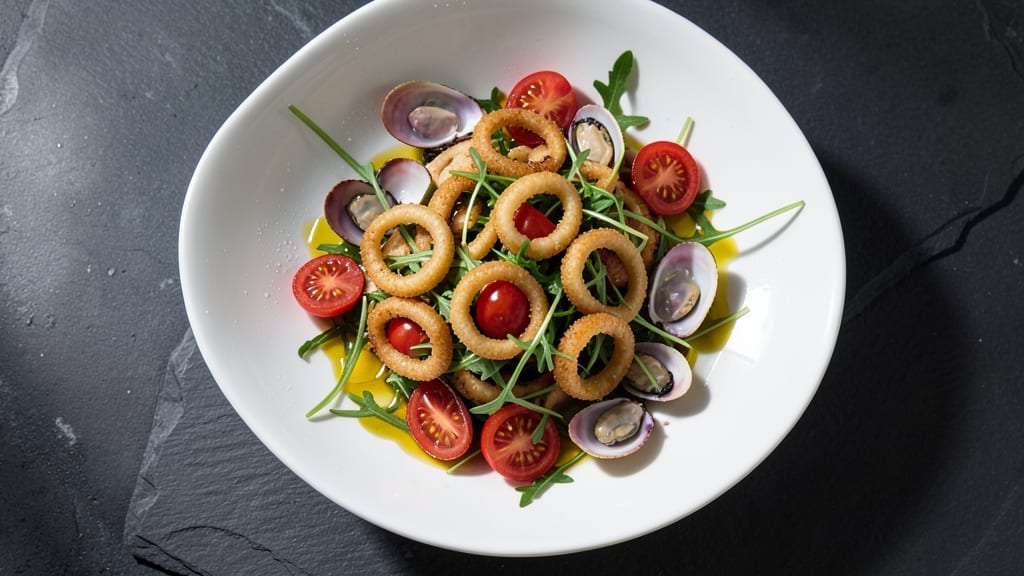
This calamari and scungilli salad delivers restaurant-quality crispiness with tender seafood and a bright lemon-anchovy dressing that elevates every bite. The key lies in properly cleaning the seafood and achieving that perfect golden crust through a quick pan-fry—no overcooking, just tender yet crispy clams and squid.
I developed this recipe after years of perfecting seafood prep, ensuring the delicate flavors shine while maintaining texture.
The salad balances fresh vegetables like cherry tomatoes and parsley with the briny depth of scungilli and the delicate sweetness of calamari, all tossed in a dressing that marries zesty lemon with the umami punch of anchovies.
This dish is equally at home as a light main for summer lunches or a showstopping appetizer for dinner parties. The crispy seafood holds up beautifully, while the dressing adds a tangy contrast that cuts through the richness.
What sets this recipe apart is the attention to detail—from properly cleaning the seafood to achieving that signature crisp-tender texture. The result is a dish that feels luxurious yet remains approachable for home cooks.
Serve it with crusty bread to soak up every last bit of dressing or alongside a simple arugula salad for a complete meal. The combination of textures and flavors makes this salad unforgettable.
Whether you're preparing for a summer gathering or simply craving a fresh seafood meal, this recipe delivers on both flavor and presentation. The crispy seafood takes center stage, while the bright dressing ties everything together into a harmonious bite.
Ready to transform your next meal? Let’s get started with the ingredients and techniques that make this salad truly special.
Ingredients for calamari scungilli salad
Fresh seafood, crispy texture, and bright Mediterranean flavors come together in this elegant yet approachable dish.
| Ingredient | Amount | Notes |
|---|---|---|
| Fresh Calamari Tubes 🦑 | 1 lb | Cleaned, tubes cut into 1-inch rings |
| Scungilli Clams 🦪 | 1 ½ lbs | Cleaned, siphons removed, rinsed |
| Extra-Virgin Olive Oil 🫒 | ½ cup | For frying, high smoke point |
| All-Purpose Flour 🌾 | ½ cup | Fine sifted, for dredging |
| Diamond Crystal Kosher Salt 🧂 | 1 ½ tbsp | Coarse, for seasoning |
| Fresh Cherry Tomatoes 🍅 | 1 pint | Halved, seeds removed |
| Fresh Flat-Leaf Parsley 🌿 | ½ cup | Chopped, stems removed |
| Red Onion 🧅 | 1 small | Thinly sliced, soaked 10 mins |
| Fresh Lemon Juice 🍋 | ¼ cup | Strained, no pulp |
| Anchovy Fillets 🐟 | 4 whole | High-quality, rinsed |
| Garlic Cloves 🧄 | 3 cloves | Minced, fresh preferred |
| Extra-Virgin Olive Oil 🫒 | ¼ cup | For dressing, fruity variety |
| Dried Oregano 🍃 | ½ tsp | Mediterranean blend preferred |
| Black Pepper 🌶️ | ¼ tsp | Freshly cracked |
The seafood quality makes or breaks this dish. Look for fresh calamari and scungilli at your local seafood market—ask when they were caught, aiming for same-day or previous-day harvest. Whole Foods Market and Trader Joe's typically carry pre-cleaned options, but if buying whole, clean them yourself by removing the siphons and rinsing thoroughly. For anchovies, imported European fillets from specialty stores like La Boîte deliver the most authentic umami punch. The olive oil should be extra-virgin with noticeable fruity notes—California Olive Ranch or Colavita are reliable brands that elevate both the frying and dressing.
No fresh anchovies? High-quality anchovy paste at half the amount works in a pinch, though texture differs slightly. Substituting scungilli with littleneck clams maintains the briny profile, but they require slightly less cooking time. For the dressing, if you can't find Mediterranean oregano, regular dried oregano at the same quantity suffices. The lemon juice should be freshly squeezed—bottled versions lack the bright acidity needed to cut through the richness. For the flour, bread flour creates a slightly chewier crust, though all-purpose works perfectly fine. Always pat the seafood dry before dredging to ensure maximum crispiness.
Fresh seafood should be used within 2 days of purchase for optimal texture. Store cleaned clams and calamari in the coldest part of your fridge, covered with a damp paper towel. The dressing keeps for 3 days in an airtight container, though it's best used immediately for peak freshness. For meal prep, fry the seafood just before serving to maintain that signature crisp-tender texture—it loses crispness within 15 minutes of frying. The vegetables can be prepped ahead and stored separately, but toss everything together just before serving to preserve the vibrant colors and textures.
Why You'll Love This Recipe
- No-Fuss Frying: The calamari and scungilli get a quick flour dredge—no marinating, no complicated steps—just a hot pan and a few minutes. I swear, the flour coating crisps up faster than you can say "lemon wedge," and the salt clings perfectly to those tender tubes.
- Briny, Buttery Magic: That first bite? The scungilli’s natural sweetness paired with the calamari’s crispy crunch, all drenched in olive oil so rich it makes you slow down. Honestly, I’ve never met a salad that tastes this much like a decadent bite of the Mediterranean coast.
- Picnic or Party Star: Pack it in a bowl for a beach day or serve it straight from the pan at a summer gathering—it’s equal parts elegant and effortless. My friends always ask for the recipe, and I just laugh because it’s basically foolproof.
- Leftovers? Better Than Fresh: The crispiness holds up surprisingly well, and the flavors deepen overnight. I’ll be real: I’ve reheated this salad twice, and it’s still the star of my lazy lunch. Plus, the clams and calamari stretch across meals without breaking the bank.
Step-by-step instructions for crispy calamari and scungilli salad
Master the technique for perfectly golden seafood with this method-tested approach.
Prepare and Fry the Calamari
Pat the 1 lb fresh calamari tubes completely dry with paper towels—this ensures maximum crispiness. Cut them into 1-inch rings and place them in a bowl with the 0.5 cup all-purpose flour and 1.5 tbsp diamond crystal kosher salt. Toss gently until evenly coated, shaking off any excess.
Heat 0.5 cup extra-virgin olive oil in a deep skillet over medium-high heat until it reaches 350°F—test with a wooden chopstick, which should sizzle and bubble immediately. Working in batches to avoid overcrowding, fry the calamari for 1-2 minutes until they float to the surface and achieve a golden brown color. Remove with a slotted spoon and drain on paper towels. Keep warm in a single layer while you prepare the clams.
Cook the Scungilli Clams
Rinse the 1.5 lbs scungilli clams thoroughly under cold water to remove any sand. In the same skillet (no need to wipe it clean—the fond adds flavor), heat 0.25 cup extra-virgin olive oil over medium heat until shimmering. Add the clams in a single layer and cover immediately. Cook for 4-5 minutes until they open completely—discard any that remain closed after this time.
Remove the clams from the skillet and let them cool slightly. The liquid released during cooking is flavorful—strain it through a fine-mesh sieve and reserve 2 tablespoons for the dressing. Keep the clams warm while you prepare the remaining salad components.
Assemble the Salad Base
In a large mixing bowl, combine the 1 pint halved cherry tomatoes, 0.5 cup chopped flat-leaf parsley, and 1 small thinly sliced red onion (after draining from its 10-minute soak). Add the fried calamari and cooked clams, gently tossing to distribute evenly. Sprinkle with 0.5 tsp dried oregano and 0.25 tsp freshly cracked black pepper.
Here's the thing—don't overmix. The seafood should remain crispy, not soggy. Taste the mixture and adjust seasoning with additional salt if needed, remembering the clams and calamari already contribute significant flavor.
Make the Lemon-Anchovy Dressing
In a small bowl, finely chop the 4 anchovy fillets and 3 minced garlic cloves until nearly paste-like. Add the 0.25 cup fresh lemon juice, 0.25 cup extra-virgin olive oil, and the reserved 2 tablespoons clam cooking liquid. Whisk vigorously until emulsified—this creates a silky, cohesive dressing that clings beautifully to the seafood.
Taste and adjust seasoning: you may need a pinch more salt to balance the acidity. The dressing should be bright, tangy, and just slightly salty—this is what elevates the simple ingredients into something extraordinary.
Combine and Serve
Drizzle the dressing over the salad mixture and toss gently, just until everything is evenly coated. The dressing should glisten slightly but not pool—if it's too thick, add 1 teaspoon water at a time until it reaches the perfect consistency. Let the salad rest for 5 minutes before serving to allow the flavors to meld.
Serve immediately while the seafood is still crisp. Each bite should deliver the satisfying contrast of crispy calamari, tender clams, and the bright, umami-rich dressing. The salad holds well for 2 hours at room temperature, but the texture will begin to soften after that.
Pro Tips For Making Calamari Scungilli Salad
- Prep Clams Fast: Scungilli clams need a quick, brutal scrub—no soaking. Use a stiff brush under cold running water for 10 seconds per clam, then rinse in a colander. I learned this the hard way: leaving them too long in water dulls their flavor, and you want that briny punch in your salad.
- Fry Calamari in Batches: Crowd the fryer, and you’ll end up with soggy tubes. Work in small batches—no more than 2 cups of calamari at a time—so the oil stays hot (350°F) and the flour crust gets crisp, not greasy. Yes, it takes longer, but trust me, the texture makes all the difference.
- Salt the Oil First: Toss a generous pinch of kosher salt (about ½ teaspoon) into the hot oil before frying. It seasons the crust from the start and cuts through the richness of the olive oil in the salad later. My grandmother swore by this, and she was right: the flavor is deeper, not just surface-level.
- Shock Clams Immediately: As soon as scungilli clams open in their shells, plunge them into ice water for 30 seconds. This stops cooking instantly and keeps them from getting rubbery in the salad. Skip this, and you’ll taste the difference—trust the process.
Troubleshooting this recipe
Seafood Texture Issues
If your calamari or clams turn rubbery instead of crispy, you likely overcooked them. The key is timing—calamari should fry for exactly 1-2 minutes at 350°F until golden brown, while clams need just 4-5 minutes covered on medium heat.
Overcrowding the pan also causes steaming instead of frying. I’ve found using a 12-inch cast iron skillet gives the best even heat distribution. 🔥
Dressing Separation
The lemon-anchovy dressing may separate if not emulsified properly. Whisk vigorously for at least 1 minute after adding all ingredients, or use an immersion blender for a silky texture. For extra insurance, add 1 tsp Dijon mustard when whisking—it acts as a natural emulsifier.
If separation happens, simply whisk again before using. The reserved clam cooking liquid helps bind everything together naturally. ✨
Clams Not Opening
If your scungilli clams refuse to open during cooking, they’re either too old or improperly stored. Fresh clams should open within 4-5 minutes of cooking. Discard any that remain closed—they’re unsafe to eat.
To test freshness before cooking, tap them on the counter; they should sound hollow. For future batches, buy clams from trusted seafood markets and use them within 24 hours of purchase. 🦪
Salad Too Dry
A common issue is the salad losing its moisture after tossing. The dressing should coat the ingredients lightly without pooling. If it seems too thick, add 1 tsp water at a time until it reaches a pourable consistency.
Another trick is to add the dressing gradually while tossing—this helps distribute flavor evenly. For extra freshness, add 1 tbsp cold water to the dressing right before serving. 💫
Frying Oil Too Hot
If your calamari burns before cooking through, your oil is too hot. Test with a wooden chopstick—it should sizzle but not smoke excessively. The ideal temperature is 350°F. For a more precise reading, invest in a thermometer like the ThermoWorks Thermapen.
If you don’t have one, look for small bubbles forming around the calamari as it hits the oil. Adjust heat to medium-high for consistent results. 🌡️
Onion Too Strong
The raw onion flavor can overpower the delicate seafood if not properly prepared. Soak thinly sliced red onion in cold water for 10 minutes before using to mellow its sharpness. Drain well before adding to the salad.
For an even milder flavor, try white onion instead. Another option is to caramelize the onion slightly before adding it to the salad—this adds sweetness and depth. 🧅
Nutrition facts
Frequently asked questions
Can I substitute scungilli clams with another type?
Yes! Littleneck or Manila clams work beautifully as substitutes—they have a similar tender texture and briny flavor. For best results, adjust cooking time to 3-4 minutes (they cook faster than scungilli). Avoid razor clams, as their texture and flavor differ significantly.
How do I properly clean calamari before cooking?
Rinse the calamari under cold water to remove any debris, then pat completely dry with paper towels. Gently pull apart the body from the head (discard the head) and remove the quill (the hard, beak-like part). Cut the body into 1-inch rings for even cooking. Never soak calamari—it absorbs water and becomes soggy.
Can I make this salad ahead of time?
For best texture, fry the seafood fresh and assemble the salad just before serving. However, you can prep components ahead: clean and store seafood in the fridge for 1 day, chop vegetables and store separately, and make the dressing up to 3 days in advance. Toss everything together last-minute to preserve crispness.
What's the best way to reheat leftover seafood?
Unfortunately, reheating crispy calamari or clams ruins their texture. Instead, keep leftovers in an airtight container in the fridge for 1 day and enjoy cold in sandwiches or over greens. For the dressing, reheat gently in a saucepan over low heat (don't boil) and use it as a sauce for pasta or grains.
Is this recipe suitable for seafood allergies?
This dish contains both calamari and clams, which are different shellfish. If someone has a shellfish allergy, they should avoid this recipe entirely. For a seafood-free alternative, try substituting with grilled chicken or crispy chickpeas while keeping the same lemon-anchovy dressing. Always check with your guests about allergies before serving.