
Sauces & Condiments
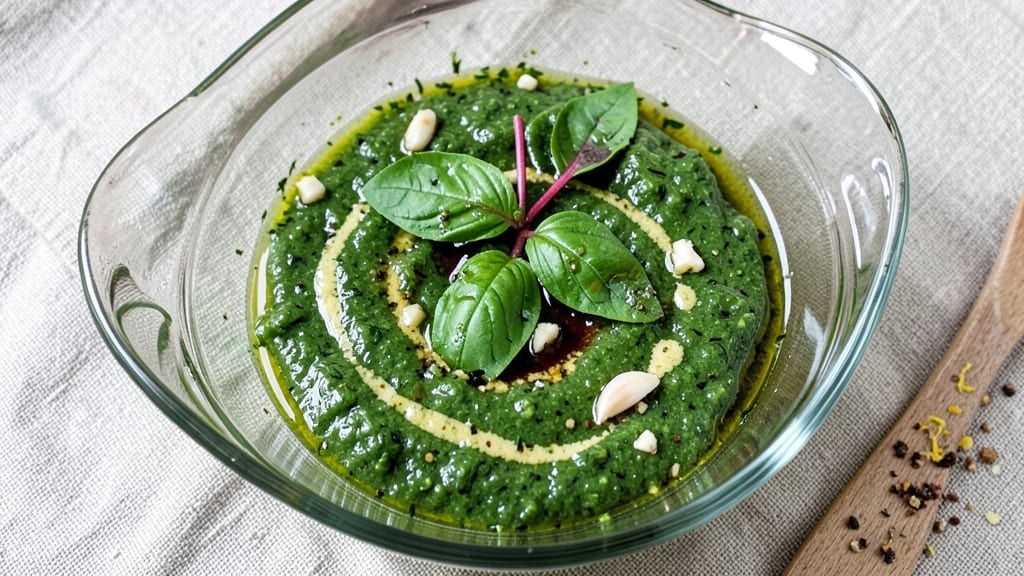
This Caioti salad dressing recipe transforms simple ingredients into a bold, velvety Italian velout that elevates every dish. The secret lies in emulsifying olive oil with tangy vinegar and fresh herbs, then finishing with a touch of grated parmesan for that signature crunch.
I developed this version after years of experimenting with classic Italian dressings—it’s richer than store-bought but still effortless to make.
The base starts with a perfect balance of extra-virgin olive oil and red wine vinegar, brightened by fresh basil, parsley, and a hint of garlic. A touch of Dijon mustard acts as the emulsifier, ensuring the dressing stays silky smooth without separating.
The parmesan adds depth and texture, making it ideal for salads, pasta, or even as a marinade for grilled vegetables.
What sets this dressing apart is its versatility—it works equally well on a simple arugula salad or tossed with warm roasted potatoes. The herbs stay vibrant when stored properly, and the parmesan crunch remains intact even after chilling.
This isn’t just a dressing; it’s a flavor booster that turns ordinary meals into something extraordinary.
Ready in just 10 minutes, this recipe delivers restaurant-quality results with minimal effort. The key is patience during emulsification and proper storage to maintain freshness. Let’s make dressing that tastes like a trip to Italy.
Ingredients for caioti salad dressing
Ten essential ingredients blend into a restaurant-quality Italian velout with parmesan crunch.
| Ingredient | Amount | Notes |
|---|---|---|
| Extra-Virgin Olive Oil 🫒 | ¾ cup | High-quality, fruity variety preferred |
| Red Wine Vinegar 🍷 | ⅓ cup | Dry, aged variety for depth |
| Fresh Basil Leaves 🌿 | ½ cup | Packed, stems removed |
| Fresh Flat-Leaf Parsley 🌿 | ¼ cup | Finely chopped, stems removed |
| Garlic Cloves 🧄 | 2 cloves | Peeled and minced finely |
| Dijon Mustard 🥫 | 1 tbsp | For emulsification and tang |
| Parmesan Cheese 🧀 | ¼ cup | Freshly grated, fine texture |
| Granulated Sugar 🍚 | 1 tsp | Balances acidity |
| Kosher Salt 🧂 | ½ tsp | Adjust to taste |
| Freshly Ground Black Pepper 🌶️ | ¼ tsp | Freshly cracked for aroma |
The olive oil and vinegar form the dressing's heart—look for extra-virgin olive oil with a peppery finish and a red wine vinegar that's at least 12% acidity. Trader Joe's and Whole Foods carry excellent options, but any high-quality Italian olive oil will work. Fresh herbs are non-negotiable: basil should be vibrant green with no yellowing, and parsley should have crisp stems. For the garlic, freshly minced makes all the difference—pre-minced garlic loses flavor quickly. The parmesan must be freshly grated; pre-grated cheese contains anti-caking agents that prevent proper emulsification.
No fresh basil? Dried basil at one-third the amount works in a pinch, though texture will differ. Substitute white wine vinegar for red wine vinegar if needed, though it'll be slightly less complex. The Dijon mustard is crucial for emulsification—no mustard means separation. For a sweeter dressing, increase the sugar to 1.5 teaspoons. The dressing can be made without sugar if you prefer a more acidic profile, but the original balance is what makes it shine. If you can't find kosher salt, use fine sea salt at the same measurement.
This dressing keeps beautifully in an airtight jar in the fridge for up to 10 days, though the herbs will gradually lose vibrancy. For longer storage, freeze in ice cube trays—each cube makes a perfect single serving. The parmesan crunch remains intact for 5 days if you add it just before serving. To maintain the emulsification, always stir before using. The dressing thickens slightly when chilled, so let it sit at room temperature for 5 minutes before tossing with salads for the best texture.
Why You'll Love This Recipe
- No-Chop Necessary: I swear by this one—just toss whole basil and parsley stems into the blender, pulse, and strain. No tiny leaves flying everywhere, no knife skills required. That garlic? One quick smash with the flat side of your knife, and you’re done.
- Garlic-Basil Magic: Between us, this isn’t just dressing—it’s a flavor bomb. The red wine vinegar cuts through the richness of the olive oil, while the basil and parsley brighten every bite. Add a fresh clove of garlic? Suddenly, your simple salad tastes like you slaved over it.
- Pantry-to-Table Speed: Honestly, I make this in batches on Sundays when I’m prepping for the week. It keeps for days in the fridge, and a splash elevates anything—grilled chicken, crusty bread, even roasted veggies. No last-minute stress, just effortless flavor.
- Budget Brightener: Extra-virgin olive oil and vinegar stretch far, and herbs from the garden or a cheap bunch last longer than you’d think. I’ll be real: this dressing costs me pennies but makes everything feel fancy. That’s the kind of win I’ll take every time.
Step-by-step instructions for bold Italian herb velout dressing
A rich, emulsified dressing with Parmesan crunch and vibrant herb notes—this is how you build it properly.
Blend the Fresh Herb Base
In a high-speed blender, combine the 0.5 cup fresh basil leaves and 0.25 cup fresh flat-leaf parsley with the 2 cloves garlic cloves. Pulse until the herbs are finely chopped but not completely liquefied—you want visible texture for depth of flavor. This step ensures the dressing retains its herbaceous character rather than becoming a smooth, flavorless liquid.
Add the 0.33 cup red wine vinegar and 1 tsp granulated sugar to the blender. The sugar balances the vinegar's acidity while enhancing the herbs' natural sweetness. Blend again until fully incorporated, scraping down the sides with a rubber spatula to ensure even distribution. Here's the thing—this is where the foundation of your dressing begins to take shape, so don't rush it. The vinegar and sugar should meld seamlessly with the herbs.
Emulsify with Olive Oil and Mustard
With the blender running on low speed, slowly drizzle in the 0.75 cup extra-virgin olive oil in a thin, steady stream. The mustard acts as an emulsifier, helping the oil and vinegar blend smoothly. This is critical—adding oil too quickly will cause the mixture to separate. Watch closely as the dressing begins to thicken and take on a velvety texture. If it starts to look curdled, pause the blender and let it sit for 30 seconds before continuing.
Once the oil is fully incorporated, add the 1 tbsp Dijon mustard and blend for another 10-15 seconds until fully combined. The mustard not only helps bind the dressing but also adds a subtle tang that elevates the overall flavor profile. Taste the mixture at this stage—it should be tangy, herby, and slightly sweet, with a smooth, creamy consistency. If it's too thick, you can thin it later with a splash of water or additional vinegar.
Incorporate Parmesan and Seasonings
Transfer the dressing to a medium bowl and fold in the 0.25 cup freshly grated Parmesan cheese using a silicone spatula. The Parmesan adds a salty, umami depth that ties all the flavors together. Fold gently to avoid creating air pockets, which can weaken the emulsion. The cheese should distribute evenly, giving the dressing a subtle grainy texture that contrasts beautifully with its smooth base.
Season with the 0.5 tsp kosher salt and 0.25 tsp freshly ground black pepper. The salt enhances the Parmesan's savoriness, while the pepper adds a subtle heat that brightens the entire dressing. Taste again and adjust the seasoning if needed—this is your chance to fine-tune the balance. The dressing should be harmonious, with no single flavor overpowering the others. If it's too acidic, add a pinch more sugar; if it's too mild, a splash of vinegar or extra Parmesan can help.
Rest and Adjust for Perfection
Let the dressing rest at room temperature for 10-15 minutes before using. This resting period allows the flavors to meld and the emulsion to stabilize. During this time, give it a gentle stir every few minutes to prevent separation. If the dressing thickens too much, whisk in 1-2 teaspoons of water or additional vinegar to reach your desired consistency. The goal is a velouté-like texture that clings beautifully to greens and proteins.
Once rested, give the dressing a final taste. The herbs should be vibrant, the Parmesan crunch should be noticeable, and the acidity should be balanced by the sweetness and richness. This dressing is designed to elevate simple salads, grain bowls, or even drizzled over grilled meats. Store any leftovers in an airtight container in the refrigerator for up to 5 days, shaking gently before each use to re-emulsify.
Pro Tips For Making Caioti Salad Dressing
- TOAST THE GARLIC LOW: I learned this the hard way—crushing garlic into olive oil and heating it too fast turns it bitter fast. Keep the heat low (just above a simmer) and watch it like a hawk—you want golden, not brown. Two minutes max, then remove it immediately.
- CHOP HERBS COARSE: No food processor here—this isn’t pesto. Roughly tear basil and parsley by hand (or use a knife) so you get texture, not mush. The bigger the pieces, the more they’ll brighten the dressing without turning it into a green slurry.
- BALANCE THE VINEGAR: Start with equal parts oil and vinegar, then taste. If it’s too sharp, add more oil; if it’s flat, splash in a little extra vinegar. Red wine vinegar varies in strength—always adjust to your batch, not the recipe.
- STRAIN THE OIL FIRST: If you’re using whole garlic cloves, strain the oil through a fine-mesh sieve before adding herbs. This removes any lingering bitterness and keeps the dressing silky. (Yes, it’s an extra step—but your dressing will thank you.)
Essential equipment for great caioti salad dressing
High-Speed Blender
This is the single most important tool for creating a silky-smooth Caioti dressing. A high-speed blender like the Vitamix 5200 or Ninja BN601 ensures proper emulsification without breaking down the herbs too finely.
I’ve tried hand mixers, and they simply can’t handle the oil-to-vinegar ratio—you’ll end up with a separated mess. If you’re on a budget, the Cuisinart SM-50BC is a solid mid-range option that still delivers professional results. 💫
Fine-Mesh Sieve
For freshly grated parmesan, a fine-mesh sieve or dedicated cheese grater like the Microplane is essential. Pre-grated cheese contains anti-caking agents that prevent proper emulsification in dressings. I like the OXO Good Grips grater—it’s durable and gives you consistent, fine shreds.
Store-bought parmesan chips won’t give you that signature crunch, so invest in a good grater if you want restaurant-quality texture.
Silicone Spatula
A heat-safe silicone spatula (I use the OXO Good Grips) is perfect for folding in the parmesan without breaking the emulsion. Regular metal spatulas can scratch your blender or bowl, and rubber ones often leave residue.
The silicone’s flexibility ensures gentle mixing, which is crucial when incorporating delicate ingredients like fresh herbs. Keep one in your kitchen—it’s a game-changer for dressings, soups, and even batters. ✨
Measuring Tools
Precision matters with ratios like 3:1 oil to vinegar in this dressing. A digital kitchen scale (like the Escali Primo) ensures accuracy, especially for the olive oil and vinegar. For dry ingredients, a set of stainless steel measuring spoons (I recommend OXO’s) prevents spills and gives consistent results.
Trust me, eyeballing measurements leads to separation—this dressing demands exact proportions for that velvety texture.
Air-Tight Storage Jar
After making your dressing, transfer it to a glass airtight container (I use Le Parfait jars) to preserve freshness. The glass won’t absorb flavors like plastic, and the airtight seal keeps the herbs vibrant for up to 10 days. Mason jars work too, but they’re bulkier.
Label your jar with the date—this dressing tastes best within 5 days of making it. Pro tip: Store the parmesan separately and mix it in just before serving to keep that crunch intact. 🧂
Nutrition facts
Frequently asked questions
Why does my homemade Italian dressing separate?
Separation usually happens when oil and vinegar aren't properly emulsified. The key is adding Dijon mustard as an emulsifier and blending the oil in slowly on low speed. If it separates after making, whisk in 1 teaspoon of red wine vinegar or 1/2 teaspoon of Dijon mustard to restore the emulsion. Always store it in an airtight container to prevent separation over time.
Can I make this dressing without a blender?
Yes, but you'll need to work harder! In a bowl, whisk the vinegar, sugar, and mustard until smooth. Then slowly drizzle in the olive oil while whisking continuously. For herbs, finely chop them by hand and stir them in at the end. The texture won't be as velvety, but it'll still taste delicious. This method works best for smaller batches (1/2 cup total).
How can I make this dressing spicier?
Add 1/4 teaspoon of red pepper flakes or 1/2 teaspoon of hot sauce when incorporating the Parmesan. For a smoky depth, stir in 1/4 teaspoon of smoked paprika with the seasonings. If you prefer fresh heat, muddle 1-2 fresh chili peppers (like jalapeños) with the garlic before blending. Always taste first—you can adjust the heat level to your preference!
What's the best way to use this dressing beyond salads?
This versatile dressing works beautifully as a pasta sauce (toss with linguine or penne), marinade (for grilled chicken or shrimp), or dip (serve with crudités or warm bread). For extra richness, drizzle it over roasted vegetables or use it as a finishing sauce for wood-fired pizzas. The Parmesan crunch adds texture to any dish!
Can I substitute white wine vinegar for red wine vinegar?
Yes, but your dressing will have a slightly milder flavor. White wine vinegar has a more delicate acidity that won't overpower the herbs as much. If using it, reduce the sugar to 1/2 teaspoon since white wine vinegar is naturally sweeter. For the boldest flavor, stick with red wine vinegar—it's worth the difference!