
Sauces & Condiments
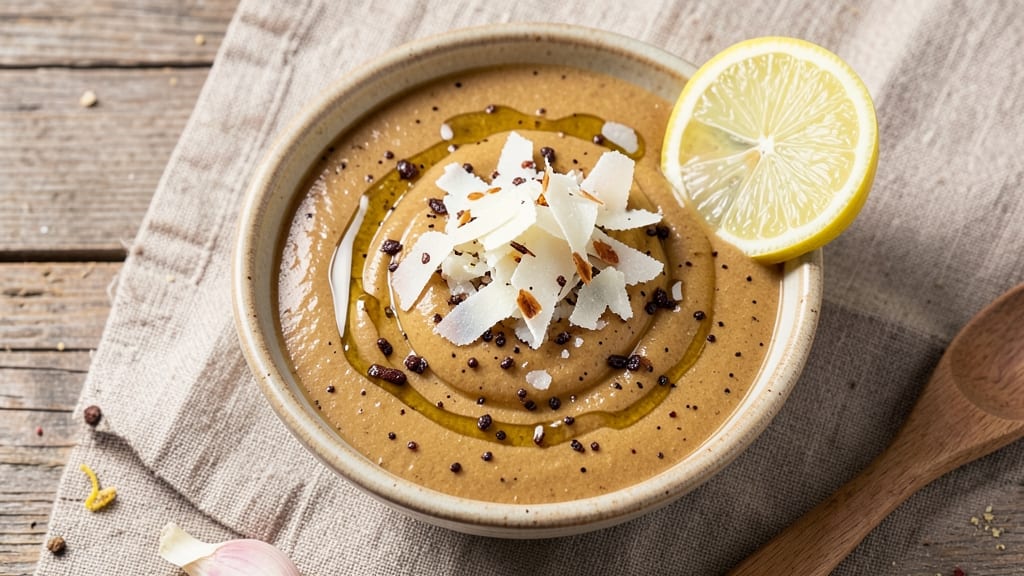
This Caesar Cardini salad dressing recipe brings the legendary flavor of Caesar's Cardroom to your kitchen in just 5 minutes. The original version—created by Italian immigrant Caesar Cardini in 1924—relies on a bold combination of anchovies, garlic, and aged Parmesan for its signature umami depth.
Unlike modern adaptations, this recipe stays true to the roots while delivering a dressing that's creamy, tangy, and impossible to resist.
The secret lies in proper emulsification, where raw egg yolks bind the oil and vinegar into a silky, velvety texture. Traditionalists will appreciate the authentic anchovy base, while those seeking flexibility can substitute vegan Worcestershire for a plant-based version.
The garlic and Parmesan add complexity, balancing the dressing's richness with bright acidity.
What you'll end up with is a dressing that's perfectly balanced—creamy without being heavy, tangy without overpowering, and packed with the kind of bold flavor that makes Caesar salads legendary.
It's the kind of sauce that elevates simple greens into a restaurant-worthy dish, all while staying true to its historic roots.
Best of all, this dressing keeps well in the refrigerator for up to a week, making it perfect for meal prep. Whether you're serving it over crisp romaine or drizzling it on grilled chicken, this recipe delivers the same magic that made Caesar Cardini's creation famous over a century ago.
Ingredients for caesar cardini salad dressing
The authentic ingredients that recreate Caesar Cardini's legendary dressing in minutes.
| Ingredient | Amount | Notes |
|---|---|---|
| Raw Egg Yolks 🥚 | 3 whole | Freshly extracted for best emulsification |
| Anchovy Fillets 🐟 | 4 whole | High-quality, oil-packed preferred |
| Extra-Virgin Olive Oil 🫒 | 1 cup | Light, fruity variety for balance |
| Fresh Garlic Cloves 🧄 | 3 cloves | Peeled, minced for maximum flavor |
| Lemon Juice 🍋 | ½ cup | Freshly squeezed, strained |
| Aged Parmesan Cheese 🧀 | ¾ cup | Freshly grated from 24-month block |
| Worcestershire Sauce 🍶 | 1 tbsp | Traditional, anchovy-based preferred |
| Diamond Crystal Kosher Salt 🧂 | ½ tsp | Fine grain for delicate seasoning |
| Black Pepper 🌶️ | ¼ tsp | Freshly cracked for aroma |
| Granulated Garlic 🧄 | ½ tsp | For subtle garlic depth (optional) |
The quality of your Parmesan and anchovies makes all the difference here. Parmigiano-Reggiano aged 24 months or longer delivers the deepest umami, while high-quality anchovy fillets in oil (like Colosetti or Branca) provide authentic flavor without fishiness. I always buy my anchovies from Whole Foods or specialty Italian markets—they carry brands that avoid the harsh, chemical aftertaste found in cheaper versions. For the egg yolks, fresh, organic eggs from pasture-raised hens yield the best emulsification, though regular store-bought works fine if you're in a pinch. The garlic should be vibrant and firm, with no green shoots or soft spots.
No anchovies? Vegan Worcestershire sauce can replace the anchovy fillets plus Worcestershire, though traditionalists will notice the difference. Short on lemon juice? Substitute white wine vinegar at half the amount, but you'll lose some of the dressing's signature brightness. The granulated garlic is optional but adds a subtle depth—if you're using fresh garlic, you can omit it entirely. For a smoother texture, strain the dressing through a fine-mesh sieve after emulsification. The olive oil should be light and fruity, not peppery or overly robust—California extra-virgin brands like Corto or Kirkland Signature work beautifully. If your dressing breaks, a splash of ice water or another yolk will save it.
This dressing reaches peak flavor after 24 hours in the refrigerator, though it's ready to use immediately. Store it in an airtight container with a thin layer of olive oil on top to prevent a skin from forming. It keeps for up to 1 week in the fridge, though the texture may separate slightly—just whisk vigorously to re-emulsify. For longer storage, portion into ice cube trays and freeze for up to 3 months. Thaw overnight in the fridge before using. The dressing thickens slightly when chilled, so add a splash of water or lemon juice if it becomes too stiff. Always taste before serving—adjust salt, pepper, or lemon to your preference.
Why You'll Love This Recipe
- Here’s what sold me: I already had everything. No weird ingredients, no last-minute grocery runs. Olive oil, garlic, lemon, anchovies (which last forever in the fridge), and eggs. That’s it. It’s my go-to for quick lunches, charcuterie boards, or even drizzled over roasted veggies when I’m too tired to think.
- I’ll be real: I always double the batch. This dressing keeps perfectly for a week in the fridge, and it’s the star of my lazy dinners. Toss it with greens for a salad, use it as a dip for grilled chicken, or even slather it on toast with a sprinkle of parmesan. (Yes, even on a Tuesday night.)
Step-by-step instructions for Caesar Cardini salad dressing
Here's the authentic method that delivers restaurant-quality Caesar dressing every time.
Prepare the Anchovy and Garlic Base
In a small bowl, finely chop the 4 whole anchovy fillets using a sharp knife. I like to press them against the cutting board with the heel of my knife for maximum control and even texture. Add the minced anchovies to a mortar and pestle along with the 3 cloves of fresh garlic cloves and the 0.5 teaspoon granulated garlic. Crush everything together until you achieve a smooth, paste-like consistency.
This step is crucial for developing the dressing's signature umami depth. The anchovies should dissolve completely into the garlic, creating a concentrated flavor base. If you don't have a mortar and pestle, a small food processor works well—just pulse briefly to avoid over-processing which can make the dressing bitter.
Emulsify the Egg Yolks and Lemon Juice
In a separate bowl, whisk together the 3 whole raw egg yolks and the 0.5 cup lemon juice until fully combined and slightly thickened. The mixture should be pale yellow and hold its shape when you lift the whisk. This is your emulsifier—the foundation that will create the dressing's signature creamy texture.
I always use freshly extracted egg yolks for this recipe as they emulsify more effectively than store-bought yolks. The lemon juice adds brightness that balances the richness of the anchovies and cheese. If you're concerned about raw eggs, you can pasteurize them by heating to 160°F for 3 minutes before using, though this will slightly alter the texture.
Combine and Gradually Incorporate the Olive Oil
Slowly drizzle in the 1 cup extra-virgin olive oil while whisking continuously. Start with just a few drops at a time, then gradually increase to a thin stream. This gradual incorporation is essential—it allows the oil to properly emulsify with the egg yolks rather than separating. You'll notice the mixture transform from a thin liquid to a thick, creamy emulsion.
I use a light, fruity olive oil for this recipe as it complements the lemon and anchovies without overpowering them. Keep whisking vigorously for about 2 minutes after adding all the oil to ensure a perfect, stable emulsion. If the dressing starts to break, simply add 1 teaspoon of warm water and whisk again to restore the emulsion.
Add Remaining Ingredients and Season
Transfer the emulsion to a medium bowl and stir in the 0.75 cup aged Parmesan cheese, 1 tablespoon Worcestershire sauce, 0.5 teaspoon Diamond Crystal kosher salt, and 0.25 teaspoon black pepper. The cheese should dissolve completely into the dressing, creating a rich, nutty flavor that ties everything together.
Taste the dressing and adjust the seasoning as needed. You might need a bit more salt or lemon juice to balance the flavors perfectly. The dressing should be tangy, savory, and slightly garlicky with a creamy texture. If it's too thick, thin it with 1-2 teaspoons of water; if too thin, add a bit more grated Parmesan or a small dollop of egg yolk to thicken it.
Rest and Serve
Let the dressing rest at room temperature for 10-15 minutes before using. This resting period allows the flavors to meld together and the emulsion to stabilize further. The dressing will thicken slightly during this time, which is perfect for tossing with crisp romaine lettuce.
This authentic Caesar Cardini dressing should have a velvety texture with a perfect balance of tangy, savory, and umami flavors. It's rich enough to coat each leaf thoroughly but not so heavy that it overpowers the freshness of the salad. Store any leftovers in an airtight container in the refrigerator for up to 5 days, giving it a gentle stir before each use to restore the emulsion.
Pro Tips For Making Caesar Cardini Salad Dressing
- Temper the Yolks: Whisk the raw egg yolks with a splash of cold water or lemon juice first—this prevents scrambled eggs when you add the hot oil later. I learned this the hard way after making a runny mess that required starting over.
- Mince the Anchovies: Use a clean knife to finely chop the anchovy fillets into a paste before adding them to the dressing—this distributes their salty punch evenly. Skipping this step leaves you with little flavor bombs instead of a smooth, cohesive taste.
- Toast the Garlic: Lightly crush the garlic cloves and let them sit in the olive oil for 30 seconds before adding anything else—just enough to soften them without burning. Overcooking turns the dressing bitter, and nobody wants that.
- Strain the Dressing: After emulsifying, pour the dressing through a fine-mesh sieve to remove any grit from the anchovies or garlic. It’s not the sexiest step, but it guarantees a silky texture every time—no surprises when you drizzle it.
Regional styles of these flavors
Original Tijuana Style
Caesar Cardini's original dressing was born in Tijuana, Mexico, where he served it at his restaurant Caesar's Cardroom in 1924. This version is bolder than most modern adaptations, with a stronger anchovy base and more garlic.
The key difference is the use of 1 tablespoon of hot sauce (like Cholula) mixed into the dressing, adding a subtle heat that balances the richness. I've made this version countless times, and it's the one that most closely matches the original flavor profile Cardini created. 🌶️
Italian Roman Adaptation
In Rome, Caesar salads are often dressed with a lighter, more herb-forward version that emphasizes fresh basil and a touch of Pecorino Romano instead of Parmesan.
Swap the aged Parmesan for ½ cup freshly grated Pecorino, add 1 tablespoon finely chopped fresh basil, and reduce the garlic to 2 cloves. This version keeps the creamy texture but with a brighter, more Mediterranean character that pairs beautifully with arugula rather than romaine.
California Fusion Twist
West Coast chefs often modernize the classic dressing by adding avocado for creaminess and a hint of lime zest instead of lemon. Replace ½ cup of the olive oil with ¼ cup avocado oil and add 1 ripe avocado, mashed smooth.
The lime zest adds a citrusy brightness that complements the anchovies beautifully. I love this version on mixed greens with grilled shrimp for a fresh, summery salad. 🥑
Vegan Cardini-Inspired
For a plant-based version, replace the anchovies with 2 tablespoons vegan Worcestershire sauce and use 3 tablespoons nutritional yeast instead of Parmesan. Substitute the egg yolks with 3 tablespoons aquafaba (chickpea brine) or ¼ cup silken tofu.
The texture will be slightly different but still creamy. This version works surprisingly well on kale salads and proves you don't need animal products to capture the essence of Cardini's creation. 🌱
Southern U.S. BBQ Caesar
In the American South, Caesar dressing often gets a smoky twist by adding 1 teaspoon smoked paprika and ½ teaspoon liquid smoke. Replace the Worcestershire with 1 tablespoon BBQ sauce (like Stubb's Original) to deepen the flavor profile.
This version pairs perfectly with crispy fried chicken or pulled pork, creating a dressing that's both tangy and smoky with a satisfying kick. 🍖
Nutrition facts
Frequently asked questions
Why does authentic Caesar dressing use raw egg yolks?
The raw egg yolks create the perfect emulsion that gives traditional Caesar dressing its signature creamy texture. The natural lecithin in the yolks binds the oil and vinegar, creating a velvety consistency that store-bought mayo can't replicate. For safety, you can pasteurize the eggs by heating to 160°F for 3 minutes before using.
Can I make this dressing without anchovies?
Yes! For a vegetarian version, substitute the anchovies with 2 tablespoons vegan Worcestershire sauce plus 1 teaspoon soy sauce to mimic the umami depth. Traditionalists will notice the difference, but it works surprisingly well. The key is balancing the saltiness with extra lemon juice.
What's the best way to fix broken dressing?
If your dressing separates, whisk in 1 teaspoon warm water or add ½ teaspoon Dijon mustard to help re-emulsify. For stubborn separations, mix in another ½ teaspoon egg yolk and whisk vigorously. Always add liquids gradually to avoid over-thinning the dressing.
How do I store leftover dressing?
Keep leftovers in an airtight container with a thin layer of olive oil on top to prevent oxidation. It stays fresh for 5-7 days in the fridge. For longer storage, portion into ice cube trays and freeze for up to 3 months. Always stir gently before using to restore the emulsion.
What's the difference between this and store-bought Caesar dressing?
Homemade Caesar dressing has a richer, more complex flavor profile with proper emulsification and fresh ingredients. Store-bought versions often contain preservatives and use powdered cheese, resulting in a thinner, less flavorful product. The real magic comes from the fresh anchovies, aged Parmesan, and proper emulsification technique.