
Salads
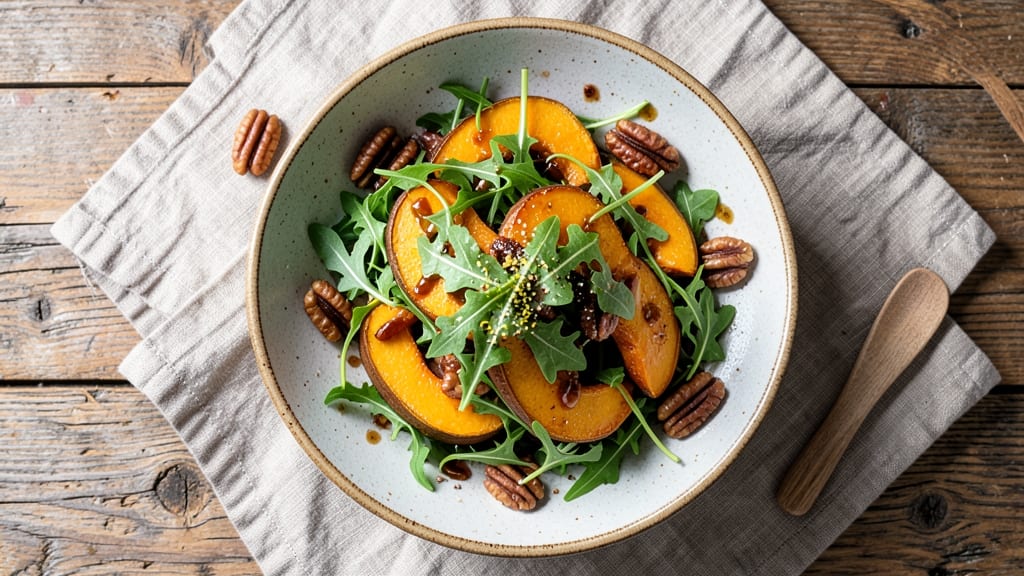
This butternut squash and arugula salad recipe transforms seasonal vegetables into a balanced, restaurant-quality dish that's perfect for fall gatherings or weeknight dinners. 💛 The star is roasted butternut squash, caramelized to sweet perfection, paired with peppery arugula and crunchy walnuts for texture contrast.
The beauty of this salad lies in its simplicity—just 20 minutes of active prep, with most of the work happening in the oven while you toss together the dressing. A tangy maple-Dijon vinaigrette ties everything together, cutting through the richness of the squash while enhancing its natural sweetness.
What you'll end up with is a visually stunning dish that's as nutritious as it is delicious: vibrant orange squash cubes, crisp arugula leaves, toasted walnuts, and shaved parmesan (or vegan alternative).
The warm, spiced notes of the roasted squash complement the peppery bite of arugula, creating a perfect balance of flavors.
This salad holds up beautifully for meal prep, making it ideal for busy weeks. Serve it as a side for roasted meats or as a light main course with crusty bread. The recipe scales easily for crowds, and the ingredients are simple to find at any grocery store.
Ingredients for butternut squash arugula salad
Restaurant-quality ingredients for a salad that balances sweet, peppery, and nutty flavors perfectly.
| Ingredient | Amount | Notes |
|---|---|---|
| Medium Butternut Squash 🎃 | 1 ½ lb | Peeled, cubed into 1-inch pieces |
| Baby Arugula 🌿 | 6 oz | Fresh, stems trimmed |
| Walnuts 🌰 | ½ cup | Toasted, roughly chopped |
| Extra-Virgin Olive Oil 🫒 | ¼ cup | For roasting and dressing |
| Maple Syrup 🍯 | 2 tbsp | Pure, grade B preferred |
| Dijon Mustard 🌶️ | 1 tbsp | High-quality, smooth variety |
| Fresh Lemon Juice 🍋 | 2 tbsp | From 1 small lemon |
| Shaved Parmesan Cheese 🧀 | ¼ cup | Freshly grated from block |
| Ground Cinnamon 🌿 | ¼ tsp | For roasting squash |
| Ground Nutmeg 🌿 | ⅛ tsp | Freshly grated preferred |
| Diamond Crystal Kosher Salt 🧂 | 1 tsp | For seasoning and dressing |
| Freshly Ground Black Pepper 🌶️ | ¼ tsp | Cracked peppercorns preferred |
| Red Wine Vinegar 🍷 | 1 tbsp | For dressing acidity |
The butternut squash is the heart of this dish, so choose a firm, heavy squash with vibrant orange skin—it should feel dense when lifted. Whole Foods or Trader Joe's often carry pre-cubed squash, but if buying whole, roast it first to make peeling easier. For the arugula, organic baby arugula from the grocery store's refrigerated section stays crisp longer than pre-washed bags. The walnuts should be raw, not pre-toasted—toast them yourself for maximum flavor, just 5-7 minutes in a dry pan until fragrant. Cinnamon and nutmeg are non-negotiable for that warm spice profile; Penzeys or McCormick Gourmet blends offer superior quality.
No maple syrup? Agave nectar or date syrup works in a pinch, though the flavor won't be identical. Substituting Dijon mustard? Whole-grain mustard thinned with water mimics the texture, but the tang will differ slightly. For the dressing, if you're avoiding vinegar, lemon juice plus a pinch of sugar creates similar acidity. The Parmesan can be swapped for nutritional yeast for a vegan option, though the umami depth won't match. If walnuts are unavailable, pecans or toasted pumpkin seeds add crunch, though the flavor shifts. Always toast your nuts—cold nuts taste bland, and this salad demands texture contrast.
Roasted squash keeps 4-5 days in the fridge, but the arugula wilts within 2 days, so prep the salad just before serving. Store dressing separately to maintain crispness. For meal prep, roast the squash ahead and store it in an airtight container—reheat gently before assembling. The toasted walnuts stay fresh for 1 week if stored in a sealed container away from light. This salad reheats poorly, so assemble it fresh for the best texture. Portion into individual containers with dressing on the side for easy grab-and-go meals.
Why You'll Love This Recipe
- Roast Once, Eat Twice: The squash roasts in the same pan you’ll toss the salad—no extra dishes, no extra effort. I swear by this trick: roast the cubes until caramelized, then chop them right into the arugula while still warm. The leftovers? Still good for days, especially tucked into wraps or over toast.
- Sweet-Savory Crunch: That maple syrup glaze on the squash? It’s the secret weapon—sticky, caramelized edges that balance the peppery arugula perfectly. Toss in toasted walnuts, and suddenly you’ve got texture, crunch, and a flavor punch that’ll make you forget about takeout.
- Weeknight or Guest Night: Throw it together for a quick lunch or impress dinner guests—same ingredients, different vibes. Add grilled chicken for protein, or keep it veggie-packed for a hearty side. Honestly, I’ve served it at both my kitchen table and a holiday spread, and it never lets me down.
- Budget-Friendly Pantry Magic: You’re using seasonal squash, affordable greens, and walnuts that last forever. The olive oil and maple syrup stretch across multiple meals, and the salad keeps well for up to 3 days. Between us, this is the kind of recipe that makes grocery night less stressful.
Step-by-step instructions for roasted butternut squash and arugula salad
Here's how to balance caramelized sweetness with peppery arugula for a salad that's both hearty and refreshing.
🔥 Step 1: Roast the Butternut Squash to Caramelized Perfection
Preheat your oven to 400°F and line a rimmed baking sheet with parchment paper. Toss the 1.5 lb medium butternut squash cubes with 1 tablespoon of the extra-virgin olive oil, 0.25 teaspoon ground cinnamon, 0.125 teaspoon ground nutmeg, and 0.5 teaspoon diamond crystal kosher salt. Spread them in a single layer—they need space to caramelize, not steam.
Roast for 25-30 minutes until the edges are deep golden brown and a knife slides in easily with minimal resistance. The squash should be tender but still hold its shape slightly. If you see any pieces browning too quickly, rotate the pan for even cooking. This roasting step transforms the squash from bland to sweetly caramelized, forming the salad's flavor foundation.
🍳 Step 2: Toast the Walnuts for Nutty Depth
While the squash roasts, toast the 0.5 cup walnuts in a dry skillet over medium heat for 3-4 minutes, stirring constantly. You're looking for a rich golden color and a toasty aroma—this indicates the oils are releasing and the nuts are developing their signature toasted flavor. Be careful not to burn them; they'll go from perfect to bitter in seconds.
Immediately transfer the toasted walnuts to a bowl and let them cool for 5 minutes. Then roughly chop them with a knife—you want some texture variation, not a fine powder. Set them aside to combine with the warm squash later. The contrast between the warm, toasted walnuts and cool arugula adds dimensional texture to the salad.
👨🍳 Step 3: Whisk the Maple-Dijon Dressing
In a small bowl, whisk together the remaining 2 tablespoons extra-virgin olive oil, 2 tablespoons maple syrup, 1 tablespoon Dijon mustard, 2 tablespoons fresh lemon juice, 1 tablespoon red wine vinegar, 0.5 teaspoon diamond crystal kosher salt, and 0.25 teaspoon freshly ground black pepper. The dressing should be smooth and emulsified—if it looks broken, add 1 teaspoon water and whisk vigorously.
Taste and adjust seasoning: the maple syrup should be balanced by the acidity of the lemon and vinegar, with the Dijon adding depth. This dressing is the secret to tying all the salad's elements together—sweet, tangy, and rich without overpowering the delicate arugula. Let it sit for 2 minutes to allow the flavors to meld before using.
🥘 Step 4: Assemble the Salad with Warm Components
In a large bowl, combine the 6 oz baby arugula with the roasted butternut squash while it's still warm. Add the toasted, chopped walnuts and gently toss everything together. The residual heat from the squash will help distribute the dressing more evenly throughout the salad. Sprinkle the 0.25 cup shaved parmesan cheese over the top—this adds a salty, umami contrast that cuts through the sweetness.
Drizzle the maple-Dijon dressing over the salad and toss gently but thoroughly. The arugula should be coated but still retain its vibrant color. I like to serve this immediately while the squash is still warm, as the temperature contrast enhances the overall experience. The warm squash and walnuts provide heartiness, while the peppery arugula keeps it light and refreshing.
Pro Tips For Making Butternut Squash Arugula Salad
- ROAST SQUASH UNTIL TENDER: I learned this the hard way—overcooked squash turns to mush, and undercooked is just sad. Aim for 35-40 minutes at 400°F (200°C), flipping halfway, until a fork slides in like butter. The edges should be caramelized but still hold shape—no one wants a squash purée in their salad.
- TOAST WALNUTS LOW AND SLOW: Skip the high-heat blitz that burns them before they crisp. Spread walnuts on a sheet pan at 325°F (160°C) for 8-10 minutes, stirring once. They’ll smell like autumn and actually crunch, not taste like gym socks. (Yes, I’ve made that mistake.)
- SALT THE SQUASH BEFORE ROASTING: This isn’t optional—it’s the thing that makes the squash taste like it belongs in a salad, not a side dish. Toss the cubes with 1 tsp salt (and olive oil) before roasting. The salt penetrates while it cooks, balancing the sweetness later. Trust me, your taste buds will notice.
- DRESS Arugula LAST MINUTE: Arugula wilts faster than a politician’s promises. Toss the greens with dressing right before serving—even 5 minutes early makes a difference. If you’re prepping ahead, keep the dressing separate and fold it in just as you plate. Crispy, not sad.
Essential equipment for butternut squash arugula salad
Roasting Pan Essentials
Your rimmed baking sheet is the workhorse of this recipe—it needs to fit in your oven and handle 400°F temperatures without warping. I recommend half-sheet pans (18x13 inches) from Nordic Ware or USA Pan for even heat distribution.
Avoid flimsy disposable pans; they warp and create hot spots that burn your squash. 🔥
Skillet for Toasting
A 10-inch cast-iron skillet (like Lodge) is perfect for toasting walnuts—it retains heat well and distributes it evenly. If you don’t own cast iron, a stainless steel skillet works too, but watch closely to avoid burning.
I avoid nonstick pans for toasting because they can’t handle the high heat needed for proper flavor development.
Mixing Bowls
Use a large, deep mixing bowl (at least 8-inch diameter) for assembling the salad—this prevents spills when tossing. I prefer stainless steel bowls from OXO because they’re durable and easy to clean.
For the dressing, a small glass bowl (like Pyrex) lets you see the emulsification process clearly. Avoid plastic bowls for hot ingredients—they can warp.
Knife & Cutting Board
A sharp 8-inch chef’s knife (I use Wüsthof) is essential for chopping squash and nuts. Pair it with a cutting board that won’t dull your blade—bamboo or plastic (like OXO Good Grips) work well.
For shaving Parmesan, a microplane or box grater gives you the best texture. Never use a dull knife; it’s dangerous and makes prep harder.
Whisk & Measuring Tools
For the dressing, a balloon whisk (like Cuisinart) ensures smooth emulsification. Measure liquids precisely with a liquid measuring cup (I prefer Pyrex) and dry ingredients with a spoon or scale for accuracy.
A small funnel helps transfer oils and syrups without spills. Precision matters here—the dressing’s balance depends on exact measurements.
Optional Upgrades
If you love this salad, consider a mandoline for perfectly even squash slices (set to ¼-inch thickness). For meal prep, glass airtight containers (like Le Creuset) keep components fresh longer.
A digital thermometer (like ThermoWorks) ensures your squash reaches 200°F internal temp for ideal tenderness. These aren’t must-haves, but they elevate the experience. ✨
Nutrition facts
Frequently asked questions
Can I use regular squash instead of butternut?
Butternut squash is ideal for its natural sweetness and texture, but you can substitute acorn or delicata squash in a pinch. These varieties caramelize beautifully and have similar flavors. Just reduce roasting time by 5-7 minutes since they cook faster than butternut. Avoid hubbard or kabocha—they're denser and may not achieve the same tender texture.
How do I store leftovers to keep the arugula crisp?
Store the salad components separately in airtight containers: squash and walnuts for 4-5 days, arugula for 2 days max. Keep dressing in a small jar and assemble fresh before serving. For extra crispness, add a paper towel to the arugula container to absorb moisture. Reheat squash gently in a 350°F oven for 5 minutes before tossing with fresh greens.
What if I don't have Dijon mustard?
Use 1 tablespoon whole-grain mustard mixed with 1 teaspoon water to mimic Dijon's texture, or substitute 1 tablespoon yellow mustard plus ½ teaspoon lemon zest for similar tang. The maple syrup will still shine, but the dressing will have a slightly different depth. For a vegan option, use 1 tablespoon tahini instead—it adds richness that balances the sweetness beautifully.
Can I make this salad ahead of time?
Roast the squash and toast the walnuts 1 day ahead—they keep well in airtight containers. Assemble the salad just before serving to maintain crispness. Store the dressing separately and toss it in right before eating. For a make-ahead breakfast option, serve the warm squash and walnuts over cold arugula with a drizzle of dressing for a temperature contrast that's surprisingly delicious.
Why does my dressing separate?
Dressing separates when the oil and vinegar aren't properly emulsified. Fix it by whisking vigorously or using a small hand mixer for 10 seconds. For prevention, add 1 teaspoon honey or corn syrup to the dressing ingredients—it helps bind the emulsion. If separation happens after tossing, just whisk the dressing again before using. The salad will still taste great!