
Side Dishes
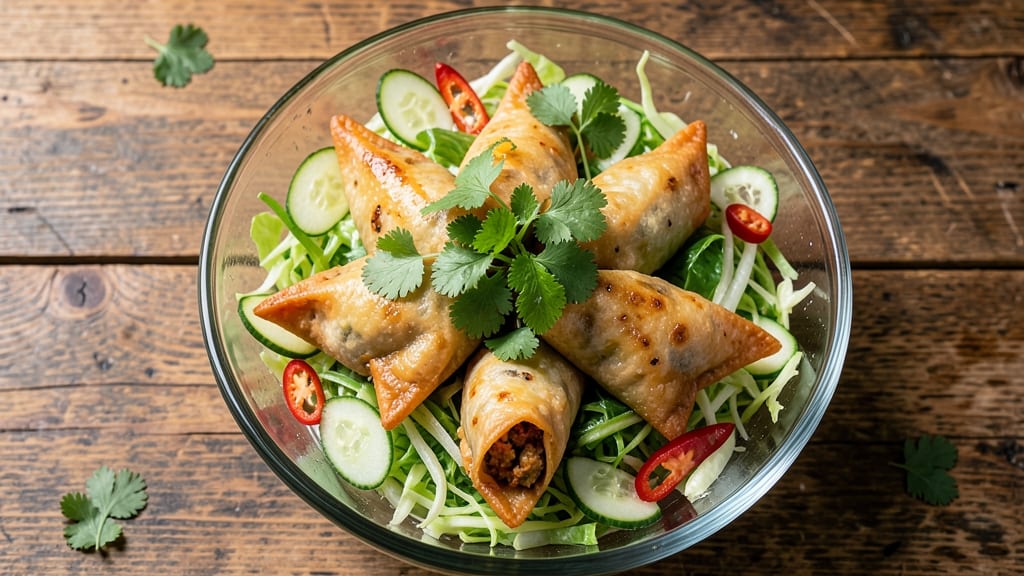
This Burmese samosa salad recipe transforms street food into a restaurant-worthy dish with crispy golden triangles and a tangy tamarind dressing that balances heat and sweetness. The secret lies in perfectly fried samosas—light, airy, and crackling at every bite—paired with fresh cabbage, cucumber, and herbs that add vibrant texture.
I developed this after tasting versions at Yangon markets, where vendors craft these salads with effortless precision.
The salad's magic comes from the tamarind dressing, where fermented tamarind pulp creates that signature tangy depth, while lime and chili add brightness and kick. Each component—crispy samosas, shredded vegetables, and fresh herbs—needs just the right touch to maintain contrast without overwhelming flavors.
What makes this dish special is how it captures Burma's street food soul while being simple enough for home cooks to recreate.
By the time you assemble this salad, you'll have a dish that's visually stunning with its golden triangles nestled among fresh greens, all glistening with the dressing. The texture play—crunchy samosas, crisp vegetables, and soft herbs—makes every bite exciting.
It's the kind of salad that feels indulgent yet light, perfect for warm days or as a side to grilled meats.
Serve it with a side of cucumber raita or spicy chutney to complement the flavors, and watch how quickly it disappears at gatherings. The recipe scales effortlessly, making it ideal for parties or meal prep. Let's bring this Burmese-inspired creation to your table!
Ingredients for burmese samosa salad
Crispy samosas meet fresh veggies and tangy dressing—this salad captures Burma's street food magic at home.
| Ingredient | Amount | Notes |
|---|---|---|
| Store-Bought Samosas (Vegetarian) 🧇 | 24 pieces | Homemade preferred but store-bought works |
| Green Cabbage 🥬 | 4 cups | Shredded, outer leaves removed |
| English Cucumber 🥒 | 1 whole | Thinly sliced, peeled |
| Fresh Cilantro 🌿 | ½ cup | Chopped, stems removed |
| Fresh Mint Leaves 🌿 | ¼ cup | Chopped, stems removed |
| Red Chili Peppers 🌶️ | 2 whole | Thinly sliced, bird's eye or Thai |
| Tamarind Paste 🍯 | ½ cup | Fermented, unsweetened |
| Fresh Lime Juice 🍋 | ¼ cup | Strained, no pulp |
| Granulated Sugar 🍚 | 2 tbsp | Or coconut sugar for depth |
| Vegetable Oil 🫒 | ¼ cup | For frying samosas if homemade |
| Salt 🧂 | 1 ½ tsp | Adjust to taste |
| Toasted Cumin Seeds 🌿 | ½ tsp | For garnish, optional |
The samosas are non-negotiable here—homemade is ideal (use store-bought if needed), but they must be light and crispy. For homemade, vegetable oil is your friend—it gives that signature golden crunch. If you're buying pre-made, check for vegetarian labels (some brands use meat fillings). The cabbage should be crisp and white, not yellowing—look for heads with tightly packed leaves. For the herbs, farmers markets often have fresher cilantro and mint than grocery stores, but the plastic-wrapped kind works in a pinch. The chili peppers? Bird's eye or Thai for authentic heat—adjust to taste if you're sensitive to spice.
No tamarind paste? Lemon juice plus a pinch of sugar gets you close, but the fermented depth is key. Short on lime? Extra lemon juice plus a splash of vinegar works. The sugar balances the tamarind's tang—coconut sugar adds caramel notes if you're feeling fancy. For the veggies, pre-cut coleslaw mix saves time, but fresh-shredded cabbage holds up better. The herbs can be swapped—basil or Thai basil add a different dimension. And if you're making this ahead, store the dressing separately until serving to keep everything crisp.
Samosas stay crispy for about 2 hours at room temperature—serve them immediately if possible. The dressing keeps for 5 days in the fridge, so make extra for other dishes. For meal prep, store components separately: samosas in an airtight container, veggies in a sealed bag with paper towels to absorb moisture, and dressing in a jar. Assemble just before eating to maintain that perfect crunch. Leftovers? Re-crisp samosas in a dry pan for 30 seconds before serving again.
Why You'll Love This Recipe
- No-Chop Night Saved: I swear by this when I’m too tired to julienne—just shred the cabbage and cucumber with a box grater (or buy pre-shredded if you’re really lazy). The samosas do all the work with their crispy, spiced magic, and the mint and cilantro add freshness without fuss.
- Crunchy-Creamy Magic: That contrast? Chef’s kiss. The samosas stay sturdy, the cabbage adds a satisfying bite, and the cucumber keeps it light—like a party in your mouth. Honestly, the dressing (if you use one) just ties it all together without stealing the show.
- Lunchbox Hero: Between us, this is my go-to for packed lunches. The samosas hold up for days, and the veggies stay crisp if you keep them in an airtight container. My kids eat it cold or at room temp—no complaints, just empty containers.
- Budget Crunch Winner: Store-bought samosas cut costs in half compared to making them from scratch, and the rest of the ingredients are pantry staples. I’ve fed four people for under $10, and it still feels special enough for a potluck or last-minute dinner guest.
Step-by-step instructions for Burmese samosa salad
Assemble this vibrant dish where crispy samosas meet a tangy tamarind dressing and fresh vegetables.
Prepare the Vegetable Base
Begin by cutting the 1 whole English cucumber into thin half-moons, discarding the seeds and peeling if desired. Core and thinly slice the 4 cups green cabbage, removing any tough outer leaves. Place both vegetables in a large mixing bowl and sprinkle with 1 teaspoon salt. Toss gently and let sit for 10 minutes to draw out excess moisture.
After resting, drain any liquid that collects at the bottom of the bowl using a fine-mesh strainer. Return the vegetables to the bowl and add the 0.5 cup chopped fresh cilantro and 0.25 cup chopped fresh mint leaves. Mix lightly—just enough to combine without bruising the herbs. The vegetables should remain crisp with a slight sheen from the drained liquid.
Create the Tangy Tamarind Dressing
In a small saucepan, combine the 0.5 cup tamarind paste, 0.25 cup fresh lime juice, 2 tablespoons granulated sugar, and 0.25 cup vegetable oil. Warm over medium-low heat for 3-4 minutes, stirring constantly until the sugar dissolves completely and the mixture thickens slightly. The dressing should coat the back of a spoon but remain pourable.
Remove from heat and let cool for 5 minutes. Stir in 1 teaspoon salt and taste—adjust the sugar or lime juice as needed to balance sweetness and acidity. The perfect dressing should be vibrant, glossy, and tangy enough to cut through the richness of the samosas.
Assemble the Salad
Gently fold the tamarind dressing into the vegetable mixture, reserving 2 tablespoons for drizzling later. Add the 24 pieces store-bought samosas (vegetarian), arranging them on top of the salad rather than mixing them in. The samosas should remain crispy and golden, so avoid crushing them during assembly.
For the final touch, sprinkle the 0.5 teaspoon toasted cumin seeds evenly over the top and drizzle with the reserved dressing. Garnish with thin slices of 2 whole red chili peppers for a subtle heat and visual contrast. Serve immediately while the samosas are still crisp.
Serve with Crispy Perfection
Divide the salad among 6 plates, ensuring each serving includes 4 samosas and an even distribution of vegetables. The contrast of crispy samosas against the cool, tangy vegetables creates the ideal balance of textures and flavors. For extra crunch, serve with additional samosas on the side.
This dish shines when enjoyed fresh, so assemble it just before serving. The tamarind dressing will continue to mellow slightly over time, but the samosas will lose their crispness if left too long. Pair with a cold beverage to complement the bold flavors.
Pro Tips For Making Burmese Samosa Salad
- CRISP THE SAMOSAS FIRST: I learned this the hard way—skipping the crisping step makes the salad soggy. Warm the samosas in a dry skillet over medium heat for 2-3 minutes per side until golden and slightly puffed. The crunch stays longer this way, and the filling warms through without turning mushy.
- SHRED CABBAGE FINE: Thick, uneven shreds turn your salad into a textural disaster. Use the large holes on a box grater or pulse in a food processor for 2 seconds—you want it almost like coleslaw. The finer it is, the better it absorbs the dressing and blends with the samosas.
- DRESSING IN STAGES: Pouring all the dressing at once drowns the samosas and wilts the herbs. Toss half the salad first, let it sit 5 minutes, then fold in the samosas and remaining greens. This keeps the samosas from getting soggy while letting flavors meld.
- SALT THE CUCUMBER: Fresh cucumber oozes water, which ruins the salad’s texture. Toss cucumber slices with ½ teaspoon salt and let sit in a colander for 10 minutes. Rinse and drain well—this removes excess moisture and sharpens the flavor without overpowering the dish.
Pro cooking tips for this dish
Crispy Samosa Secrets
For perfect samosas, fry them in small batches using vegetable oil at 350°F—overcrowding drops the oil temperature and makes them greasy. I use a deep fry thermometer to maintain consistency. If making homemade samosas, seal the edges with a little egg wash before frying for extra crispiness. 🔥
Dressing Balance Tricks
The tamarind dressing needs three key elements: tang (tamarind), sweet (sugar), and acid (lime). I start with equal parts tamarind paste and lime juice, then adjust sugar to taste.
For extra depth, add 1 teaspoon fish sauce (traditional in Burmese cuisine) or 1 teaspoon soy sauce for a vegetarian version. Always taste as you go!
Veggie Prep Hacks
To keep cabbage extra crisp, salt it first and let it sit for 10 minutes before draining. Use a mandoline slicer for even, thin slices—this prevents soggy salad.
For cucumbers, peel and slice them last to avoid browning. Store prepped veggies in a sealed container with paper towels to absorb moisture until assembly.
Plating Like a Pro
Arrange samosas on top of the salad (not mixed in) to showcase their golden crust. Use a small spoon to drizzle dressing artistically—try a zigzag pattern. Garnish with thin chili slices and toasted cumin seeds for color contrast. Serve immediately while samosas are still crackling—this is non-negotiable for texture! ✨
Make-Ahead Tips
Prep the dressing 2 days ahead and store it in the fridge. Fry samosas same-day (they lose crispness overnight). For veggies, store them separately in airtight containers with paper towels.
Assemble just before serving to maintain that crunchy-perfect moment. Leftovers? Re-crisp samosas in a dry skillet for 30 seconds before serving again.
Heat Control Mastery
If your chili peppers are too spicy, balance them with 1 teaspoon honey or 1 teaspoon sugar in the dressing. For milder heat, use Thai bird's eye peppers (seeds removed) instead of fresh red chilies. Always taste the dressing before combining with the salad—adjustments are easier before assembly. 🌶️
Nutrition facts
Frequently asked questions
Can I use store-bought samosas for this recipe?
Store-bought vegetarian samosas work perfectly—just ensure they're light and crispy when fried. For extra authenticity, look for brands with a golden crust and minimal oil absorption. If they're too soft, briefly toast them in a dry pan before adding to the salad.
What if I can't find tamarind paste?
No problem! Mix ¼ cup lemon juice with 1 teaspoon sugar and ½ teaspoon vinegar for a quick substitute. For deeper flavor, add 1 teaspoon soy sauce or a pinch of fish sauce (if not vegetarian). The dressing will be slightly less tangy but still delicious.
How do I keep the samosas crispy when assembling?
Place samosas on top of the salad (don't mix them in) to preserve their crunch. If they start losing crispness, re-crisp them in a dry skillet over medium heat for 20-30 seconds before serving. Avoid soggy dressings—reserve some for drizzling after assembly.
Can I make this salad ahead of time?
Prep the dressing 2 days ahead and store it separately. Fry samosas same-day (they lose crispness overnight). Keep veggies in airtight containers with paper towels to absorb moisture. Assemble just before serving to maintain that perfect texture contrast.
What's the best way to adjust the spice level?
For milder heat, remove seeds from chili peppers or use Thai bird's eye peppers instead. To balance spice, add 1 teaspoon honey or 1 teaspoon sugar to the dressing. Always taste the dressing before combining with the salad for easy adjustments.