
Side Dishes
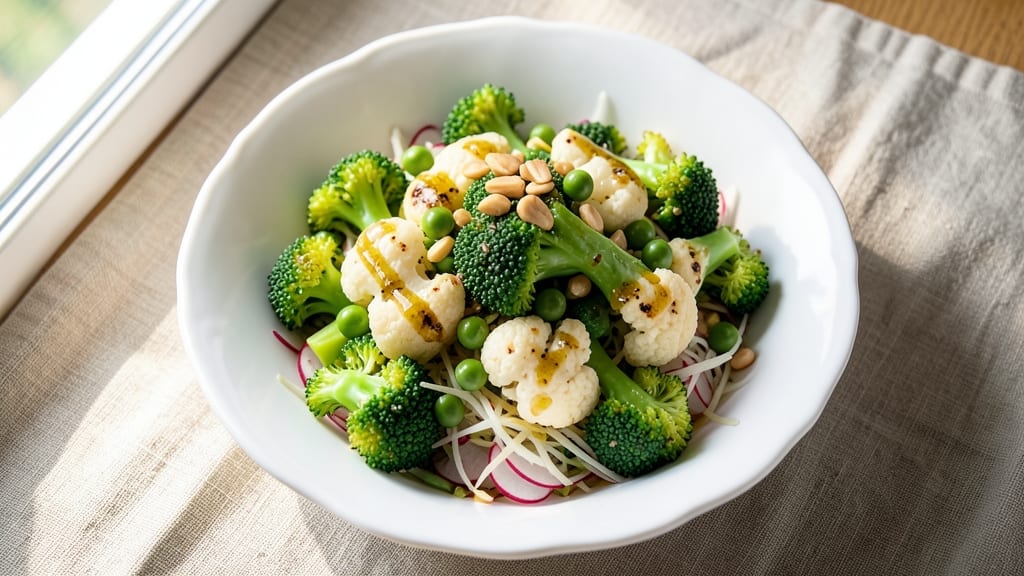
This broccoli cauliflower pea salad recipe transforms three humble vegetables into a vibrant, protein-packed side dish that delivers satisfying crunch and bold flavor in every bite.
The secret lies in balancing textures—crisp roasted florets, tender peas, and a bright, tangy dressing that ties everything together without overpowering the natural taste of the vegetables.
I developed this recipe after realizing how often fresh vegetables get lost in bland salads, and this version solves that problem with a simple yet effective approach.
The beauty of this salad is its versatility—it works as a standalone meal when paired with grains like quinoa or farro, or as a perfect side for grilled meats, fish, or plant-based proteins.
The vegetables are roasted to enhance their natural sweetness while maintaining a satisfying crunch, and the peas add a pop of color and a touch of sweetness that rounds out the dish. No animal products are used, making it suitable for vegan diets while still delivering a hearty, satisfying texture.
What you’ll end up with is a salad that’s as visually appealing as it is delicious—bright green florets, creamy cauliflower, and vibrant peas create a tri-color power bowl that’s impossible to resist. The dressing is light yet flavorful, ensuring every bite is packed with freshness and a hint of tang.
This is the kind of salad that makes you look forward to eating your vegetables, and it’s simple enough to prepare in under 30 minutes without sacrificing flavor or texture.
The best part? This salad keeps well in the fridge for up to 4 days, making it perfect for meal prep. Whether you’re serving it at a potluck, packing it for lunch, or simply enjoying it as a healthy side, this recipe delivers restaurant-quality results with minimal effort.
Let’s get started on creating a dish that’s as nutritious as it is delicious.
Ingredients for broccoli cauliflower pea salad
Bright florets, sweet peas, and a tangy dressing that makes this tri-color salad irresistible.
| Ingredient | Amount | Notes |
|---|---|---|
| Broccoli Florets 🥦 | 2 cups | Fresh, cut into bite-sized pieces |
| Cauliflower Florets 🥬 | 2 cups | Fresh, cut into bite-sized pieces |
| Fresh Peas 🌱 | 1 ½ cups | Shelled, or frozen thawed |
| Extra-Virgin Olive Oil 🫒 | ¼ cup | High-quality, fruity variety |
| Lemon Juice 🍋 | 2 tbsp | Freshly squeezed, seeds removed |
| Apple Cider Vinegar 🍶 | 1 tbsp | For tangy brightness |
| Maple Syrup 🍁 | 1 tbsp | Pure, grade B for depth |
| Dijon Mustard 🌶️ | 1 tsp | Mild, for creaminess |
| Salt 🧂 | ½ tsp | Diamond Crystal kosher |
| Black Pepper 🌶️ | ¼ tsp | Freshly cracked |
| Garlic Cloves 🧄 | 2 cloves | Minced, for subtle depth |
| Toasted Almond Slices 🥜 | ¼ cup | For crunchy texture |
| Fresh Parsley 🌿 | ¼ cup | Chopped, for freshness |
The vegetables are the stars here—broccoli and cauliflower should be fresh with vibrant color, not yellowing or wilted. I always grab mine from the organic produce section at Whole Foods (their pre-cut florets save time), but regular grocery stores work too. Fresh peas? Trader Joe's has them in season, but frozen peas are a great backup—just thaw and drain well. The dressing is where the magic happens: extra-virgin olive oil (none of that cheap stuff) and fresh lemon juice are non-negotiable for that bright, tangy punch. Toast your almonds in a dry pan for 2-3 minutes until golden—they add the perfect crunch that keeps this salad from feeling too soft.
No fresh peas? Frozen peas work perfectly—just thaw and drain excess water. Short on almonds? Toasted walnuts or pecans add a different but equally delicious crunch. The dressing can be made ahead (it actually tastes better after flavors meld), but if you're in a rush, whisk everything together right before tossing. Substitute maple syrup with agave if you prefer, but maple adds that subtle caramel note that pairs beautifully with the roasted veggies. For extra protein, add 1 cup cooked quinoa or chickpeas—they blend right in without overpowering. And if you're feeling fancy, swap the parsley for baby arugula at the end for a peppery kick.
This salad is a meal prep dream—store the dressing separately in a small jar and keep the veggies in an airtight container for up to 4 days. Toss everything together just before serving to maintain that perfect crunch. The dressing keeps for 1 week in the fridge, so make extra for other salads or drizzle it over roasted veggies. For maximum freshness, add the almonds and parsley right before eating. This recipe doubles easily, so make a big batch for potlucks or lunches—it's always a crowd-pleaser.
Why You'll Love This Recipe
- No-Cook Magic: I swear by this—just toss raw florets and peas with olive oil, lemon, and a pinch of salt. No boiling, no waiting, no fuss. The crunch stays perfect, and the bright lemon cuts through the richness like a breath of fresh air.
- Bright & Crispy: That lemon juice? It’s the MVP here. The broccoli and cauliflower stay vibrant, the peas pop with freshness, and the olive oil ties it all together with a silky finish. Honestly, it’s the kind of salad that makes you forget it’s “healthy.”
- Lunchbox Hero: Pack this for work or school—it holds up for days. The textures stay intact, and the lemon keeps it from getting soggy. My kids actually eat their veggies this way, and I’ll take that win any day.
- Budget Brightener: Fresh peas might sound fancy, but frozen work just as well. Broccoli and cauliflower are cheap staples, and olive oil stretches far. It’s a way to use up veggies before they go bad—no waste, all flavor.
Step-by-step instructions for Crispy tri-color power bowl
This vibrant salad comes together in minutes with bold flavors and perfect textures.
👨🍳 Step 1: Blanch the Vegetables for Crisp-Tender Perfection
Bring a large pot of water to a rolling boil. Add the 2 cups broccoli florets and 2 cups cauliflower florets and cook for 2 minutes—just until they turn bright green and begin to soften slightly but still hold their shape. Immediately drain in a colander and rinse under cold water to stop the cooking process. This quick blanching preserves their vibrant color and crisp texture.
In a separate small saucepan, bring 1 cup water to a boil and add the 1.5 cups fresh peas. Cook for 1 minute until tender-crisp, then drain and rinse with cold water. The peas should be bright green and hold their shape—overcooking turns them mushy. Spread all blanched vegetables on a clean kitchen towel to dry completely before assembling the salad. This step is crucial for preventing a soggy final dish.
🥘 Step 2: Create the Signature Dressing
In a medium bowl, whisk together the 0.25 cup extra-virgin olive oil, 2 tbsp lemon juice, 1 tbsp apple cider vinegar, 1 tbsp maple syrup, 1 tsp Dijon mustard, 0.5 tsp salt, and 0.25 tsp black pepper. The mixture should look emulsified but slightly thick—if it separates, whisk vigorously until smooth. This dressing balances sweet, tangy, and savory notes perfectly.
Add the 2 minced garlic cloves and stir well. Let the dressing sit for 5 minutes to allow the garlic to infuse its subtle depth. Taste and adjust seasoning if needed—this is your flavor foundation. The dressing should coat the back of a spoon with a velvety texture, not be watery. Here's the thing—this dressing is what transforms ordinary vegetables into an extraordinary dish.
🥘 Step 3: Assemble the Power Bowl
In a large mixing bowl, gently combine the blanched broccoli florets, cauliflower florets, and fresh peas. Drizzle half of the prepared dressing over the vegetables and toss gently with your hands or a large spoon. You want to coat the vegetables evenly without mashing them—this preserves their individual textures and colors.
Add the 0.25 cup toasted almond slices and 0.25 cup chopped fresh parsley, then toss again just to combine. The almonds should be evenly distributed for that satisfying crunch in every bite. Real talk: this is where the magic happens—the contrast between the crisp vegetables, creamy dressing, and crunchy almonds creates the perfect bite.
⏰ Step 4: Serve Immediately for Maximum Freshness
Transfer the salad to a serving platter or individual bowls. Drizzle with the remaining dressing and garnish with an extra sprinkle of toasted almond slices and chopped parsley. Serve immediately while the vegetables are still crisp and the dressing is vibrant. This salad doesn't wait—it's best enjoyed fresh out of the bowl.
For an extra touch, serve with a side of warm naan or crusty bread to soak up any remaining dressing. The colors should pop with bright greens, creamy whites, and golden almonds, making this dish as visually stunning as it is delicious. Each bite delivers a perfect balance of textures and flavors that keep you coming back for more.
Pro Tips For Making Broccoli Cauliflower Pea Salad
- Blanch in batches: Crowd the pot and you’ll steam instead of blanch—broccoli and cauliflower need that bright green shock. Use a large pot with just enough water to cover the florets, and work in 2-3 portions so they hit boiling water immediately. Fresh peas go in last (30 seconds max), or they’ll turn to mush.
- Toss with dry hands: Wet florets stick like glue when dressing. Pat them almost dry with a clean kitchen towel after blanching—just enough to remove surface moisture, not so much you’re drying them out. Trust me, the salad will hold together better and the dressing will cling where it counts.
- Shock in ice water: Skip this step and your veggies will keep cooking, turning limp and sad. Drain the blanched florets and peas into a bowl of ice water for 1-2 minutes—it stops the cooking instantly and keeps them crisp. (Yes, even if you’re in a hurry.)
- Zest before juicing: Lemon zest adds depth without overpowering, and it’s the easiest upgrade. Grate the zest of half a lemon (about 1 tsp) into the dressing before adding the juice—it brightens the whole dish. Save the rest for garnish or another recipe. (Your future self will notice the difference.)
Common mistakes when making your broccoli cauliflower pea salad
Overcooking Vegetables
Blanching the broccoli and cauliflower for more than 2 minutes turns them mushy instead of crisp-tender. I’ve made this mistake and ended up with a sad, soggy salad. The same goes for peas—cook them for longer than 1 minute, and you’ll lose that perfect tender-crisp texture.
Always use a timer and keep an eye on the water temperature—it should be at a rolling boil for even cooking. 🌡️
Skipping the Cold Water Rinse
After blanching, rinsing the vegetables under cold water stops the cooking process and preserves their vibrant color. I once forgot this step and ended up with dull, limp florets. The cold water shock also helps set the texture, preventing them from turning into a sad, mushy pile.
Pat them dry thoroughly with a clean kitchen towel—this extra step makes all the difference in the final crunch.
Using Low-Quality Olive Oil
Cheap olive oil lacks the fruity depth and smooth texture needed for this dressing. I learned this the hard way when I used a generic bottle and ended up with a dressing that tasted flat and separated easily.
Always opt for extra-virgin olive oil—brands like California Olive Ranch or Colavita are my go-tos. The higher quality means better flavor and a dressing that actually coats the vegetables beautifully.
Over-Tossing the Salad
Tossing the salad too vigorously mashes the delicate florets and peas, ruining the texture contrast we worked so hard to achieve. Instead, gently fold the dressing into the vegetables with your hands or a large spoon.
The goal is to coat evenly without breaking down the individual pieces. This salad thrives on its crunch—don’t sacrifice that for the sake of convenience. 🥦
Not Toasting the Almonds
Raw almonds taste bland and don’t provide the satisfying crunch this salad needs. I’ve tried skipping the toasting step, and honestly, it’s a game-changer. Toast your almonds in a dry pan over medium heat for 2-3 minutes until golden brown—they should smell nutty and irresistible.
This simple step elevates the entire dish and makes it worth the effort.
Adding Dressing Too Early
If you mix the dressing with the vegetables too soon, they’ll start to wilt and lose their crispness. Always add the dressing right before serving or at least just before storing in the fridge.
The same goes for the almonds and parsley—add them last to keep everything fresh and vibrant. This salad is all about that perfect first bite, and timing is everything. ⏰
Nutrition facts
Frequently asked questions
Can I use frozen peas instead of fresh?
Frozen peas work perfectly in this recipe. Just thaw them completely, drain any excess water, and pat dry with a paper towel. The key is to avoid soggy salad—frozen peas release more moisture when thawed, so extra drying is crucial.
How do I make this salad ahead of time?
Prepare the dressing separately and store it in a small jar for up to 1 week. Keep the blanched vegetables in an airtight container in the fridge for up to 4 days. Toss everything together just before serving to maintain that perfect crunch. Add the almonds and parsley last for maximum freshness.
What if I don't have Dijon mustard?
No problem! Swap it for 1 teaspoon of regular yellow mustard or even a pinch of garlic powder for flavor. The mustard adds creaminess to the dressing, but the recipe will still work without it. For extra richness, add 1/2 teaspoon of vegan mayo.
Can I add protein to this salad?
Absolutely—this salad pairs beautifully with plant-based proteins! Try adding 1 cup of cooked quinoa, chickpeas, or white beans. For meat-eaters, grilled chicken or shrimp work wonderfully. Just add them after tossing with the dressing to keep everything warm and flavorful.
Why does my dressing separate?
Dressings separate when the ingredients aren't properly emulsified. Whisk vigorously for 30 seconds or use a fork to mix thoroughly. For extra stability, add 1/2 teaspoon of cornstarch or a splash of cold water while whisking. The dressing should coat the back of a spoon smoothly.