
Salads
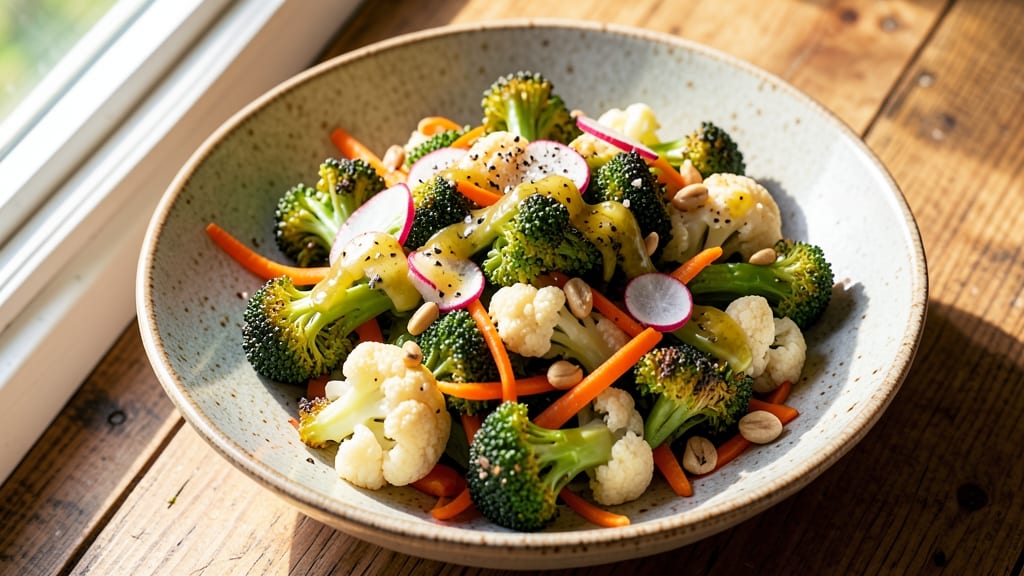
This broccoli cauliflower carrot salad recipe transforms simple vegetables into a vibrant, textured medley that’s packed with flavor and nutrition. The secret lies in the citrus-herb vinaigrette, which brightens the natural sweetness of the carrots while balancing the earthy tones of the broccoli and cauliflower.
I developed this recipe to create a dish that’s as satisfying as it is healthy—perfect for meal prep or a refreshing side dish.
The salad’s beauty comes from its crunchy texture contrast, achieved by roasting the broccoli and cauliflower for a subtle caramelization while keeping the carrots fresh and crisp.
The dressing, made with lemon juice, olive oil, and fresh herbs, ties everything together with a zesty kick that cuts through the richness of the vegetables. It’s a foolproof method that delivers restaurant-quality results without the fuss.
What you’ll end up with is a colorful, nutrient-packed salad that’s as visually appealing as it is delicious. The combination of roasted and raw vegetables creates a satisfying bite, while the dressing adds a tangy brightness that makes every forkful irresistible.
This dish is versatile—serve it as a side, a light lunch, or even a base for grain bowls.
Best of all, it’s easy to customize with optional add-ins like toasted almonds, pumpkin seeds, or a sprinkle of feta for extra protein. The recipe scales effortlessly, making it ideal for feeding a crowd or prepping for the week ahead. Let’s get started!
Ingredients for broccoli cauliflower carrot salad
Fresh vegetables and bright citrus dressing transform simple ingredients into a restaurant-worthy salad.
| Ingredient | Amount | Notes |
|---|---|---|
| Broccoli Florets 🥦 | 4 cups | Fresh, cut into bite-sized pieces |
| Cauliflower Florets 🥬 | 4 cups | Fresh, cut into bite-sized pieces |
| Carrots 🥕 | 3 medium | OR 1.5 cups julienned |
| Extra-Virgin Olive Oil 🫒 | ½ cup | For roasting vegetables |
| Fresh Lemon Juice 🍋 | ¼ cup | Freshly squeezed |
| Dijon Mustard 🍯 | 1 tbsp | For vinaigrette |
| Fresh Flat-Leaf Parsley 🌿 | ¼ cup | Chopped, for dressing |
| Fresh Dill 🌿 | ¼ cup | Chopped, for dressing |
| Salt 🧂 | 1 tsp | Diamond Crystal preferred |
| Black Pepper 🌶️ | ½ tsp | Freshly ground |
| Toasted Almonds 🥜 | ½ cup | Optional, for crunch |
| Pumpkin Seeds 🎃 | ¼ cup | Optional, for crunch |
| Vegan Feta Cheese 🧀 | ½ cup | Optional, crumbled |
The broccoli and cauliflower are the stars here—look for heads with tight florets at the grocery store, as they roast best. Whole Foods and Trader Joe's carry pre-cut florets for convenience, but whole heads let you trim the tough stems. Carrots should be crisp with vibrant color; orange is ideal, but purple or yellow varieties add visual interest. For the dressing, extra-virgin olive oil is non-negotiable—its peppery notes elevate the dish. If you can't find fresh dill, dried dill at one-third the amount works in a pinch, though fresh is preferred for brightness.
No Dijon mustard? Yellow mustard thinned with water mimics the tang, though the texture differs slightly. Substituting white balsamic vinegar for lemon juice deepens the richness but sacrifices freshness. For the optional add-ins, toasted almonds from the bulk section provide the best crunch—avoid pre-packaged nuts, which oxidize quickly. Pumpkin seeds can be swapped for sunflower seeds, though they lack the earthy depth. The vegan feta? Follow Your Heart brand melts beautifully and stays crumbly when chilled.
Roasted vegetables hold for 3 days in the fridge, though texture softens over time. The dressing keeps for 5 days if stored separately in an airtight container. For meal prep, assemble the salad just before serving to preserve crispness. The raw carrots stay fresh for 1 week when wrapped in a damp towel. Freezing isn't recommended for the vegetables—they become mushy, but the dressing can be frozen for 3 months if you omit the herbs and add them fresh when using.
Why You'll Love This Recipe
- No Chopping Chaos: I swear by this one—just toss in florets and shredded carrots raw, no knife skills required. The crunch comes from the raw veggies, so you skip the whole "overcook and lose texture" game.
- Bright Crunch Magic: That lemon juice and olive oil combo? Chef’s kiss. The carrots stay crisp, the cauliflower gets a light char if you roast it (or skip it—raw works too), and the broccoli holds its snap. It’s fresh, tangy, and never boring.
- Lunchbox Hero: Between us, this is my go-to for packed lunches or potlucks. Drizzle extra lemon before serving, and it stays fresh for days. Honestly, I’ve had it cold, at room temp, and even reheated—still tastes like a million bucks.
- Pantry Stash Winner: You already have these ingredients? Done. Broccoli, cauliflower, and carrots are cheap staples, and olive oil and lemon juice last forever. It’s the kind of salad that won’t break the bank or leave you scrambling for ingredients.
Step-by-step instructions for crispy roasted veggie salad
Transform ordinary vegetables into a restaurant-worthy salad with perfect texture and vibrant flavors.
Prep and Roast the Vegetables
Preheat your oven to 425°F and line two large baking sheets with parchment paper. Arrange the 4 cups broccoli florets and 4 cups cauliflower florets in even single layers on one sheet. Toss them with 2 tablespoons of the 0.5 cup extra-virgin olive oil, 0.5 teaspoon of the 1 teaspoon salt, and 0.25 teaspoon of the 0.5 teaspoon black pepper.
Cut the 3 medium carrots into matchsticks or thin julienne strips (about 1.5 cups total) and spread them on the second baking sheet. Toss with the remaining 3 tablespoons of olive oil, the remaining 0.5 teaspoon salt, and remaining 0.25 teaspoon black pepper. Roast both sheets for 20-25 minutes until the edges are deep golden brown and the vegetables are tender when pierced with a fork.
Here's the thing—don't overcrowd the pans. If you do, the vegetables will steam instead of roast, resulting in soggy instead of crispy textures. I like to spread them out so they have room to caramelize properly. Remove from oven and let cool slightly before combining.
Make the Citrus-Herb Vinaigrette
While the vegetables roast, whisk together the 0.25 cup fresh lemon juice, 1 tablespoon Dijon mustard, and remaining 1 tablespoon of olive oil in a medium bowl. Gradually whisk in the remaining 3 tablespoons of olive oil until emulsified. Add the 0.25 cup chopped fresh flat-leaf parsley and 0.25 cup chopped fresh dill and stir to combine.
Taste the dressing and adjust seasoning with additional salt or pepper if needed. The dressing should be bright, tangy, and perfectly balanced—not too sharp from the lemon or too heavy from the mustard. This is your flavor foundation, so take your time getting it right. The herbs should be finely chopped but still visible, adding both texture and aroma to each bite.
Combine All Ingredients
In a large mixing bowl, gently combine the cooled roasted vegetables, 0.5 cup toasted almonds, and 0.25 cup pumpkin seeds. Drizzle the vinaigrette over the vegetables and toss gently with tongs or a large spoon. Be careful not to overmix—you want to preserve the individual textures of each component.
Add the 0.5 cup vegan feta cheese (if using) and toss lightly just to distribute. The cheese should crumble evenly throughout the salad. If you prefer a creamier texture, add a splash of water or lemon juice to the vinaigrette before tossing. The salad should look vibrant with deep golden roasted vegetables, bright green herbs, and crunchy nuts and seeds.
Serve Immediately for Best Texture
Transfer the salad to a large platter and serve immediately while the vegetables are still warm from roasting. The contrast between the warm, crispy roasted vegetables and the cool, tangy dressing creates an incredible textural experience. If you need to serve later, refrigerate for up to 2 hours, but the texture will be best when served fresh.
For an extra touch, garnish with additional fresh herbs or a sprinkle of flaky salt before serving. This salad holds up well for lunches or as a side dish for dinner, and the flavors actually improve as the dressing marinates into the vegetables over time. The key to success is proper roasting—don't skip this step, as it transforms the vegetables from bland to extraordinary.
Pro Tips For Making Broccoli Cauliflower Carrot Salad
- CUT VEGETABLES UNIFORM: Broccoli and cauliflower florets should be roughly the same size—about 1-inch chunks—so they cook evenly. I learned this the hard way when my cauliflower turned mushy while the broccoli stayed crisp. A sharp knife and steady hand make this faster than you’d think.
- ROAST AT 425°F: High heat is non-negotiable here—anything lower and the carrots will steam instead of caramelize. Toss the veggies in olive oil and salt before spreading them on the sheet pan, then roast for 20-25 minutes until the edges are golden. No flipping needed; just let them crisp in one layer.
- SALT THE CARROTS FIRST: Carrots absorb salt like sponges, so toss them with a pinch of salt and a drizzle of olive oil before adding the broccoli and cauliflower. This keeps them from turning bland while the other veggies roast. (Yes, even if you’re impatient like me.)
- DRESS AFTER COOLING: Warm veggies release moisture, which dilutes your lemon dressing. Let the roasted mix cool for 10 minutes first—just until you can handle it—then toss with the olive oil and lemon. The flavors will cling better, and you’ll avoid a soggy salad. (Your future self will thank you.)
Serving suggestions for broccoli cauliflower carrot salad
Plating Presentation
Serve this vibrant salad on a large wooden board or slate platter to highlight its natural colors and textures. I like to mound the roasted vegetables in the center and scatter the toasted almonds and pumpkin seeds around the edges for visual appeal.
A drizzle of extra vinaigrette along the perimeter adds a professional touch while keeping the salad moist. 💫
Garnishing Ideas
Add fresh edible flowers like nasturtiums or microgreens for a pop of color and delicate flavor. A sprinkle of flaky Maldon salt enhances the caramelized notes from roasting. For a citrusy finish, zest a lemon wedge over the top just before serving—it adds a bright aroma and visual contrast.
Meal Pairings
This salad pairs beautifully with grilled proteins like chicken or tofu for a complete meal. For a vegan spread, serve alongside quinoa bowls or farro salads. The roasted vegetables also complement hearty dishes like mushroom risotto or black bean tacos by balancing richness with freshness.
Portioning Tips
For individual servings, divide the salad into 4 equal portions using a ring mold or ladle. Garnish each serving with a small sprig of fresh dill and a pinch of toasted almonds.
For buffet-style serving, use a large glass bowl to showcase the layers of color and texture. Keep the dressing on the side for customization.
Serving Occasions
This salad shines at summer picnics, potlucks, or as a light lunch on warm days. Its fresh ingredients and bright flavors make it perfect for holiday gatherings or weeknight dinners. For a restaurant-worthy touch, serve with a side of crusty bread or warm pita for dipping.
Leftovers Strategy
Store leftovers in an airtight container with parchment paper between layers to maintain crispness. Reheat gently in the microwave for 30 seconds and toss with a splash of water or lemon juice to revive texture. The dressing can be stored separately and mixed fresh before serving to prevent sogginess. 🌿
Nutrition facts
Frequently asked questions
Can I use raw carrots instead of roasted?
While roasting adds sweetness and texture, raw carrots work beautifully for a crisp, refreshing bite. Simply julienne them thinly and add them to the salad just before serving to preserve their crunch. For extra flavor, toss with a pinch of salt and a squeeze of lemon juice before mixing.
How do I make this salad nut-free?
Skip the almonds and pumpkin seeds, or swap them for sunflower seeds or toasted chickpeas for a nut-free crunch. For extra protein, add chopped edamame or white beans. The dressing and roasted veggies will still provide plenty of flavor and texture without nuts.
Can I prep this salad ahead of time?
Yes, but with a few tweaks! Roast the vegetables 1 day ahead and store them in an airtight container. Make the dressing separately and keep it refrigerated. When ready to serve, toss everything together and let it sit for 10 minutes to marry the flavors. Add raw carrots fresh for maximum crunch.
What if I don't have Dijon mustard?
No problem! Mix 1 tablespoon yellow mustard with 1 teaspoon water to mimic Dijon's tang. For a sweeter option, use 1 tablespoon honey or maple syrup instead. The dressing will still taste bright and balanced—just slightly different in texture.
Is this salad kid-friendly?
With a few adjustments, absolutely! Skip the vegan feta and reduce the lemon juice slightly to mellow the flavor. Cut the roasted veggies into smaller pieces and mix in mild ingredients like shredded cucumber or avocado. Kids often prefer familiar textures, so start with just the roasted carrots and cauliflower.