
Sauces & Condiments
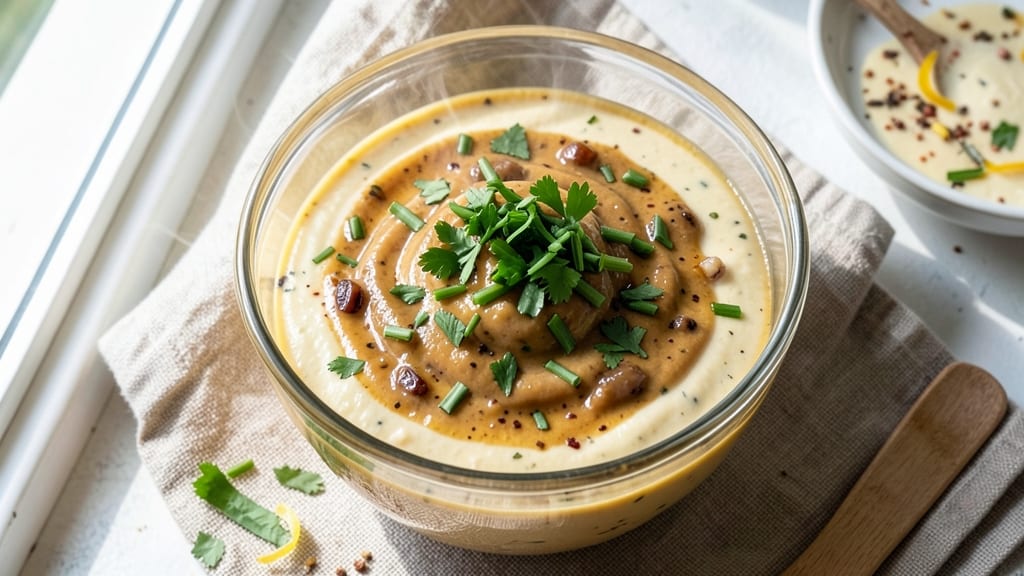
This Boursin salad dressing recipe transforms creamy herb cheese into a velvety, tangy dressing that elevates every salad—no store-bought shortcuts needed. The secret lies in blending softened Boursin with sharp Dijon mustard, minced shallots, and fresh herbs, then emulsifying with a slow drizzle of olive oil.
I developed this after craving that signature French herbed richness without the heaviness of traditional creamy dressings.
The magic happens in the emulsification: whisking the wet and dry ingredients separately before combining creates a stable, clingy dressing that won’t separate. A splash of white wine vinegar brightens the garlic-onion base, while fresh chives and parsley add freshness.
This dressing clings beautifully to greens, grains, and proteins—think grilled chicken or roasted vegetables—without overpowering delicate flavors.
What sets this apart is the balance of textures: the Boursin provides creamy richness, while the vinegar and herbs cut through the fat for a sophisticated bite. The dressing keeps for up to a week in the fridge, making it perfect for meal prep.
Store it in a sealed jar, giving it a gentle shake before each use to maintain that perfect emulsion.
For extra depth, infuse the olive oil with garlic before emulsifying, or swap shallots for finely diced red onion. This dressing works equally well on warm grain bowls, crudité platters, or as a dip for fresh bread. Let’s make it—your salads will never be the same.
Ingredients for boursin salad dressing
Ten ingredients transform simple pantry staples into restaurant-quality salad dressing.
| Ingredient | Amount | Notes |
|---|---|---|
| Boursin Herb Cheese 🧀 | ½ cup | Softened to room temperature |
| Dijon Mustard 🌶️ | 2 tbsp | Sharp, high-quality variety |
| Shallots 🧅 | 2 whole | Finely minced, not chopped |
| Garlic Cloves 🧄 | 3 cloves | Minced into fine paste |
| Fresh Chives 🌿 | ¼ cup | Finely chopped, stems included |
| Fresh Parsley 🌿 | ¼ cup | Finely chopped, flat-leaf preferred |
| Extra-Virgin Olive Oil 🫒 | ½ cup | Light, fruity variety preferred |
| White Wine Vinegar 🍷 | 1 tbsp | Dry, crisp variety |
| Diamond Crystal Kosher Salt 🧂 | ½ tsp | Fine grain preferred |
| Freshly Ground Black Pepper 🌶️ | ¼ tsp | Coarsely ground |
The Boursin is non-negotiable here—look for the herb-infused version at specialty cheese counters or Whole Foods for optimal flavor. The cheese should be soft but not melted, with a vibrant green speckling from the herbs. Trader Joe's carries a good quality version if you prefer convenience. For the shallots, French shallots from the produce section have the best sweetness, but regular shallots work in a pinch. The garlic matters too—freshly minced releases more aroma than pre-minced, which can taste bitter. If you're short on time, garlic-infused olive oil from the gourmet section adds depth without extra effort.
No Dijon mustard? Whole-grain mustard thinned with 1 tsp water works, though the texture will differ slightly. Fresh herbs wilt fast, so dried chives or parsley at one-third the amount can substitute in a bind. The white wine vinegar can be swapped for apple cider vinegar, though it adds a subtle sweetness. For extra richness, add 1 tsp crème fraîche to the emulsion. If your dressing separates, whisk in 1 tsp additional olive oil to restore stability. The emulsification technique is critical—whisk wet ingredients first, then slowly drizzle oil while whisking vigorously to prevent breaking.
This dressing maintains its perfect emulsion for up to 7 days when stored in an airtight jar in the fridge. Give it a gentle shake before each use to redistribute any separated oil. For meal prep, portion into small jars—2 tbsp servings work perfectly for individual salads. Freeze for up to 3 months by layering with parchment paper between each 2 tbsp portion. Thaw in the fridge overnight. The dressing thickens slightly when chilled, so add 1 tsp water or vinegar to thin if needed after refrigeration.
Why You'll Love This Recipe
- Five-Ingredient Magic: I swear by this one—just blend, drizzle, and done. No fancy techniques, no last-minute grocery runs. The Boursin does all the heavy lifting while I chop shallots in under two minutes.
- Herb Bomb Flavor: That creamy Boursin meets tangy Dijon and fresh chives? It’s like a French bistro in a jar. The garlic and shallots add depth without overpowering—just rich, herby satisfaction.
- Salad’s Best Friend: Dressing a simple green salad? Perfect. Tossing with roasted veggies? Even better. I’ve used it on grilled chicken and charcuterie boards—it’s the unsung MVP of any spread.
- Leftovers That Work: Make a double batch—it keeps for days in the fridge. The flavor only gets better as the mustard and herbs meld. Honestly, I’ve had it last a full week, and it’s still the star of my lunches.
Step-by-step instructions for herb-infused onion & garlic dressing
This dressing delivers bold, layered flavor through precise technique and fresh ingredients.
Prep the Aromatics for Maximum Flavor
Peel and finely mince the 2 whole shallots and 3 cloves garlic into a food processor bowl. I like to use the pulse function for 10-12 seconds until you achieve a smooth, paste-like consistency—this ensures even distribution throughout the dressing. The texture should resemble wet sand with no visible chunks.
Transfer the minced shallot and garlic to a small mixing bowl. Add the 0.25 cup fresh chives and 0.25 cup fresh parsley, then chop them together with a sharp chef's knife until you achieve a fine, uniform texture. This step is crucial for achieving that signature herbaceous brightness in every bite. The stems from the chives add subtle earthiness that complements the richness of the Boursin.
Emulsify the Base Ingredients
In a separate bowl, combine the 0.5 cup softened Boursin Herb Cheese with the 2 tbsp Dijon Mustard. Using a hand mixer or whisk, blend these ingredients together until completely smooth and homogeneous. The mixture should be thick and creamy with no visible streaks of mustard. This emulsification process creates the foundation for your dressing's rich, velvety texture.
Gradually drizzle in the 0.5 cup extra-virgin olive oil while continuing to mix on medium speed. Begin slow to prevent splattering, then increase to high speed for 30-45 seconds until the mixture thickens noticeably. You're looking for a mayonnaise-like consistency that clings to the whisk or mixer blade. The oil should be fully incorporated without any separation.
Incorporate Acid and Seasonings
Add the 1 tbsp white wine vinegar to the emulsified base and mix for an additional 15-20 seconds. The vinegar brightens the flavors and balances the richness of the Boursin. Taste the mixture at this stage—you should detect the sharpness of the vinegar cutting through the creamy elements. If it's too acidic, you can add a tiny pinch of the 0.5 tsp Diamond Crystal Kosher Salt to round out the flavor profile.
Next, incorporate the finely chopped herb mixture and season with the 0.25 tsp freshly ground black pepper. Mix thoroughly until the herbs are evenly distributed throughout the dressing. The final texture should be smooth with visible herb flecks that add both visual appeal and aromatic complexity. This is where the dressing comes together—each component should be harmoniously blended without overpowering any single element.
Rest and Adjust for Perfect Consistency
Transfer the dressing to a clean, airtight container and let it rest at room temperature for 15-20 minutes. This resting period allows the flavors to meld and the dressing to reach its optimal consistency. During this time, the ingredients will marry more completely, resulting in a more cohesive flavor profile.
After resting, give the dressing one final taste. If it needs adjusting, you can thin it with 1-2 teaspoons of water or additional white wine vinegar for a lighter consistency, or add a small dollop of softened Boursin if it's too thin. The dressing should coat the back of a spoon without being overly thick. When properly balanced, each spoonful should deliver a perfect harmony of creamy, tangy, and herby notes that elevate any salad or vegetable dish.
Pro Tips For Making Boursin Salad Dressing
- SOFTEN THE BOURSIN FIRST: Take the Boursin out of the fridge 15 minutes before using—it’s easier to mix when slightly softened, and you’ll avoid lumps that scream "amateur." I used to force it straight from the fridge, and the dressing always ended up grainy no matter how much I stirred.
- MINCE THE SHALLOTS FINE: Don’t chop the shallots—mince them like you’re prepping for a salsa. Tiny pieces dissolve into the dressing instead of sitting as sharp little surprises. I learned this after biting into a shallot chunk in my first batch and nearly spat it out.
- TEMPER THE GARLIC: Smash the garlic cloves with the flat side of your knife before mincing—it softens them and prevents that bitter, raw bite. No need to cook it; just release the oils by crushing first. Trust me, your dressing won’t taste like a garlic punch to the face.
- WHISK IN STAGES: Start with the mustard and softened Boursin, then whisk in the shallots and garlic slowly while adding oil. Dumping everything at once turns your dressing into a clumpy mess. Think "slow and steady," like you’re painting a masterpiece, not slinging paint.
Common mistakes when making your boursin salad dressing
Skipping the Emulsification
One of the biggest mistakes is rushing the emulsification step. Many home cooks pour oil directly into the bowl and whisk frantically, only to end up with a broken dressing that separates into oil and cheese layers.
The key is to whisk the wet ingredients—Boursin and Dijon—until completely smooth before adding oil. I’ve seen this happen when people use a blender instead of a whisk or hand mixer, which can overheat and cook the garlic, making the dressing taste bitter. 🌡️
Using Cold Ingredients
Another common error is using cold Boursin straight from the fridge. Cold cheese doesn’t emulsify properly, leading to clumps and a grainy texture. Always let the Boursin soften to room temperature—about 30 minutes at room temp or 10 minutes in warm water.
I learned this the hard way when my first batch turned out lumpy. Pro tip: Gently warm the Boursin in a bowl set over hot (not boiling) water for even softer results.
Over-Mincing the Aromatics
Too many cooks turn their shallots and garlic into a paste, which can make the dressing bitter. The goal is a fine, even texture—not a smooth puree. Use a sharp knife and chop the shallots and garlic into tiny, even pieces, about 1/8-inch in size.
I’ve found that a food processor set to pulse for 10-12 seconds works best. Over-processing releases harsh allicin compounds, which can overpower the delicate Boursin flavor.
Ignoring the Resting Time
Skipping the 15-20 minute resting period is a game-changer for flavor development. Many people taste the dressing immediately after mixing and assume it’s done, only to find the flavors uneven or the texture unstable. During this time, the dressing thickens slightly and the flavors meld.
I always let mine sit while I prep the rest of my meal—it’s worth the wait for that perfect balance of creaminess and tang.
Using Low-Quality Oil
Not all olive oils are created equal, and using a cheap or heavily processed oil can ruin your dressing. Opt for a light, fruity extra-virgin olive oil with a high polyphenol content—brands like California Olive Ranch or Colavita work well.
These oils emulsify better and add subtle fruity notes that complement the Boursin. I avoid heavily flavored oils, like those infused with garlic or herbs, as they can compete with the dressing’s natural flavors.
Forgetting to Taste Early
Many cooks wait until the very end to taste their dressing, only to realize it’s too salty, acidic, or bland. Taste it after adding the vinegar and adjust immediately—it’s much easier to fix flavors early than to try and salvage an over-seasoned batch.
I like to taste at three key stages: after emulsifying the Boursin and mustard, after adding the vinegar, and after incorporating the herbs. This way, I can tweak the balance before the dressing sets.
Nutrition facts
Frequently asked questions
Can I substitute Boursin with another cheese?
Yes! For a similar creamy texture, try herb goat cheese or soft goat cheese (like chèvre). If you prefer a sharper flavor, cream cheese mixed with 1 tsp lemon zest works well. Avoid hard cheeses like cheddar—they won’t blend smoothly. The key is a soft, spreadable cheese with herbs for that signature richness.
Why did my dressing separate?
Separation usually happens when the oil isn’t emulsified properly. Start fresh by whisking the wet ingredients (Boursin + mustard) until completely smooth, then slowly drizzle oil while whisking vigorously. If it’s already separated, whisk in 1 tsp additional olive oil or a pinch of Dijon mustard to restore the emulsion. For stubborn cases, blend briefly with a hand mixer.
How can I make this dressing spicier?
Add ½ tsp smoked paprika or a pinch of cayenne for heat, or stir in 1 tbsp finely chopped jalapeño seeds (remove seeds for mild heat). For depth, swap white wine vinegar for red wine vinegar—it’s naturally bolder. Always taste before adding more, as spices can intensify as the dressing rests.
Is this dressing vegan-friendly?
Not as written, but you can easily adapt it! Replace Boursin with ¼ cup vegan cream cheese + 2 tbsp nutritional yeast for a cheesy flavor. Use vegan Dijon mustard and ensure your olive oil is certified vegan. The texture will be slightly lighter but still creamy and tangy.
Can I use this dressing on cooked dishes?
It’s perfect for drizzling over grilled chicken, roasted vegetables, or even as a dip for warm bread. The rich, herby flavor pairs beautifully with proteins and carbs. For extra shine, warm the dressing gently (don’t boil) before serving—it enhances the aromatics.