
Salads
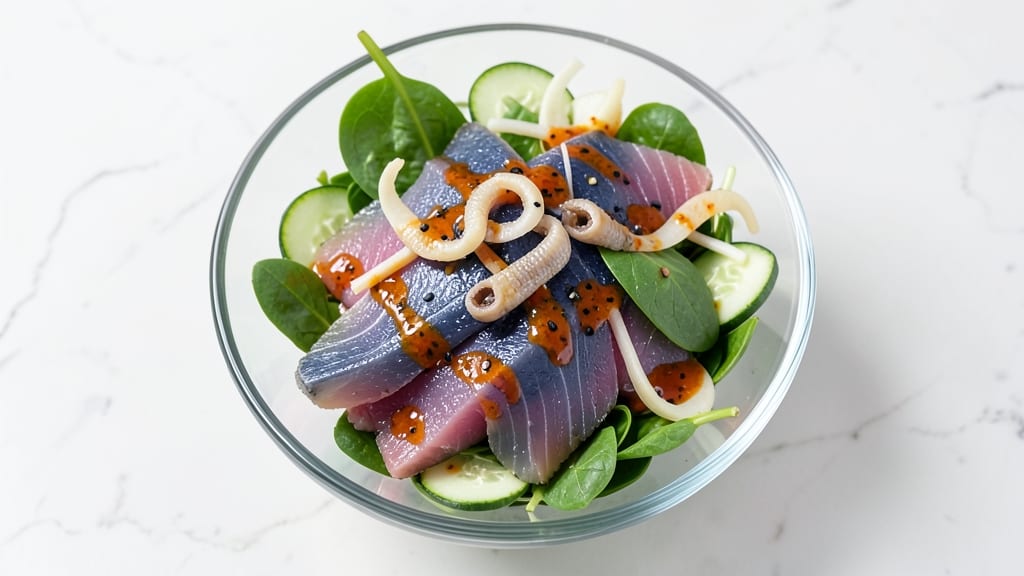
This bluefin tuna salad recipe transforms delicate ocean flavors into a restaurant-worthy dish that balances umami, citrus, and crisp texture. The secret lies in using sashimi-grade tuna—freshly seared for subtle warmth while maintaining melt-in-your-mouth tenderness.
What sets this apart is the anchovy-zing dressing, where fermented anchovies and yuzu kosho create a bright, salty-sweet contrast that elevates every bite.
Assembling the salad requires precision: thinly sliced tuna sits atop a bed of delicate greens, paired with crisp cucumber, radish, and toasted sesame seeds for crunch. The dressing ties it all together, its tangy depth cutting through the richness of the tuna while preserving its natural sweetness.
This isn’t just a salad—it’s a celebration of freshness, where technique meets simplicity to deliver a dish that feels both luxurious and effortless.
Perfect for summer entertaining or a refined weeknight dinner, this recipe pairs beautifully with chilled sake or a crisp white wine. The balance of textures—silky tuna, crisp vegetables, and toasted seeds—ensures each bite is satisfying, while the dressing’s complexity keeps it intriguing.
Whether served as a light main or elegant appetizer, it’s designed to impress without sacrificing ease.
For those who love fusion flavors, consider adding avocado or a drizzle of spicy mayo for extra richness. The key is keeping the tuna fresh and the ingredients vibrant—this salad shines when every component is at its peak.
Let’s bring the ocean to your table in a way that’s both bold and balanced.
Ingredients for bluefin tuna salad
Fourteen ingredients transform delicate bluefin into a restaurant-worthy salad with ocean-fresh crunch and umami depth.
| Ingredient | Amount | Notes |
|---|---|---|
| Sashimi-Grade Bluefin Tuna 🐟 | 1 lb | Thinly sliced against grain |
| Baby Spinach 🌿 | 4 cups | Fresh, vibrant leaves only |
| Persian Cucumber 🥒 | 1 whole | Thinly sliced, seeds removed |
| Daikon Radish 🥕 | ½ lb | Thinly julienned, crisp texture |
| Anchovy Fillets 🐟 | 6 whole | High-quality, fermented |
| Yuzu Kosho 🍋 | 2 tbsp | For authentic citrus-spice balance |
| Extra-Virgin Olive Oil 🫒 | ¼ cup | Light, fruity variety preferred |
| Rice Vinegar 💧 | 1 ½ tbsp | Seasoned preferred for depth |
| Toasted Sesame Seeds 🌰 | 2 tbsp | Lightly toasted for aroma |
| Fresh Lemon Juice 🍋 | 1 tbsp | Bright, freshly squeezed |
| Diamond Crystal Kosher Salt 🧂 | ½ tsp | For delicate seasoning |
| Freshly Ground Black Pepper 🌶️ | ¼ tsp | Lightly cracked for texture |
| Avocado 🥑 | 1 whole | Optional, sliced for richness |
| Spicy Mayo 🥚 | 2 tbsp | Optional, for extra heat |
The bluefin tuna is non-negotiable—sashimi-grade quality ensures melt-in-your-mouth texture. Purchase from high-end seafood markets or trusted sushi suppliers, where the fish is flash-frozen at peak freshness. Look for vibrant red flesh with no brown edges, and ask when it was caught (freshness matters most). The daikon radish should be crisp with a clean, peppery bite—Japanese markets often carry the best quality. For the anchovies, Italian or Spanish brands like Colavita or Conservole are ideal; avoid the canned variety with added oils or preservatives. These ingredients are the foundation of the dish's restaurant-worthy character.
No yuzu kosho? Substitute with a mix of lemon zest and a pinch of chili flakes—it won't be identical, but captures the citrus-spice essence. For the cucumber, English cucumbers work in a pinch, but Persian cucumbers have fewer seeds and better texture. The sesame seeds can be toasted in a dry pan over medium heat for 30 seconds until fragrant. If you're avoiding anchovies entirely, replace with 1 tbsp soy sauce plus 1 tsp mirin, though the umami depth will differ. The avocado is optional but recommended—use Hass avocados when ripe but firm to prevent browning. For the spicy mayo, add a pinch of cayenne or sriracha to regular mayo if you don't have a prepared version.
The tuna should be used immediately after slicing—it oxidizes quickly. Store the rest of the ingredients in airtight containers: spinach in a sealed bag with a paper towel lasts 3 days, while cucumber and radish keep for 5-7 days in the fridge. The anchovies and sesame seeds have longer shelf lives (6-12 months) if stored in cool, dark places. Assemble the salad just before serving to preserve the crispness of the vegetables and the freshness of the tuna. For entertaining, pre-slice the vegetables and store them separately, then combine with the dressing and tuna at the last moment—this keeps the textures vibrant and the flavors at their peak.
Why You'll Love This Recipe
- No-Fuss Assembly: I swear, this comes together faster than ordering takeout. Just slice the tuna thin, toss in the baby spinach and Persian cucumber, and let the anchovies dissolve into that umami magic—no chopping marathon, no stress.
- Umami Bomb: That first bite? The tuna’s buttery richness meets the salty punch of anchovies and the subtle crunch of daikon radish—it’s like a flavor explosion in your mouth. Honestly, I’ve never had a salad that hits this hard.
- Lunch or Dinner: Pack it for work in a bento box with rice crackers, or serve it over toasted sourdough for a dinner that feels fancy but takes zero effort. (Yes, even on a Tuesday night.)
- Leftovers That Don’t Suck: Unlike most salads, this stays fresh for days—store it in the fridge, and the tuna keeps its texture while the daikon adds a nice bite. I’ve had it cold, at room temp, even reheated (briefly!) with a drizzle of sesame oil.
Step-by-step instructions for ocean-fresh bluefin tuna salad
Here's the precise method for assembling this delicate yet bold salad with perfect texture balance.
Prepare the Crunchy Vegetable Base
In a large mixing bowl, combine the 4 cups baby spinach, thinly sliced Persian cucumber, and thinly julienned daikon radish. Use your hands to gently massage the vegetables for 30 seconds—this ensures even distribution of any dressing and prevents clumping. The spinach should look vibrant and the radish should maintain its crisp texture, not soggy.
Here's the thing—don't over-mix. You want the vegetables to stay intact but slightly wilted from the massage, not pulverized. Set this base aside while you prepare the dressing components. The vegetables will continue to soften slightly as they absorb the dressing, so we're aiming for just enough tenderness to complement the tuna rather than overpower it.
Create the Anchovy-Zing Dressing
In a small bowl, dissolve the 6 whole anchovy fillets in the 0.25 cup extra-virgin olive oil by crushing them lightly with a fork. Let this mixture sit for 5 minutes—the anchovies will break down and create a silky emulsion. This is the flavor foundation of your salad, so don't skip this resting time.
Add the 2 tbsp yuzu kosho, 1.5 tbsp rice vinegar, 1 tbsp fresh lemon juice, 0.5 tsp diamond crystal kosher salt, and 0.25 tsp freshly ground black pepper to the anchovy mixture. Whisk vigorously for 1 minute until completely combined. The dressing should be smooth with a vibrant golden hue from the yuzu kosho. Taste and adjust seasoning—you want a perfect balance of umami from the anchovies, citrus brightness from the yuzu and lemon, and subtle heat from the kosho.
Assemble the Tuna and Dressing
Gently fold the prepared dressing into the vegetable base using a large spoon, working in batches if needed. The dressing should coat the vegetables evenly without making them soggy. Add the 1 lb sashimi-grade bluefin tuna, sliced against the grain, and toss very gently—just enough to distribute the tuna evenly without breaking the delicate slices.
Here's where precision matters: work quickly once the tuna is added. The raw fish will begin to oxidize almost immediately, so assemble the salad no more than 2 minutes before serving. The tuna should remain vibrant pink in the center with just slightly warmed edges from the dressing's acidity. If using the optional whole avocado, slice it and arrange it on top of the salad just before serving to prevent browning.
Final Garnish and Serving
Transfer the tuna salad to serving plates and immediately sprinkle with 2 tbsp toasted sesame seeds and the optional 2 tbsp spicy mayo (if using) in small dollops around the plate. The sesame seeds add a nutty crunch that contrasts beautifully with the silky tuna and crisp vegetables. If you're serving this as a main course, consider pairing it with warm steamed rice or crusty sourdough to balance the salad's freshness.
Serve immediately while the tuna remains at its peak texture and temperature. Each bite should deliver the oceanic richness of the bluefin, the bright acidity of the citrus dressing, the delicate crunch of the vegetables, and the subtle heat from the kosho. The salad should be vibrant in color—deep pink from the tuna, bright green from the spinach, and crisp white from the radish—with no dulling of colors that would indicate over-mixing or improper storage.
Pro Tips For Making Bluefin Tuna Salad
- Slice Tuna Thin: Bluefin’s texture matters—cut it against the grain into ¼-inch slices, not thick steaks. I learned the hard way that wider pieces turn mushy when tossed with spinach and cucumber, while thin slices hold their shape and bite.
- Soak Anchovies First: Crush the anchovy fillets in a spoon, then cover with warm water for 5 minutes before adding to the salad. This softens the salt and oil, so they blend smoothly instead of clumping or overpowering the delicate tuna.
- Dry Spinach Thoroughly: Pat the baby spinach leaves completely with paper towels—no half-measures. Even a little moisture makes the salad soggy, and you’ll end up with a sad, wilted mess instead of crisp layers.
- Use Chilled Tools: Let your knife, cutting board, and bowl sit in the fridge for 10 minutes before prepping. Cold surfaces keep the tuna from warming up, which is especially critical for sashimi-grade—warmth ruins the texture faster than you’d think.
Common mistakes when making this recipe
Overcooking the Tuna
Bluefin tuna is delicate—once sliced, it begins oxidizing immediately. The biggest mistake is letting it sit too long before serving. Work within 2 minutes of assembly to preserve that vibrant pink center.
If your tuna turns grayish, it’s past its prime. I’ve learned to slice the tuna last and assemble the salad right on the serving plate to minimize exposure. 🐟
Skipping the Anchovy Rest
The anchovy dressing needs that 5-minute rest to fully emulsify. Skipping this step means your dressing will be grainy and uneven, throwing off the entire salad’s balance.
When I first tried this recipe, I rushed and ended up with a dressing that tasted more like anchovy dust than a silky sauce. Trust the process—let those anchovies dissolve properly for that perfect umami punch.
Over-Mixing the Vegetables
Massaging the spinach and radish is key, but don’t turn them into a mush. The goal is to slightly wilt the greens and soften the radish just enough to complement the tuna, not overpower it.
I once ended up with a sad, limp pile of vegetables because I mixed too aggressively. Aim for 30 seconds max of gentle tossing—just enough to distribute any dressing you might add before the tuna goes in.
Using Non-Sashimi Tuna
This isn’t your average canned tuna—it’s sashimi-grade bluefin, and substituting with regular tuna or even cheaper sushi-grade will ruin the texture. The fat content and freshness are critical for that melt-in-your-mouth experience.
If you can’t find sashimi-grade, look for super-fresh, flash-frozen bluefin from a reputable seafood market. I’ve tried cheaper alternatives, and the difference is night and day.
Ignoring the Yuzu Kosho
The yuzu kosho isn’t just a garnish—it’s the secret to balancing the dish. Without it, your salad lacks that bright citrus-spice kick that cuts through the richness of the tuna.
If you’re substituting, lemon zest plus chili flakes works in a pinch, but it won’t give you that exact same depth of flavor. I keep a small jar of yuzu kosho on hand now because it makes such a difference in this salad.
Serving Too Late
This salad is best served immediately after assembly. The tuna’s texture and color degrade quickly, and the vegetables lose their crispness. If you’re prepping ahead, store the dressing and vegetables separately and assemble right before serving.
I’ve learned the hard way—waiting even 10 minutes can turn a stellar salad into a sad, soggy mess. 💫
Nutrition facts
Frequently asked questions
Can I use frozen bluefin tuna for this salad?
Only if it's flash-frozen sashimi-grade bluefin that's been properly thawed. Regular frozen tuna loses its delicate texture and flavor. Thaw it overnight in the fridge, wrapped tightly in plastic, and pat it completely dry before slicing. The tuna should still have that vibrant pink center when sliced—if it's gray, it's not fresh enough for this recipe.
What's the best way to slice bluefin tuna for maximum texture?
Slice against the grain at a 1/4-inch thickness using a very sharp knife. For even slices, freeze the tuna for 10 minutes first—this firms it up slightly. Work quickly after slicing to prevent oxidation. The goal is thin, even slices that stay intact when tossed with the salad ingredients.
How do I store leftovers without ruining the texture?
This salad isn't ideal for leftovers due to the tuna's perishable nature, but if you must, store only the dressing and vegetables separately in airtight containers for up to 1 day. Reassemble with fresh tuna when ready to eat. Never refrigerate the tuna longer than 2 hours before serving—it loses both texture and flavor quickly.
Can I make this salad without anchovies?
Yes, but the flavor will be less complex. Replace the anchovies with 1 tbsp soy sauce + 1 tsp mirin for umami, plus an extra 0.5 tsp yuzu kosho to maintain balance. For a vegetarian version, use mushroom powder (like dried shiitake) dissolved in the olive oil instead. The anchovies are key to that signature oceanic depth.
What's the perfect temperature for serving this salad?
Serve at room temperature or slightly chilled (45-50°F). The tuna should never be cold—this makes it tough. If your kitchen is warm, assemble the salad just before serving. For outdoor gatherings, keep the tuna on ice until 10 minutes before serving, then let it sit at room temperature while you finish plating.