
Sauces & Condiments
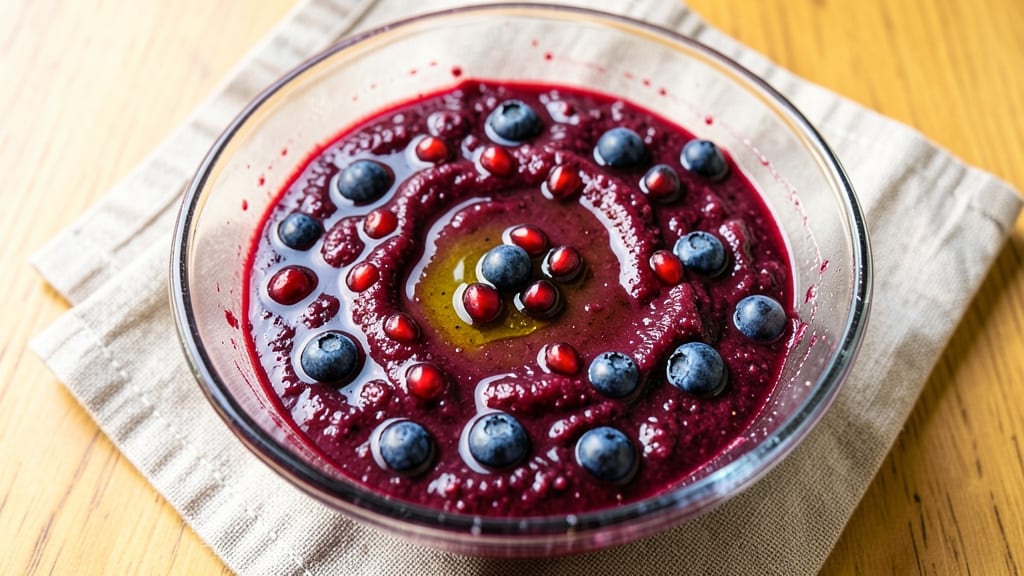
This blueberry pomegranate salad dressing recipe transforms simple greens into a vibrant, flavor-packed masterpiece with just five ingredients. The tartness of pomegranate molasses and blueberries balances perfectly with a touch of honey, creating a dressing that's bright, refreshing, and packed with natural sweetness.
It's the kind of dressing that elevates even the most basic salad into something restaurant-worthy.
The secret lies in the emulsification process, where whisked olive oil and vinegar create a silky texture that clings beautifully to mixed greens, grilled chicken, or roasted vegetables. Unlike store-bought dressings, this one stays fresh for up to a week in the refrigerator, making it perfect for meal prep.
The dressing's deep ruby color and complex flavor profile come from the blueberries and pomegranate seeds, which add a subtle crunch and burst of juicy sweetness.
What makes this dressing truly special is its versatility—it works equally well on crisp arugula salads, grilled shrimp skewers, or even as a marinade for chicken. The balance of tart, sweet, and slightly tangy flavors ensures it won’t overpower delicate ingredients but instead enhances their natural taste.
Each batch delivers a dressing that’s rich in antioxidants and free from artificial additives, making it a healthier choice without sacrificing flavor.
Ready in just 10 minutes, this dressing is perfect for busy weeknights or weekend entertaining. The ingredients are simple, and the method foolproof, ensuring you’ll never settle for bottled dressing again. Let’s get started on creating this vibrant, crowd-pleasing dressing that will become a staple in your kitchen.
Ingredients for blueberry pomegranate salad dressing
Five vibrant ingredients create this restaurant-quality dressing with perfect tart-sweet balance.
| Ingredient | Amount | Notes |
|---|---|---|
| Fresh Blueberries 🫐 | ½ cup | Pitted if possible for smoother texture |
| Pomegranate Molasses 🍇 | 2 tbsp | High-quality, thick variety preferred |
| Extra-Virgin Olive Oil 🫒 | ½ cup | Light, fruity variety for balance |
| Apple Cider Vinegar 🍏 | ¼ cup | Raw, unfiltered preferred |
| Maple Syrup 🍁 | 1 tbsp | Grade B for richer flavor profile |
| Pomegranate Seeds 🍇 | ¼ cup | Fresh, unsweetened seeds only |
| Sea Salt 🧂 | ½ tsp | Diamond Crystal preferred |
| Fresh Lemon Juice 🍋 | 1 tbsp | Freshly squeezed for brightness |
The blueberries and pomegranate molasses form the dressing's signature ruby hue and complex flavor profile. Look for organic blueberries at Whole Foods or your local farmers market—they're sweeter and more vibrant. Pomegranate molasses should be thick and syrupy; Biona or Al Wadi brands are excellent choices. The pomegranate seeds add a subtle crunch and burst of juicy sweetness, so choose fresh, unsweetened seeds from the bulk section. For the olive oil, California-grown varieties like Corto or Kirkland offer that perfect light, fruity balance that won't overpower the delicate berry flavors.
No pomegranate molasses? Substitute with 1 tbsp balsamic vinegar plus 1 tbsp date syrup, though the flavor will be slightly less complex. Short on blueberries? Raspberries or blackberries work beautifully, though they'll shift the color slightly. The apple cider vinegar can be swapped for white wine vinegar if needed, but raw, unfiltered is ideal for its subtle sweetness. If you can't find fresh pomegranate seeds, dried unsweetened seeds work in a pinch—just rehydrate them briefly in warm water. For the maple syrup, Grade B is essential for that caramelized depth, but agave nectar in a 1:1 ratio works if you're avoiding maple.
This dressing keeps beautifully for up to 1 week in the refrigerator when stored in an airtight glass jar. The emulsification process means it won't separate if properly whisked, but give it a quick shake before each use. For meal prep, I recommend making a double batch—it's perfect for dressing multiple salads or using as a marinade. The pomegranate seeds can be stored separately in the fridge for up to 2 weeks if you want to add them fresh to salads. If the dressing thickens over time, simply whisk in 1-2 tsp of water to restore its silky texture.
Why You'll Love This Recipe
- Five-Ingredient Magic: I swear, this is the kind of dressing that makes me feel like a genius—just toss blueberries, pomegranate molasses, olive oil, vinegar, and a drizzle of maple syrup into a jar. No blender, no straining, no stress. Honestly, it’s the kind of recipe that makes me want to cook more often.
- Tart-Sweet Balance: That first bite of pomegranate molasses and blueberries? It’s like summer in a jar—bright, tangy, with just enough maple syrup to round out the edges. The apple cider vinegar cuts through the sweetness, so you’re not drowning in sugar. I’ll be real: I’ve made dressings that were too sweet before, but this one? Spot-on.
- Weeknight Workhorse: This isn’t just for salads—drizzle it over grilled chicken, toss it with roasted veggies, or even use it as a glaze for pork tenderloin. I’ve even poured it over vanilla ice cream (yes, really) when I wanted something fancy but didn’t feel like cooking. It’s my go-to for when I need flavor fast.
- Lasts All Week: Between us, I make a big batch on Sundays and it’s still good by Friday. The pomegranate molasses keeps it from going rancid, and the vinegar acts like a natural preservative. Plus, it’s cheap to make—way cheaper than buying fancy bottled dressings. I’ve saved enough money on this alone to buy a new cutting board.
Step-by-step instructions for blueberry pomegranate salad dressing
This vibrant dressing delivers a perfect balance of tart, sweet, and fruity complexity.
Prepare the Fruit Base
In a small food processor or high-speed blender, combine the 0.5 cup fresh blueberries and 0.25 cup pomegranate seeds. Pulse until you achieve a chunky puree with small fruit pieces remaining—this texture adds visual appeal and prevents the dressing from becoming too smooth. You want visible pops of color throughout, so don't over-process.
This fruit base forms the flavor foundation. The blueberries provide bright acidity while the pomegranate seeds contribute a delicate crunch and deep ruby hue. If using pitted blueberries, you'll get an even smoother texture without the risk of seeds disrupting the emulsion later.
Combine Liquid Ingredients
Transfer the fruit puree to a medium mixing bowl and whisk in the 0.5 cup extra-virgin olive oil, 0.25 cup apple cider vinegar, 1 tbsp maple syrup, and 1 tbsp fresh lemon juice. The olive oil should be light and fruity to complement the fruit flavors without overpowering them. Use a whisk to emulsify the ingredients thoroughly—you'll see the mixture transform from separate components into a cohesive emulsion.
This is where the dressing begins to take shape. The apple cider vinegar provides the necessary acidity to balance the sweetness, while the lemon juice adds brightness. The olive oil carries the flavors and creates the silky texture. Taste at this stage—you should detect all components but need to adjust seasoning before adding the final ingredient.
Incorporate Pomegranate Molasses and Season
Add the 2 tbsp pomegranate molasses and 0.5 tsp sea salt to the bowl. The molasses will deepen the fruit complexity with its concentrated tart-sweet flavor, while the salt enhances all components. Whisk vigorously for 30 seconds to fully incorporate. The mixture should be smooth with visible fruit specks throughout—this is your finished dressing.
At this point, taste again and make any final adjustments. You might need a touch more salt to balance the sweetness or a splash of lemon juice if the acidity feels muted. The dressing should coat the back of a spoon with a velvety texture while maintaining visible fruit pieces for visual interest and texture contrast.
Rest and Emulsify
Let the dressing rest at room temperature for 15-20 minutes before using. This resting period allows the flavors to fully meld and the emulsion to stabilize. The colors will deepen and intensify during this time, indicating proper flavor development. Gently stir once or twice during the resting period to maintain the emulsion.
This step is crucial for achieving the perfect balance of flavors and textures. The resting period also gives you time to prepare your salad greens or other components you'll be dressing. Once rested, the dressing should be vibrant with a glossy sheen and maintain its chunky texture when drizzled over greens.
Pro Tips For Making Blueberry Pomegranate Salad Dressing
- MASH THE BLUEBERRIES: Use a fork to crush them—just enough to release juices, not turn them into sauce. Over-mashing turns your dressing into a thick jam, and nobody wants that cloying texture clinging to greens.
- STRAIN THE MOLASSES: Pomegranate molasses is thick stuff, and clumps make your dressing look like mud. Pour it through a fine-mesh sieve into the bowl first—saves you from stirring out lumps later.
- SWEAT THE VINEGAR: Add apple cider vinegar last, then let the mixture sit for 2 minutes before tasting. The acid needs a moment to mellow out; dumping it in right away makes the whole thing taste harsh and unbalanced.
- UPGRADE THE OIL: Skip the cheap stuff—use a high-quality extra-virgin olive oil with a peppery finish. It carries the blueberry and pomegranate flavors better, and the dressing won’t taste like it’s fighting for its life against low-grade oil.
Pro cooking tips for perfect results
Emulsification Secrets
For a silky texture, whisk the extra-virgin olive oil and apple cider vinegar together first—they form the base of your emulsion. I use a balloon whisk for this step because it creates tiny air bubbles that help stabilize the dressing.
Add the fruit puree slowly while whisking continuously to prevent separation. If your dressing breaks, simply whisk in 1 tsp of warm water to restore the emulsion. 💫
Fruit Texture Control
Pulse the blueberries and pomegranate seeds in the food processor until you see small visible specks—this adds visual appeal and prevents a muddy texture. If your dressing becomes too smooth, the flavor will lose its vibrant character.
For extra crunch, reserve 1 tbsp of pomegranate seeds to sprinkle on top of salads after dressing. 🍇
Sweet-Tart Balance
The maple syrup and pomegranate molasses create the signature sweet-tart profile, but taste as you go! Start with 1 tbsp maple syrup and adjust by ½ tsp increments—some blueberries are sweeter than others.
If the dressing tastes too sweet, add 1 extra tsp lemon juice to brighten the flavors. 🍋
Equipment Shortcuts
No food processor? Mash the blueberries with a fork in a bowl, then strain through a fine-mesh sieve to remove seeds. For emulsification, a clean mason jar works perfectly—just shake vigorously for 30 seconds after adding each ingredient.
This method takes a little more elbow grease but delivers the same silky results. ✨
Flavor Layering
Add the pomegranate molasses last to preserve its concentrated flavor—it deepens the dressing's complexity. For an extra layer of flavor, infuse the olive oil with 1 tsp dried rosemary by heating it gently for 5 minutes before using. Strain out the herbs before mixing with other ingredients. 🌿
Storage Hacks
Store your dressing in a glass jar with a tight-sealing lid to maintain freshness. If it separates after refrigeration, simply shake vigorously before using—no need to remake it!
For longer storage, add ½ tsp lemon juice to the jar before sealing to extend shelf life by up to 2 weeks. ❄️
Nutrition facts
Frequently asked questions
Can I make this dressing without pomegranate molasses?
Yes! Substitute with 1 tbsp balsamic vinegar plus 1 tbsp date syrup for similar depth of flavor. The dressing will be slightly less complex but still delicious. For extra tartness, add an additional ½ tsp lemon juice to compensate for the missing molasses intensity.
How long does this dressing keep in the fridge?
This vibrant dressing stays fresh for up to 1 week when stored in an airtight glass jar. The emulsification process means it won't separate if properly whisked initially. For longer storage, add ½ tsp extra lemon juice to the jar before sealing to extend shelf life by up to 2 weeks. Always shake before using.
What's the best way to fix a separated dressing?
Simply shake the jar vigorously for 30 seconds—the emulsion will reform! For stubborn separation, whisk in 1 tsp warm water to restore the silky texture. This happens occasionally with fruit-based dressings, but it's completely fixable without remaking the entire batch.
Can I use this dressing on non-salad dishes?
This dressing works beautifully as a marinade for grilled chicken or fish, a drizzle for roasted vegetables, or even a glaze for pork tenderloin. The sweet-tart balance complements protein dishes perfectly. For marinades, reduce the olive oil to ¼ cup to prevent excess greasiness.
Why does my dressing taste too sweet?
Adjust the balance by adding 1 extra tsp lemon juice or ½ tsp apple cider vinegar to brighten the flavors. Some blueberries are naturally sweeter than others, so taste as you go and adjust by ¼ tsp increments. The pomegranate molasses also contributes sweetness—using a slightly less sweet variety can help if needed.