
Sauces & Condiments
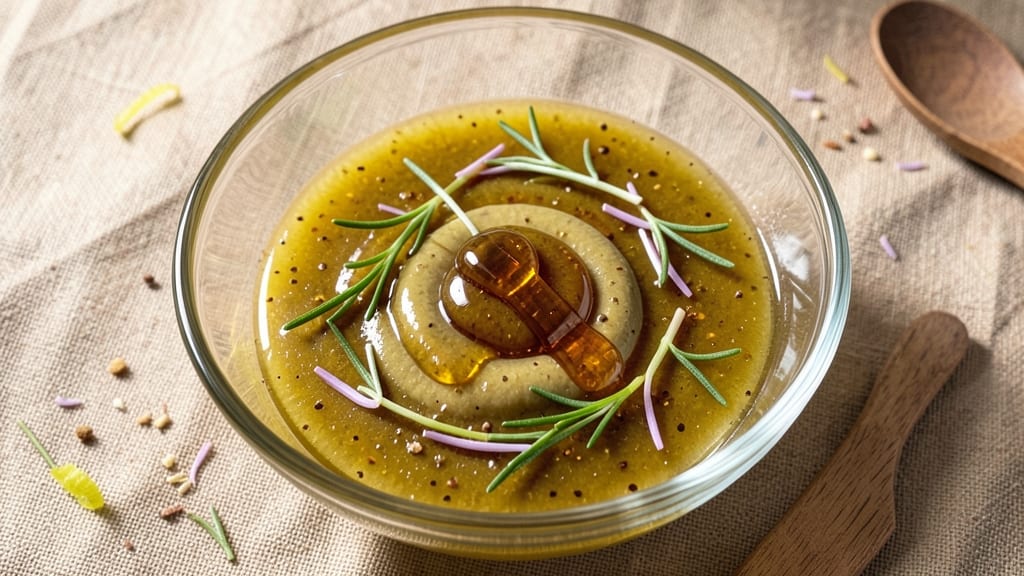
This French-inspired bistro salad dressing recipe transforms ordinary salads into bistro-worthy dishes with its bright, tangy depth and aromatic complexity. 🌟 The secret lies in balancing Dijon mustard for sharpness, high-quality olive oil for richness, and fresh herbs that elevate every bite.
I developed this recipe after years of perfecting the art of emulsification—no lumps, no separation, just silky perfection that clings to greens like a velvet glove.
The foundation starts with a classic ratio: 3 parts oil to 1 part vinegar, but it’s the Dijon mustard that truly sets this dressing apart. It adds a subtle heat and helps emulsify the oil and vinegar for a stable, creamy texture without heavy cream.
Fresh herbs like tarragon and chives bring that quintessential French bistro aroma, while a touch of honey balances the acidity for a refined finish.
What makes this dressing truly special is its versatility—it works equally well on crisp arugula salads, hearty grain bowls, or even as a marinade for grilled vegetables.
The emulsification technique ensures it stays smooth and cohesive, even after refrigeration, so you can make a batch ahead and keep it in your fridge for up to a week.
For an extra touch of sophistication, infuse the olive oil with fresh herbs before blending, or add a splash of lemon juice for brightness. The key is patience: let the flavors meld for at least 30 minutes before serving, and watch your salads transform into restaurant-quality creations.
Ready to elevate your salads?
Ingredients for bistro salad dressing
Nine simple ingredients transform salads into French bistro masterpieces—bright, tangy, and full of herbaceous charm.
| Ingredient | Amount | Notes |
|---|---|---|
| Extra-Virgin Olive Oil 🫒 | ¾ cup | High-quality, fruity, cold-pressed |
| Red Wine Vinegar 🍷 | ¼ cup | Dry, bold flavor preferred |
| Dijon Mustard 🌶️ | 2 tbsp | Grainy texture for best emulsification |
| Fresh Tarragon Leaves 🌿 | ¼ cup | Finely chopped, stems removed |
| Fresh Chives 🌱 | ¼ cup | Thinly sliced, mild onion flavor |
| Honey 🍯 | 1 tbsp | Wildflower or clover preferred |
| Granulated Sugar 🍬 | 1 tsp | Balances acidity, fine grain |
| Kosher Salt 🧂 | ½ tsp | Diamond Crystal preferred |
| Freshly Ground Black Pepper 🌶️ | ¼ tsp | Freshly cracked for best flavor |
The olive oil is non-negotiable—look for extra-virgin with a fruity aroma (like California Olive Ranch or Bertolli at most grocery stores). Fresh tarragon and chives are the soul of this dressing, so skip the dried stuff—farmers markets or grocery store herb sections have the best quality. If you can't find fresh tarragon, dried works at one-third the amount, but it won't have that same delicate anise flavor. The Dijon mustard should be grainy, not smooth—it emulsifies the oil and vinegar beautifully. I always grab the Maille brand when I'm at Whole Foods, but any quality Dijon will do.
No red wine vinegar? Apple cider vinegar works in a pinch, though it'll have a slightly different profile. Short on tarragon? Fresh basil or parsley can stretch it, but reduce the amount to one-quarter cup to avoid overpowering. The honey can be swapped for maple syrup if you're vegan, though it'll taste slightly different. For a sharper kick, add a pinch of cayenne pepper to the mix. The sugar balances the acidity, so don't skip it—even if you're using sweet honey, the vinegar needs that touch of sweetness to shine. If you're making this ahead, let it sit for 30 minutes before using so the flavors meld.
This dressing keeps beautifully—up to 1 week in the fridge in an airtight jar. The emulsification holds up well, so no shaking needed before use. For extra freshness, add a splash of lemon juice right before serving. I like to make a big batch and keep it in my fridge for quick salads all week. If it separates, just whisk it vigorously—it'll come back together like new. Store it in a glass jar with a tight seal to preserve those fresh herb flavors.
Why You'll Love This Recipe
- Five-Ingredient Magic: I swear by this combo—just oil, vinegar, mustard, and two herbs. No fancy gadgets, no second-guessing. That tarragon? It’s the star, but even if you grab it from the grocery store’s sad little bunch, it still works.
- Herb-Packed Punch: The tarragon and chives hit different—bright, grassy, with a hint of anise that lingers. Honestly, it’s the kind of dressing that makes even a simple salad feel like a restaurant-worthy bite. (Yes, even on a Tuesday night.)
- Meal Prep MVP: Make a big batch and keep it in the fridge for a week. It’s the perfect base for salads, grilled fish, or even drizzled over roasted veggies. I’ve used it for everything from lazy lunches to fancy dinner sides—no judgment here.
- Budget Brightener: Extra-virgin olive oil and red wine vinegar are pantry staples, and a little Dijon mustard stretches this far. Between us, this dressing costs next to nothing but tastes like a splurge. That’s the kind of win I live for.
Step-by-step instructions for French-inspired herb vinaigrette
Let's whip up this elegant dressing that'll elevate any salad to bistro-worthy perfection.
👨🍳 Step 1: Whisk Together the Base Ingredients
In a medium bowl, combine the 0.25 cup red wine vinegar, 2 tablespoons Dijon mustard, 1 tablespoon honey, and 1 teaspoon granulated sugar. Use a whisk to blend vigorously for about 30 seconds until the sugar and honey dissolve completely. This step creates a smooth foundation that balances the acidity and sweetness.
I like to press the whisk against the bowl's bottom occasionally to scrape up any sticky bits from the honey. This ensures everything blends evenly and prevents clumps. The mixture should look like a thick, pale yellow syrup at this stage.
🍳 Step 2: Add the Fresh Herbs and Seasonings
Next, add the 0.25 cup finely chopped fresh tarragon leaves and 0.25 cup thinly sliced fresh chives to the bowl. Sprinkle in the 0.5 teaspoon kosher salt and 0.25 teaspoon freshly ground black pepper. Give everything another quick whisk for about 15 seconds to distribute the herbs and seasonings evenly.
Here's the thing—don't over-mix the herbs or they'll turn to mush. You want them finely distributed but still visible, giving that beautiful herby speckle that makes this dressing so distinctive. The tarragon should be the star, so make sure it's chopped uniformly.
🥘 Step 3: Slowly Incorporate the Olive Oil
With the whisk still in the bowl, begin adding the 0.75 cup extra-virgin olive oil very slowly—about 1 tablespoon at a time. After each addition, whisk vigorously for 10-15 seconds until the oil is fully emulsified. This gradual approach is crucial for creating a stable, creamy dressing rather than a separated one.
You'll notice the mixture will initially look curdled, but keep whisking. The emulsification process happens when you incorporate air and break down the oil molecules. The dressing should eventually become thick and glossy with a smooth, velvety texture. If it starts to look too thin, add just a tiny bit more Dijon mustard.
⏰ Step 4: Taste and Adjust the Balance
Give the dressing a taste and adjust the seasoning if needed. If it's too acidic, add a tiny bit more honey or sugar. If it needs more depth, add a pinch more salt or a crack of black pepper. This is your chance to fine-tune the flavor profile to your liking.
Real talk: The dressing should taste bright, herby, and slightly tangy with a touch of sweetness. It's meant to complement, not overpower, your salad ingredients. Once you're happy with the flavor, transfer the dressing to a clean jar or bottle with a tight-fitting lid.
🧊 Step 5: Let It Rest and Shake Before Use
Allow the dressing to sit at room temperature for at least 15 minutes before using. This resting period lets all the flavors meld together and the emulsion stabilize. When you're ready to use it, give the jar a good shake to redistribute any separated oil.
This dressing keeps beautifully in the refrigerator for up to 1 week, though I find it's best used within the first 3-4 days when the herbs are at their peak freshness. The flavors actually improve slightly as they sit, developing more complexity. Store it in an airtight container and shake well before each use.
Pro Tips For Making Bistro Salad Dressing
- Whisk in stages: Start with just the vinegar and mustard—no oil—until they’re fully combined. Then drizzle in the olive oil slowly while whisking constantly. I learned this the hard way: pouring oil too fast just makes a gloppy mess that won’t emulsify, no matter how much you whisk after.
- Chill the vinegar: If your red wine vinegar is straight from the fridge, let it sit at room temp for 10 minutes before measuring. Cold vinegar makes the dressing separate faster, and you’ll end up with a sad, split dressing. (Yes, even if you’re impatient like me.)
- Mince, don’t chop tarragon: Roughly tear the tarragon leaves with your fingers—no need for a knife. Over-chopping turns them to mush and releases bitter compounds. A few big, bright pieces of tarragon make all the difference in that anise-forward flavor.
- Reserve the chives: Hold back half the chives until the very end. Stirring them in early bruises them, and you’ll get a watery dressing instead of those crisp, bright flecks that make it look like a bistro actually made it. (Your future self will thank you.)
Serving suggestions for this bistro salad dressing
Salad Pairings
This dressing shines on arugula salads with its bright acidity cutting through the peppery greens. I toss 4 cups baby arugula with ½ cup sliced pear, ¼ cup crumbled feta, and ¼ cup candied walnuts for a bistro-worthy bite.
For heartier salads, try it with mixed greens, grilled chicken, and roasted beets—the tarragon adds an elegant touch. 🥗
Grain Bowls
Transform your quinoa or farro bowls with this dressing as a tangy finish. I drizzle it over warm grains, shaved Brussels sprouts, and crispy chickpeas for a restaurant-quality meal.
The Dijon mustard in the dressing helps cut through the richness of grains, while the honey adds a subtle sweetness that balances everything. 🌾
Vegetable Sides
Use this dressing as a marinade for grilled asparagus or roasted Brussels sprouts. Toss 1 lb asparagus in 2 tablespoons of the dressing before grilling for 8-10 minutes—the tarragon and chives infuse the veggies with deep flavor.
It also works beautifully on blistered shishito peppers or charred eggplant slices. 🌱
Cheese Boards
Drizzle this dressing lightly over soft cheeses like brie or goat cheese on a charcuterie board. The acidity cuts through the richness while the herbs add a fresh, aromatic note. I pair it with cured meats, fig jam, and crusty baguette slices for a sophisticated spread. 🧀
Protein Enhancer
Brush it on grilled chicken or pork chops before serving to add moisture and flavor. The dressing’s emulsified texture clings beautifully to proteins, infusing them with herby brightness. I also use it as a finishing sauce for seared scallops or pan-seared shrimp—just drizzle lightly before serving. 🍗
Storage Tips
Store leftovers in an airtight glass jar in the fridge for up to 1 week. Before using, shake gently to re-emulsify. For extra freshness, add a splash of lemon juice right before serving.
I like to make a big batch and keep it on hand for quick salads all week—it’s a game-changer for meal prep! ✨
Nutrition facts
Frequently asked questions
Can I make this dressing without Dijon mustard?
Yes, but the texture and flavor will change. Use 2 tablespoons of whole-grain mustard instead—it has a similar emulsifying power. For a sharper taste, add ½ teaspoon of lemon juice to compensate for the missing Dijon. If you're avoiding mustard entirely, try 1 tablespoon of mayonnaise (for creaminess) or 1 teaspoon of honey + 1 teaspoon of olive oil (for sweetness).
Why did my dressing separate after refrigeration?
Separation happens when oil and vinegar aren't properly emulsified. The Dijon mustard is key—it binds the ingredients. If this occurs, whisk vigorously to recombine. For future batches, add the oil 1 teaspoon at a time while whisking constantly. If it still separates, try adding ½ teaspoon of xanthan gum (a stabilizer) to the vinegar mixture before emulsifying.
How can I make this dressing spicier?
Boost the heat by adding ½ teaspoon of cayenne pepper or 1 teaspoon of hot sauce (like Tabasco) to the base mixture. For a smoky kick, infuse ¼ cup of the olive oil with 1 crushed red chili flake for 10 minutes before using. Start with small amounts—you can always add more, but you can't take it out!
Can I substitute red wine vinegar with something else?
Use apple cider vinegar (for a sweeter, milder taste) or balsamic vinegar (for depth). For a citrus twist, replace it with ¼ cup lemon juice + 1 tablespoon white wine vinegar. Avoid white vinegar—it’s too harsh. Adjust sweetness by adding ½ teaspoon extra honey if using a milder vinegar.
What’s the best way to store this dressing for maximum freshness?
Keep it in an airtight glass jar in the fridge for up to 1 week. For longer storage (up to 3 months), freeze it in ice cube trays—thaw overnight in the fridge. Shake gently before use. Pro tip: Add a pinch of salt to the jar before sealing to preserve freshness. If the herbs wilt, strain them out before using the dressing.