
Side Dishes
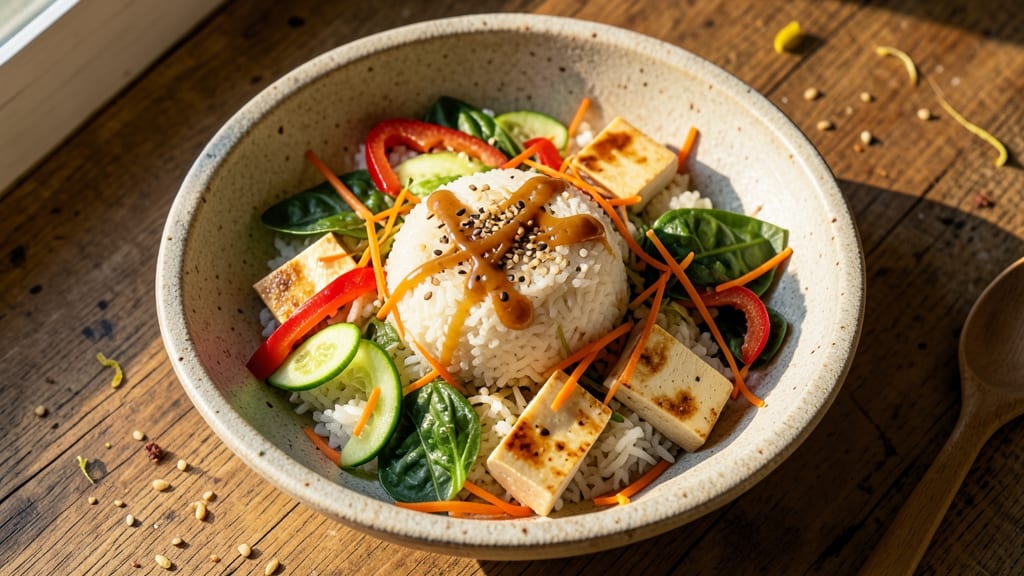
This bibimbap salad recipe transforms a simple rice bowl into a vibrant, customizable masterpiece that balances textures and flavors in every bite. 🌟 The secret lies in sautéing vegetables to perfection—keeping them crisp-tender—while layering them over steamed rice with a bold gochujang sauce that ties everything together.
I developed this version to capture the essence of traditional bibimbap while making it approachable for home cooks, with optional tofu for a vegetarian-friendly twist.
The beauty of bibimbap is its adaptability—swap in seasonal vegetables, add protein, or adjust the spice level to suit your taste. Each component is cooked separately, ensuring vibrant colors and distinct textures that come together when you assemble the bowl.
The gochujang sauce, a fermented chili paste, adds depth and a subtle tang that elevates every ingredient, while a quick sear in a hot bowl creates the ultimate dining experience.
What you’ll achieve is a harmonious, restaurant-quality dish that’s as visually stunning as it is delicious. The rice stays fluffy, the vegetables retain their crunch, and the sauce delivers a perfect balance of spicy, sweet, and umami.
This isn’t just a side dish—it’s a complete, satisfying meal that’s easy to customize for any occasion.
Whether you’re serving a crowd or treating yourself to a flavorful lunch, this bibimbap salad delivers bold flavors and a satisfying crunch. The best part? Every bite is an opportunity to mix and match your favorite toppings, making it as unique as the person eating it. Let’s get started!
Ingredients for bibimbap salad
Transform simple rice bowls into vibrant, restaurant-quality bibimbap with these 15 essential ingredients.
| Ingredient | Amount | Notes |
|---|---|---|
| Short-Grain White Rice 🍚 | 1 ½ cups | Uncooked, jasmine or sushi rice preferred |
| Firm Tofu 🥬 | 1 lb | Extra-firm, pressed and cubed |
| Spinach Leaves 🌿 | 4 cups | Baby spinach or fresh baby leaves |
| Carrots 🥕 | 2 medium | Julienned into thin matchsticks |
| Zucchini 🍆 | 1 medium | Thinly sliced into half-moons |
| Red Bell Pepper 🌶️ | 1 whole | Thinly sliced into strips |
| Mushrooms 🍄 | 8 oz | Shiitake or cremini, sliced |
| Sesame Seeds 🌰 | 2 tbsp | Toasted for garnish |
| Vegetable Oil 🫒 | 3 tbsp | High smoke point preferred |
| Gochujang Sauce 🌶️ | ½ cup | Korean fermented chili paste |
| Soy Sauce 🥢 | 2 tbsp | Low-sodium preferred |
| Sesame Oil 🫒 | 1 tbsp | For finishing |
| Rice Vinegar 🍶 | 1 tbsp | Seasoned preferred |
| Sugar 🍚 | 1 tsp | White or brown |
| Garlic Cloves 🧄 | 4 cloves | Minced for sauce |
The rice is the foundation—jasmine or sushi rice gives that perfect sticky texture. Trader Joe's carries both in bulk, or check the Asian aisle at Whole Foods for premium options. For the tofu, extra-firm is non-negotiable—press it for 20 minutes to remove excess water. The vegetables should be fresh, crisp, and colorful—farmers markets have the best selection for vibrant carrots and bell peppers. If you're short on time, pre-cut veggies from the salad bar work too, but fresh is always better. Gochujang sauce is the soul of bibimbap—look for Korean brands like Maesil or Dongwon for authentic flavor.
No sesame seeds? Toasted pumpkin seeds work in a pinch, though they lack that nutty depth. Short on mushrooms? Extra zucchini or spinach keeps the texture game strong. The sauce can be simplified with soy sauce, rice vinegar, and a touch of honey if you can't find gochujang, but trust me, it's worth tracking down. For the tofu, marinate in soy sauce and garlic for 15 minutes before cooking—it makes all the difference. The vegetables should be sautéed separately to maintain their individual textures, so don't overcrowd the pan. If you're feeling adventurous, add kimchi or bean sprouts for extra crunch and flavor.
Rice keeps best in an airtight container for 3-4 days—reheat with a splash of water to maintain texture. The cooked vegetables reheat beautifully, but sauté them fresh for the best crunch. Gochujang sauce freezes for up to 6 months, so make extra for future meals. I always prep components ahead and assemble when ready to eat—the colors pop so much more when everything's fresh. Store tofu and veggies separately in the fridge for up to 5 days, but use within 2 days for peak texture.
Why You'll Love This Recipe
- I swear by this trick: toss the spinach and zucchini in boiling water for 30 seconds while I pan-fry the tofu. Minimal chopping, zero fuss—just slice the carrots thin and let them soften in the sesame oil. Honestly, the hardest part is deciding which veggie to eat first.
- No-Cook Prep Magic: I swear by this trick: toss the spinach and zucchini in boiling water for 30 seconds while I pan-fry the tofu. Minimal chopping, zero fuss—just slice the carrots thin and let them soften in the sesame oil. Honestly, the hardest part is deciding which veggie to eat first.
- Umami Bomb Combo: That crispy pan-fried tofu with its chewy center? Chef’s kiss. Add the garlicky spinach, sweetly caramelized carrots, and a drizzle of gochujang—suddenly you’ve got layers of flavor without a single bland bite. Between us, this is the kind of dish that makes rice taste like a celebration.
- Lunchbox Hero: Pack it cold or at room temp—this salad holds up perfectly for work lunches or school lunches. My kid’s favorite? The tofu stays firm, the veggies don’t wilt, and the rice doesn’t turn to mush. (Yes, even on a Tuesday night.)
Step-by-step instructions for bibimbap salad
Transform simple ingredients into a vibrant, restaurant-quality Korean rice bowl.
🍳 Step 1: Cook the Short-Grain White Rice to Perfect Texture
Rinse the 1.5 cups short-grain white rice thoroughly in a fine-mesh strainer until the water runs clear—this removes excess starch for fluffy grains. Combine with 2 cups water in a pot and bring to a boil. Once boiling, reduce heat to low, cover, and simmer for 15 minutes.
Turn off the heat and let it steam for 10 minutes without lifting the lid. The rice should be tender with a slight bite—this is crucial for bibimbap's texture. Fluff gently with a fork and spread on a tray to cool slightly before assembling. Overcooked rice turns mushy and ruins the dish.
👨🍳 Step 2: Prepare and Sauté the Vegetable Medley
Heat 1 tablespoon vegetable oil in a large skillet over medium-high heat. Add the 2 medium julienned carrots and cook for 3 minutes until just tender-crisp. Remove and set aside. In the same pan, add another 1 tablespoon vegetable oil and sauté the 1 medium zucchini and 1 whole sliced red bell pepper for 4 minutes until vibrant and slightly softened.
Push vegetables to one side, add 1 tablespoon vegetable oil, then cook the 8 oz sliced mushrooms for 5 minutes until golden. Finally, wilt the 4 cups spinach leaves by adding them to the pan and tossing for 1 minute until just tender. Keep all vegetables separate—their distinct colors and textures are essential for presentation.
🍳 Step 3: Create the Gochujang Sauce Base
In a small saucepan, combine 0.5 cup gochujang sauce, 2 tbsp soy sauce, 1 tbsp rice vinegar, 1 tsp sugar, and 4 minced garlic cloves. Cook over medium-low heat for 5 minutes, stirring constantly, until the sugar dissolves and the sauce thickens slightly. Remove from heat and stir in 1 tbsp sesame oil—this adds nutty depth and balances the heat.
Taste and adjust seasoning: add more soy sauce for saltiness or rice vinegar for tang. The sauce should coat the back of a spoon with a rich, slightly spicy-sweet balance. Let it cool completely before using—hot sauce can cook the tofu prematurely.
🔥 Step 4: Pan-Fry the Firm Tofu Until Crispy
Press the 1 lb firm tofu between paper towels for 15 minutes to remove excess moisture, then cut into ½-inch cubes. Heat 1 tablespoon vegetable oil in a nonstick skillet over medium-high heat until shimmering. Add the tofu in a single layer and cook undisturbed for 4 minutes per side until golden brown and crispy.
Don't overcrowd the pan—this prevents proper browning. For extra flavor, sprinkle with a pinch of salt during cooking. The tofu should be firm yet tender inside with a satisfying crunch. Remove and drain on paper towels before assembling.
🥘 Step 5: Assemble and Garnish the Bibimbap
Divide the cooked rice among four bowls. Arrange the sautéed vegetables in neat piles around each serving—carrots, zucchini, bell pepper, mushrooms, and spinach should create a colorful rainbow effect. Place the crispy tofu cubes on top of the vegetables in each bowl.
Drizzle each serving with about 2 tablespoons of the gochujang sauce, then sprinkle with ½ tablespoon toasted sesame seeds. The seeds should be evenly distributed for both visual appeal and nutty crunch. Serve immediately with a small bowl of extra sauce on the side—this lets everyone customize their spice level.
Pro Tips For Making Bibimbap Salad
- STEAM THE TOFU: I learned this the hard way—frying firm tofu straight from the package leaves it dense and flavorless. Instead, steam it for 15 minutes first (pierce it first, or it’ll explode like a science experiment). The moisture cooks out evenly, so when you pan-fry it later, it absorbs marinades like a sponge and gets that perfect crispy edge.
- SALT THE SPINACH NOW: Skip the last-minute wilting—toss your spinach leaves with a pinch of salt and a squeeze of lemon juice right after washing. Let them sit for 5 minutes while you prep other veggies. This softens them just enough to hold up in the bowl without turning to mush when mixed with rice.
- CUT CARROTS IN HALF LENGTHWISE: Yes, it looks weird, but trust the process. Slicing carrots into long, thin half-moons instead of rounds means they cook faster and stay crisp-tender when stir-fried. Plus, they hold their shape better when you toss them into the bibimbap—no sad, limp veggie piles here.
- USE COLD RICE: Your future self will thank you. Spread freshly cooked rice on a tray and let it cool completely before assembling the bibimbap. Cold rice prevents the spinach and tofu from steaming into a sad, watery mess when everything gets mixed. (I know, I know—it’s tempting to eat it hot, but this is non-negotiable.)
Pro cooking tips for great bibimbap salad
Vegetable Timing
Cook vegetables in reverse order of tenderness—start with carrots (which take longest) and finish with spinach (which wilts fastest). I use a large skillet to prevent overcrowding, which keeps each vegetable crisp-tender. Reserve 1 tablespoon vegetable oil for each batch to maintain even cooking. 🥕
Tofu Crispiness
Press tofu for 15 minutes between paper towels to remove moisture—this ensures crispy edges. Use extra-firm tofu (not silken) and cut into ½-inch cubes for even cooking. A nonstick skillet prevents sticking, but I still recommend a wooden spatula for gentle flipping. 🥬
Sauce Balance
The gochujang sauce should be thick enough to coat but not syrupy. Simmer for 5 minutes to meld flavors, then adjust with soy sauce (salt) or rice vinegar (tang). I like to add 1 tbsp sesame oil at the end—it enhances nutty depth without overpowering. 🌶️
Bowl Assembly
Arrange vegetables in colorful piles for visual appeal—carrots (orange), bell peppers (red), mushrooms (brown), and spinach (green). Place tofu on top, then drizzle sauce evenly to prevent soggy rice. Toast sesame seeds in a dry pan for 30 seconds to amplify their aroma. ✨
Heat the Bowl
For the ultimate dining experience, heat the bowl with a candle or small flame before serving. This melts the sauce slightly, creating a warm, aromatic steam that enhances every bite. I use a tea light for safety and even heat distribution. 🔥
Customizable Spice
Serve extra sauce on the side so guests can adjust heat to their preference. For milder versions, reduce gochujang to ¼ cup and add 1 tsp honey. For extra heat, mix in ½ tsp red pepper flakes or 1 tsp gochugaru (Korean chili flakes). 🌶️
Nutrition facts
Frequently asked questions
Can I make bibimbap without rice?
While rice is traditional, you can substitute with quinoa or cauliflower rice for a lower-carb option. The key is maintaining the same texture—fluffy and slightly sticky. For gluten-free versions, ensure your gochujang sauce is certified gluten-free, as many contain wheat.
How do I store leftover bibimbap?
Store components separately in airtight containers for up to 3 days. Keep the rice, vegetables, tofu, and sauce in separate containers to prevent sogginess. Reheat vegetables in a skillet to restore their crisp-tender texture, and warm rice with a splash of water. Never reheat the sauce with the rice—it’ll make everything mushy.
What protein can I use besides tofu?
For vegetarian options, try marinated tempeh or seitan—both hold up well to pan-frying. Non-vegetarians can use grilled chicken, shrimp, or bulgogi beef. The key is cooking the protein until crispy on the outside while keeping it tender inside. Adjust marinade times accordingly (tofu needs 15 minutes, beef needs 30 minutes).
Why does my bibimbap sauce taste too salty?
Gochujang is naturally salty, so reduce the soy sauce to 1 tbsp instead of 2. For balance, add 1 tsp honey or rice vinegar to counteract the saltiness. If you're using store-bought gochujang, check the label—some brands are saltier than others. Always taste as you go and adjust gradually.
How do I make bibimbap kid-friendly?
Skip the gochujang and use a mild soy sauce mixture (1 tbsp soy sauce + 1 tbsp honey + 1 tsp sesame oil). Serve deconstructed with rice, steamed veggies, and plain tofu on the side. Let kids assemble their own bowls—it makes the meal more fun! For extra appeal, add sweet potato cubes or corn kernels that kids love.