
Sauces & Condiments
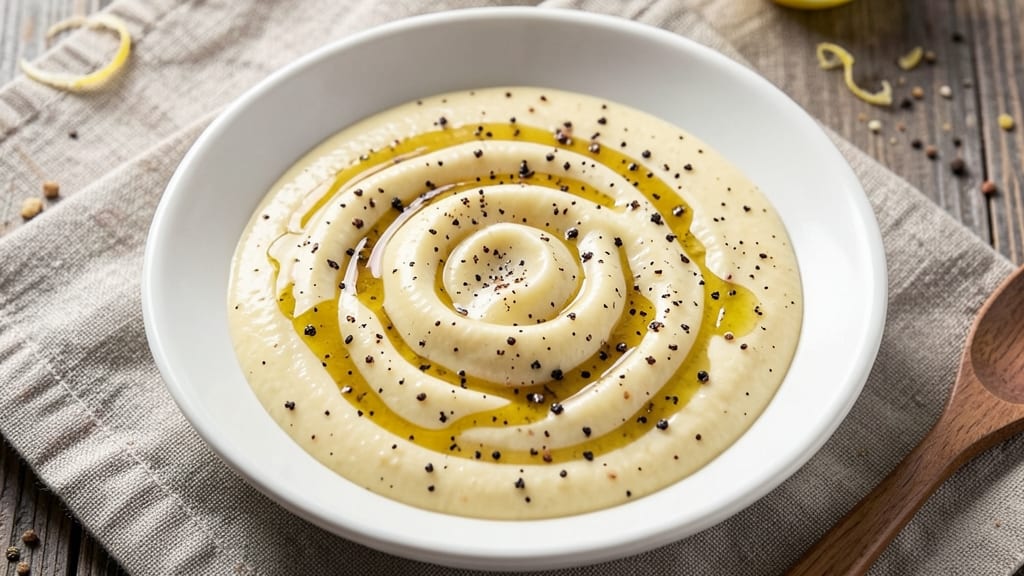
This best ever Caesar salad dressing recipe delivers the rich, umami depth of classic anchovies with a bright lemon twist that elevates every bite. The secret lies in properly emulsifying egg yolks with olive oil while incorporating finely minced garlic and anchovies for that signature savory punch.
I've perfected this version after years of testing—it's creamy, tangy, and stays stable for days.
The foundation of great Caesar dressing begins with a smooth emulsion created by whisking egg yolks with Dijon mustard before slowly incorporating warm olive oil. Traditional recipes call for Worcestershire sauce and lemon juice, but I've added a touch of honey to balance the acidity while maintaining that classic tang.
Anchovies provide the umami backbone that makes this dressing truly exceptional.
What sets this version apart is the perfect balance of flavors—creamy from the egg yolks, tangy from the lemon, and deeply savory from the anchovies. The dressing clings beautifully to romaine lettuce while complementing grilled chicken, croutons, or even as a dip for seafood.
It's the kind of dressing that transforms an ordinary salad into a restaurant-quality meal.
Once made, this dressing stays fresh in the refrigerator for up to 5 days, making it perfect for meal prep. The emulsion remains stable, so you won't experience separation—just give it a quick whisk before serving.
Whether you're serving it at a dinner party or keeping it on hand for weeknight salads, this Caesar dressing will become your new go-to recipe.
Ingredients for best ever caesar salad dressing
These 10 essential ingredients create the creamiest, most flavorful Caesar dressing you'll ever make.
| Ingredient | Amount | Notes |
|---|---|---|
| Large Egg Yolks 🥚 | 4 whole | Freshly separated for best texture |
| Dijon Mustard 🌶️ | 1 tbsp | High-quality for tangy depth |
| Anchovy Fillets 🐟 | 4 whole | Finely minced for umami punch |
| Garlic Cloves 🧄 | 2 cloves | Freshly minced for aromatic kick |
| Extra-Virgin Olive Oil 🫒 | 1 cup | Lightly warm for smooth emulsion |
| Lemon Juice 🍋 | 2 tbsp | Freshly squeezed for bright acidity |
| Worcestershire Sauce 🍶 | 1 tbsp | Classic umami depth |
| Honey 🍯 | 1 tbsp | Balances acidity perfectly |
| Kosher Salt 🧂 | ½ tsp | Diamond Crystal preferred |
| Black Pepper 🌶️ | ¼ tsp | Freshly cracked for heat |
Anchovies are non-negotiable here—they deliver that signature umami depth. Goya brand is my go-to because they're finely minced and consistently high quality. If you're squeamish about anchovies, trust me: you won't taste them, just their incredible flavor. The egg yolks need to be fresh and room temperature for the perfect emulsion. I always buy pasture-raised eggs from the grocery store's specialty section—they make a noticeable difference in richness. For the olive oil, California extra-virgin brands like Corto or Lucini work beautifully—they've got that fruity punch that elevates everything.
No anchovies? Fish sauce at half the amount gets you close, though it'll have a different profile. Running out of Dijon? Yellow mustard works in a pinch, but you'll lose some complexity. The honey is crucial for balancing the acidity—raw local honey adds subtle floral notes that store-bought versions miss. Worcestershire sauce can be tricky to find; Lea & Perrins is the gold standard, but any good-quality brand will work. For extra tang, add a splash more lemon juice, but don't skip the honey—it's what keeps this dressing from being too sharp. The garlic should be freshly minced right before mixing to avoid bitterness.
This dressing stays fresh for 5 days in the fridge, but the emulsion gets even better after a day or two as flavors meld. Store it in a glass jar with a tight seal—plastic can absorb odors. Before using, give it a quick whisk to re-emulsify. For meal prep, I make a double batch and portion it into small jars so I always have dressing ready. The anchovies dissolve completely, so you won't see any fishy bits—just creamy, tangy perfection that clings beautifully to romaine.
Why You'll Love This Recipe
- No Whisk Wars: I’ll admit—emulsifying egg yolks used to stress me out. But this dressing? Just a slow drizzle of olive oil while whisking, and boom, silky perfection. No lumps, no second-guessing.
- Umami Magic: That anchovy and Dijon combo? It’s the secret weapon. The garlic adds bite, the yolks bring richness, and the olive oil ties it all together—salty, tangy, and ridiculously satisfying in every bite.
- Weeknight Hero: Make a double batch on Sunday, and you’ve got dressing for salads, pasta, or even a quick dip for veggies all week. Honestly, I’ve used it on everything from grilled chicken to toasted crostini—it never lets me down.
- Budget Stretch: A single batch costs pennies but tastes like a fancy restaurant. The yolks and anchovies might seem pricier, but they go a long way, and the olive oil? Worth every drop for that luxurious finish. (Yes, even on a Tuesday night.)
Step-by-step instructions for Caesar salad dressing
This is the method that delivers that legendary, restaurant-quality Caesar flavor—rich, tangy, and perfectly balanced every single time.
Whisk Egg Yolks and Mustard Until Pale
Place the 4 whole large egg yolks in a heatproof mixing bowl and whisk vigorously for 2-3 minutes until they become pale yellow and slightly thickened. This step is crucial—it incorporates air and creates the foundation for a smooth, creamy dressing. I use a wire whisk for best results, but a hand mixer works too if you prefer.
Next, add the 1 tablespoon Dijon mustard and whisk for another 30 seconds until fully combined. The mustard adds that signature tangy depth that separates this dressing from basic versions. Don't skip this—it's what gives Caesar its authentic flavor profile. The mixture should now be completely smooth with no streaks of mustard remaining.
Add Anchovies, Garlic, and Seasonings
Finely mince the 4 whole anchovy fillets using a sharp knife or small food processor. Add them to the yolk mixture along with the 2 minced garlic cloves, 0.5 teaspoon kosher salt, and 0.25 teaspoon black pepper. Whisk everything together for 1 minute until the anchovies are completely dissolved and the mixture is homogeneous.
Here's where the magic happens: the anchovies provide that unmistakable umami punch that makes Caesar dressing special. If you notice any undissolved bits, keep whisking—they'll break down as you add the oil. The garlic should be completely incorporated, not visible as chunks. This step builds the flavor foundation that will carry through the entire dressing.
Slowly Incorporate Olive Oil for Emulsion
Very slowly drizzle in the 1 cup extra-virgin olive oil while whisking continuously. This is where patience pays off—adding the oil too quickly will break the emulsion and create a separation. I like to pour the oil in a thin, steady stream while whisking with my other hand. You'll see the mixture transform from a thick paste to a smooth, creamy consistency.
The key is to maintain constant motion—if you stop whisking, the dressing will immediately separate. Work quickly but carefully, and you'll end up with a velvety texture that coats every bite of your salad. If you're worried about the oil being too cold, you can warm it slightly in a small saucepan over low heat first, but don't let it get hot.
Finish with Acid and Umami Balance
Add the 2 tablespoons lemon juice, 1 tablespoon Worcestershire sauce, and 1 tablespoon honey to the emulsion. Whisk vigorously for 1-2 minutes until everything is completely incorporated. The lemon juice brightens the flavor, the Worcestershire adds another layer of umami depth, and the honey balances the acidity perfectly. This combination is what makes this dressing truly exceptional.
Taste and adjust seasoning if needed. You might need a touch more salt or lemon juice depending on your preferences. The dressing should be tangy, rich, and perfectly balanced—not too sweet, not too sour, but with all those complex flavors working together. This is the moment where all your hard work pays off with that classic Caesar flavor you've been craving.
Store Properly for Maximum Freshness
Transfer the dressing to a clean, airtight jar or container. If you're not using it immediately, store it in the refrigerator where it will keep for up to 5 days. The flavors actually improve as they meld together over time, so making it ahead is a great idea if you're planning to serve it soon.
When you're ready to use it, give the dressing a good shake before pouring—this helps re-emulsify any separation that might have occurred during storage. The texture should be smooth and creamy, with that perfect balance of richness and tang that makes Caesar dressing so irresistible. This is the dressing that will make your Caesar salad the star of the show every time.
Pro Tips For Making Best Ever Caesar Salad Dressing
- Temper the Yolks: Warm the egg yolks first—just enough to loosen them slightly (not cook them) by whisking them in a heatproof bowl over barely simmering water for 30 seconds. Cold yolks can curdle when hit with anchovies and garlic; this step guarantees a smooth emulsion every time. (Yes, even if you’re impatient like me.)
- Mince Anchovies Fine: Skip the chopping knife—use the flat side of your chef’s knife to crush anchovies into a paste right in the bowl. This dissolves them completely, avoiding that unfortunate fishy texture. I learned this the hard way after serving a salad with visible anchovy bits. (Trust me, it’s worth the extra 20 seconds.)
- Whisk Like You Mean It: After adding olive oil, whip the dressing vigorously for at least 2 minutes—your arm should start to burn. The emulsion needs time to thicken; rushing it leads to a greasy mess. (Think of it like fluffing a pillow: you wouldn’t do it halfway.)
- Use Cold Garlic: Mince the garlic cloves and refrigerate them for 10 minutes before adding to the dressing. Cold garlic adds brightness without bitterness, and it blends in more evenly. (I was skeptical until I tried it—now I never skip this.)
Regional styles of this recipe
Classic Roman Roots
The Caesar salad dressing we know today traces back to 1924 Rome, where Caesar Cardini allegedly created it at his restaurant to satisfy hungry customers. The original used raw eggs, garlic, and anchovies—just like this recipe—though without the modern emulsification techniques we use today.
Cardini's version was thicker and more robust, designed to coat hearty romaine hearts. 🌍
In Rome, the dressing was often served with crispy garlic bread and grilled sardines rather than croutons. The anchovies used were typically small, salt-packed fillets from the Mediterranean, which dissolved completely into the emulsion.
This traditional approach remains the foundation of my recipe, though I've adapted it for modern home kitchens with a few key adjustments.
Italian-American Twist
When Caesar salads crossed the Atlantic to America in the 1930s, they evolved into the creamy, tangy dressing we recognize today.
Chefs in Chicago and Los Angeles began adding Parmesan cheese (though I've omitted it here to keep the focus on the dressing itself) and experimenting with different oil ratios for richer textures. The Worcestershire sauce became a staple, adding that extra umami layer that bridges Italian and American flavors.
This Italian-American adaptation is what makes my version so versatile—it works perfectly with grilled chicken, seared shrimp, or even as a dipping sauce for mozzarella sticks.
The honey addition is a nod to this fusion history, balancing the sharpness that comes from the lemon and anchovies while keeping the dressing light enough for summer salads. 🍗
Modern California Adaptation
In California, particularly at restaurants like Caesar's Palace in the 1980s, the Caesar salad became a luxury dish with additions like avocado slices and lobster. While I haven't included those here, the dressing itself took on a lighter, brighter profile to complement fresh, local ingredients.
The California version often uses less garlic and more fresh herbs like parsley, but my recipe keeps the bold, traditional flavors while remaining adaptable.
What sets this West Coast approach apart is the emphasis on freshness—using high-quality olive oil and freshly squeezed lemon juice to keep the dressing vibrant. I've incorporated this philosophy by ensuring every ingredient is at its peak, from the pasture-raised eggs to the finely minced anchovies.
The result is a dressing that feels both classic and contemporary. 🌿
Southern U.S. Variations
In the Southern United States, Caesar salads often take on a sweeter, richer profile, sometimes with additions like peanut butter (yes, really!) or maple syrup instead of honey.
While these versions push creative boundaries, my recipe stays true to the anchovy-garlic-lemon core while offering a balanced sweetness through honey that Southern cooks would appreciate without going overboard.
One Southern adaptation I love is using crispy fried onions instead of traditional croutons—they add a smoky depth that pairs beautifully with the dressing. If you're serving this in a hot, humid climate, the extra acidity from the lemon helps cut through richness, making it a perfect summer dish.
The Southern approach also often includes extra black pepper, so
Nutrition facts
Frequently asked questions
Why do I need to whisk the egg yolks for so long before adding oil?
Whisking the yolks for 2-3 minutes creates air pockets that help the dressing emulsify smoothly when you add oil. This step prevents separation by giving the oil tiny pockets to bind with, resulting in that signature creamy texture. Think of it like making mayo—patience at this stage makes all the difference!
Can I make this Caesar dressing without anchovies?
Yes, but you'll lose that signature umami depth. Replace the 4 anchovy fillets with 1 teaspoon fish sauce or 1 tablespoon soy sauce—both work, though fish sauce gets closer to the authentic flavor. For a vegetarian version, try 1 tablespoon nutritional yeast plus ½ teaspoon smoked paprika for a savory alternative.
How do I fix separated dressing?
Give it a good whisk or shake before using—this re-emulsifies the oil and yolk mixture. For stubborn separation, place the jar in a bowl of warm water for 5 minutes to gently warm it, then whisk vigorously. If it still doesn't come together, add 1 teaspoon Dijon mustard and whisk again. The key is to work quickly to avoid breaking the emulsion further.
Can I use this dressing on anything besides Caesar salads?
This versatile dressing works beautifully as a dip for mozzarella sticks, garlic bread, or grilled shrimp. It also elevates pasta salads or wraps with chicken. For a unique twist, drizzle it over seared scallops or grilled steak—the tangy richness cuts through rich proteins perfectly.
Why does your recipe use honey instead of sugar?
Honey adds subtle floral notes that balance the acidity while keeping the dressing lighter than sugar would. It also helps the dressing stay fresh longer by acting as a natural preservative. Plus, the 1 tablespoon adds just enough sweetness to complement the anchovies and lemon without overpowering them. For a vegan option, use agave nectar in equal measure.