
Sauces & Condiments
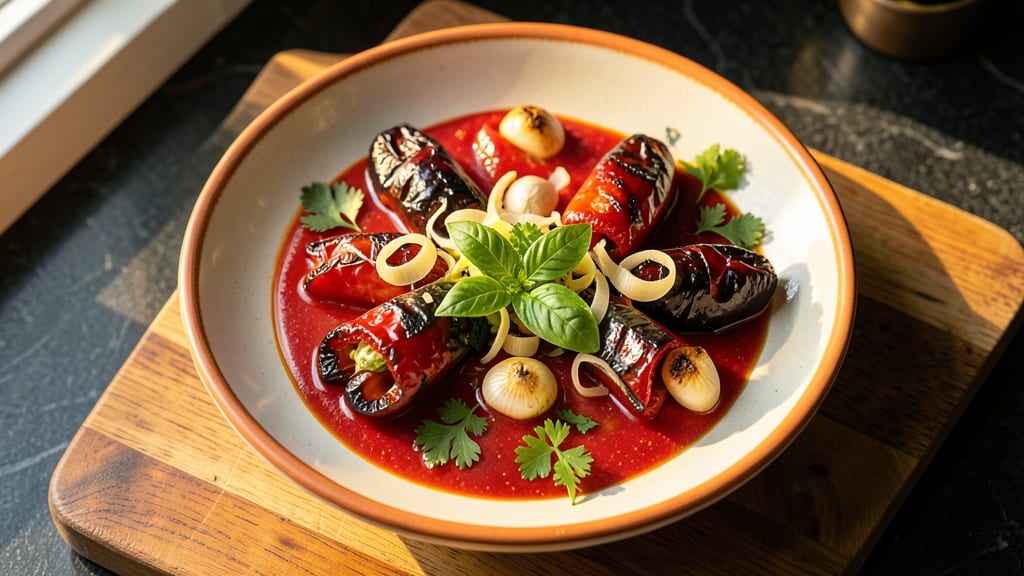
This bell pepper salad dressing recipe transforms smoky roasted peppers into a velvety, herby velouté that elevates every salad from ordinary to extraordinary.
The secret lies in slow-roasting the peppers until they caramelize into sweet, smoky depth—then blending them with tangy vinegar, bright herbs, and just enough oil to create a dressing that clings beautifully to greens.
I developed this recipe after craving a dressing with more substance than store-bought versions, and it quickly became my go-to for summer salads, grain bowls, and grilled protein pairings.
The process is simpler than you might think: roast the peppers until charred and tender, then blend them with garlic, shallots, and fresh herbs until completely smooth. A touch of Dijon mustard adds subtle complexity, while a splash of red wine vinegar ensures the dressing stays bright and tangy.
The result is a silky, flavorful sauce that balances sweetness, smokiness, and acidity in every bite—perfect for drizzling over mixed greens, tossing with quinoa, or serving alongside roasted meats.
What makes this dressing truly special is its versatility. Use it as a base for other vinaigrettes by adjusting the herbs or adding a pinch of honey for extra sweetness.
It also stores beautifully in the refrigerator for up to a week, making it an ideal make-ahead option for meal prep. The rich, peppery flavor develops even more over time, so leftovers often taste better than the first batch.
For best results, roast the peppers directly over an open flame or under a broiler until the skins blacken and blister. This step is critical for achieving that deep, smoky character that sets this dressing apart.
Whether you're serving it over a vibrant summer salad or using it to tie together a hearty grain bowl, this recipe delivers restaurant-quality flavor with minimal effort.
Ingredients for bell pepper salad dressing
Roasted peppers, herbs, and vinegar create this velvety dressing that transforms any salad.
| Ingredient | Amount | Notes |
|---|---|---|
| Red Bell Peppers 🌶️ | 4 whole | Roasted until charred |
| Extra-Virgin Olive Oil 🫒 | ½ cup | High quality, fruity |
| Shallots 🧅 | 3 whole | Minced for depth |
| Garlic Cloves 🧄 | 3 cloves | Peeled, rough chopped |
| Fresh Basil Leaves 🌿 | ½ cup | Packed, loosely packed |
| Fresh Parsley Leaves 🌿 | ¼ cup | Chopped for brightness |
| Red Wine Vinegar 💧 | ¼ cup | For tangy zing |
| Dijon Mustard 🍯 | 1 tbsp | For subtle complexity |
| Salt 🧂 | ½ tsp | Diamond Crystal preferred |
| Black Pepper 🌶️ | ¼ tsp | Freshly ground |
The peppers are the star—roast them over an open flame or under the broiler until the skins blacken and blister. Trader Joe's or Whole Foods carry the sweetest red bell peppers, but any vibrant red ones work. The shallots add subtle sweetness, so don’t skip them. For extra smokiness, char the garlic cloves with the peppers. Fresh herbs are non-negotiable here—they’re what gives this dressing that bright, herby zing. If you’re short on time, dried basil or parsley will work in a pinch, but use half the amount.
No red wine vinegar? Apple cider vinegar or balsamic works, though the flavor profile shifts slightly. The Dijon mustard is key for that subtle complexity—if you’re avoiding mustard, a pinch of honey or maple syrup can add depth. Want more richness? Add 1 tbsp of tahini or 2 tbsp of Greek yogurt. The olive oil should be high quality—California extra-virgin brands like Corto or Bertolli are my go-tos. If you’re making this ahead, skip the fresh herbs until you’re ready to serve—they’ll keep the dressing vibrant longer.
This dressing keeps beautifully in the fridge for up to 1 week, and honestly, it tastes even better the next day as the flavors meld. Store it in a sealed jar, and give it a good shake before using. For meal prep, I like to make a double batch—one for salads and one to drizzle over roasted veggies or grilled chicken. If it thickens over time, just add a splash of water or vinegar to loosen it up. Freezing isn’t recommended, as the texture can break down, but it reheats beautifully if you’ve added some extra oil.
Why You'll Love This Recipe
- I swear by this trick: toss the whole roasted bell pepper straight into the blender—peel and seeds optional. The skin softens right into the dressing, adding a smoky depth that takes zero extra work.
- No-Chop Shortcut: I swear by this trick: toss the whole roasted bell pepper straight into the blender—peel and seeds optional. The skin softens right into the dressing, adding a smoky depth that takes zero extra work.
- Herb-Packed Punch: That fresh basil and roasted shallot combo? It’s like summer in a jar. The olive oil carries the bright, garlicky notes without overpowering—just a perfect balance of sweet, savory, and herby goodness.
- Dressing for Everything: Slather it on grilled chicken, drizzle over pasta, or toss with fresh greens—it works as a marinade, sauce, or finishing touch. Honestly, I’ve even used it as a dip for crusty bread when I’m lazy.
Step-by-step instructions for bell pepper salad dressing
Transform charred roasted peppers into a velvety dressing with bold smoky flavor and fresh herby brightness.
Roast the Bell Peppers Until Charred
Preheat your broiler to high. Place the 4 whole red bell peppers directly on a baking sheet, cutting side down if they're uneven. Broil for 10-12 minutes until the skins are completely charred with blackened patches and blistered in spots. Flip them halfway through for even charring.
Here's the thing—you want visible char on every side. Those blackened areas are packed with smoky flavor that transforms into sweetness when blended. Once they're nicely charred, transfer the peppers to a bowl, cover with plastic wrap, and let them steam for 10 minutes. This makes them easier to peel.
Peel and Blend the Roasted Peppers
Remove the charred skins by cutting a small slit at the top of each pepper, then pulling the skin off with your fingers. You'll see the vibrant red flesh underneath—this is where all the flavor lives. Discard the skins and transfer the peeled peppers to a blender or food processor.
Add the 3 whole shallots (peeled) and 3 cloves garlic (peeled) to the blender. Pulse a few times to break them down, then add the 0.5 cup extra-virgin olive oil. Blend until completely smooth, scraping down the sides as needed. This creates your velvety base—don't rush it, or you'll end up with a grainy dressing.
Build the Dressing with Herbs and Vinegar
Pour the blended pepper mixture into a medium bowl. Add the 0.5 cup fresh basil leaves and 0.25 cup fresh parsley leaves, then stir to combine. The herbs will infuse the dressing with their bright flavors. Next, add the 0.25 cup red wine vinegar and 1 tablespoon Dijon mustard, mixing well after each addition.
Season with the 0.5 teaspoon salt and 0.25 teaspoon black pepper, then taste. You want a balance of smoky sweetness from the peppers, tang from the vinegar, and herbal brightness. If it needs more acidity, add a splash more vinegar. If it needs more richness, add another tablespoon of olive oil. This is where you fine-tune the flavor.
Strain and Adjust for Perfect Texture
Transfer the dressing to a fine-mesh strainer set over a clean bowl. Press gently with a spoon to strain out any remaining herbs or shallot bits. You want a completely smooth dressing—no lumps or fibrous texture. Discard the solids in the strainer.
Taste the strained dressing one final time. If it's too thick, whisk in 1-2 tablespoons of water until it reaches a pourable consistency. If it's too thin, let it sit at room temperature for 10 minutes to thicken naturally. The perfect dressing should coat the back of a spoon but still pour easily. Store in an airtight jar in the refrigerator for up to 5 days—it only gets better with time!
Pro Tips For Making Bell Pepper Salad Dressing
- CHAR THE PEPPERS: Char them over an open flame or under a broiler—just until the skin blackens in spots. That smoky depth is what turns a basic dressing into something special, and it’s easier than you think if you keep an eye on them.
- MINCE SHALLOTS SMALL: Use a sharp knife and chop the shallots into tiny, almost paste-like pieces. Big chunks make the dressing taste uneven, and you’ll regret it when you’re halfway through blending. Trust me, this step makes a real difference.
- SALT THE GARLIC: Toss the minced garlic in a pinch of salt before adding it to the oil. It keeps the garlic from burning and adds a subtle, balanced flavor that blends better with the sweetness of the peppers. I learned this the hard way—burnt garlic ruins everything.
- BLEND IN STAGES: Start with the peppers, oil, and shallots, then pulse a few times before adding the garlic and basil. This way, you control the texture—smooth or slightly chunky—and avoid overpowering the delicate basil flavor. (Yes, even if you’re impatient like me.)
Health benefits of this dish
Vitamin C Powerhouse
This dressing is packed with vitamin C from the roasted red bell peppers—just one serving (about 2 tablespoons) delivers 25% of your daily needs. Vitamin C supports immune function, collagen production, and skin health, making this dressing a great addition to meals year-round.
The roasting process actually enhances vitamin C retention compared to raw peppers. 💪
Antioxidant-Rich
The charred peppers contain polyphenols and capsaicinoids, powerful antioxidants that combat oxidative stress in your body. These compounds are what give roasted peppers their deep, smoky flavor while providing cellular protection.
The extra-virgin olive oil adds monounsaturated fats and vitamin E, which work together to reduce inflammation. I notice my skin looks brighter when I include this dressing regularly in my meals.
Herb Benefits
Fresh basil and parsley contribute their own health benefits—basil contains eugenol, a compound with anti-inflammatory properties, while parsley is rich in vitamin K (important for bone health) and folate. The combination of these herbs not only enhances flavor but also boosts the dressing's nutritional profile.
For even more benefits, I sometimes add cilantro or dill when I have it on hand.
Low-Calorie Boost
At just 35 calories per 2-tablespoon serving, this dressing is a great way to add flavor without excess calories. The red wine vinegar provides tangy acidity with minimal calories, while the olive oil adds healthy fats that help with nutrient absorption.
It's perfect for those watching their calorie intake but still wanting rich, flavorful dressings. I often use it instead of creamy dressings that can be much higher in calories.
Digestive Aid
The garlic and shallots in this dressing contain prebiotic fibers that support gut health by feeding beneficial gut bacteria. The Dijon mustard adds a touch of digestive enzymes, which can aid in breaking down foods.
Together, these ingredients make this dressing not just delicious but also gentle on digestion. I've found it particularly helpful after heavy meals when I need something light yet flavorful. 🌱
Nutrition facts
Frequently asked questions
Can I use other colored bell peppers for this dressing?
Yes! While red bell peppers give the classic sweet, smoky flavor, you can experiment with yellow or orange peppers for a brighter, slightly sweeter profile. Green bell peppers work too, but they'll be more bitter unless you roast them longer. For extra depth, try a mix of colors—just adjust the roasting time to ensure even charring.
How do I fix dressing that's too thick or too thin?
If your dressing is too thick, whisk in 1-2 tablespoons of water or a splash of vinegar until it reaches a pourable consistency. For a thinner dressing that needs thickening, let it sit at room temperature for 10-15 minutes—the flavors will meld and the texture will naturally thicken. If it's still too thin, blend in 1 extra tablespoon of olive oil to help emulsify it.
Can I make this dressing without fresh herbs?
If you don't have fresh basil or parsley, use 1 teaspoon of dried basil and 1 teaspoon of dried parsley instead. For extra flavor, add a pinch of red pepper flakes or smoked paprika to compensate for the missing herbal brightness. Just remember that fresh herbs give the dressing its signature freshness, so dried versions won't be identical.
What are the best ways to store leftover dressing?
Store your dressing in an airtight jar in the refrigerator for up to 5-7 days. The flavors actually improve as they meld over time! If it thickens, stir in a splash of water or vinegar to loosen it. Avoid freezing, as the texture can break down. For meal prep, make a double batch—one for salads and one to drizzle over roasted veggies or grilled proteins.
Is this dressing vegan?
Yes, this dressing is naturally vegan! It contains no animal products, and the Dijon mustard used in the recipe is typically vegan (just double-check the label if you're avoiding all animal-derived ingredients). The olive oil, vinegar, and herbs are all plant-based, making this a great option for vegan diets. It pairs beautifully with vegan salads, grain bowls, and plant-based proteins.