
Side Dishes
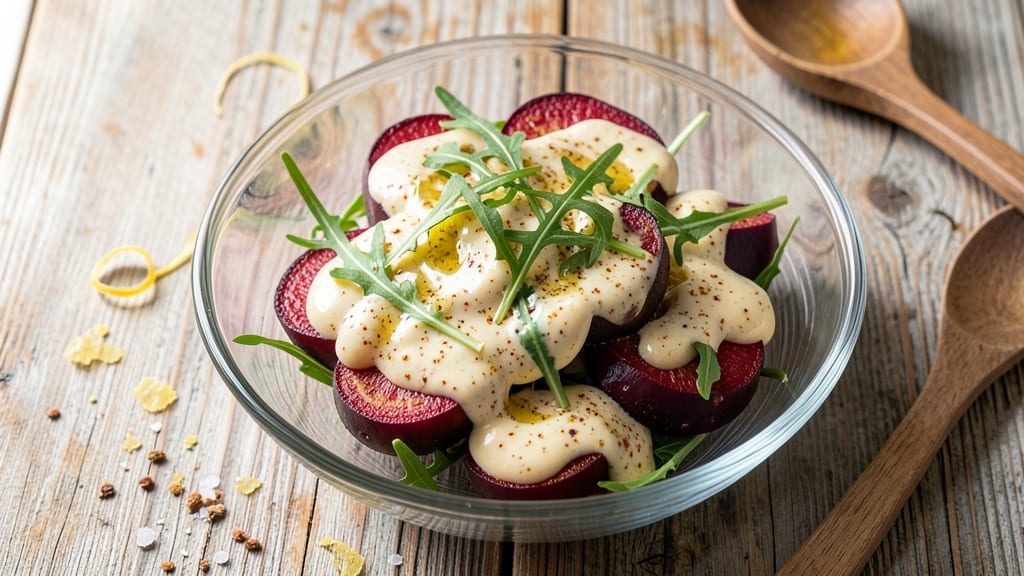
This beetroot salad recipe with mayonnaise transforms humble ingredients into a harmonious blend of earthy sweetness and creamy richness—perfect for elevating any meal. The secret lies in balancing the natural depth of roasted beets with velvety mayonnaise, creating a texture that’s both satisfying and elegant.
I developed this recipe after years of experimenting with beet preparations, and it consistently delivers that restaurant-worthy balance between bold flavors and smooth consistency.
The foundation begins with perfectly roasted beets, their vibrant color and tender texture preserved through gentle cooking. Once cooled, they’re tossed with a creamy mayonnaise base, where a touch of Dijon mustard and apple cider vinegar brightens the richness.
This isn’t just a side dish—it’s a flavor experience that transforms simple greens, toasted nuts, and fresh herbs into a visually stunning, texturally complex salad.
What you’ll end up with is a salad that’s creamy yet fresh, sweet yet tangy, and crunchy with every bite. The mayonnaise binds the ingredients together without overpowering the beets’ natural sweetness, while the addition of crisp nuts and fresh herbs adds layers of texture and brightness.
This recipe is designed to impress—whether served alongside grilled meats, as a standalone lunch, or as a vibrant addition to holiday spreads.
Best of all, it comes together in under 30 minutes, making it ideal for weeknight dinners or meal prep. The key is patience—letting the flavors meld as you assemble the salad ensures each bite is perfectly balanced.
Ready to create a salad that’s as delicious as it is beautiful? Let’s get started.
Ingredients for beetroot salad recipe with mayonnaise
Twelve ingredients blend earthy sweetness with velvety creaminess for a salad that elevates any meal.
| Ingredient | Amount | Notes |
|---|---|---|
| Medium Beets 🧅 | 2 whole | Roasted until tender, peeled |
| Dijon Mustard 🍯 | 1 tbsp | High-quality, smooth texture |
| Apple Cider Vinegar 🍎 | 1 tbsp | Unfiltered for depth |
| Mayonnaise 🥫 | ½ cup | Dijon-infused preferred |
| Extra-Virgin Olive Oil 🫒 | 2 tbsp | Light, fruity variety |
| Baby Arugula 🌿 | 4 cups | Fresh, vibrant leaves |
| Walnuts 🥜 | ½ cup | Toasted, roughly chopped |
| Parmesan Cheese 🧀 | ¼ cup | Freshly grated, aged |
| Fresh Thyme Leaves 🌿 | ¼ cup | Finely chopped, aromatic |
| Honey 🍯 | 1 tsp | Wildflower, optional |
| Kosher Salt 🧂 | ½ tsp | Diamond Crystal preferred |
| Freshly Ground Black Pepper 🌶️ | ¼ tsp | Coarsely cracked |
| Lemon Juice 🍋 | 1 tsp | Freshly squeezed |
The beets are the heart of this salad, so choose vibrant, firm varieties—golden or red both work, but avoid pre-cooked jarred beets. Roast them whole until tender, then peel while still warm for easier handling. For the mayonnaise, Dijon-infused brands like Hellmann’s or Best Foods add subtle depth without overpowering. The extra-virgin olive oil should be light and fruity—avoid strong, peppery varieties that can clash with the beets’ natural sweetness. I source my beets from local farmers markets in season, but pre-packaged organic beets from Whole Foods work well when fresh ones aren’t available. Toasting the walnuts in a dry pan until fragrant (about 5 minutes) enhances their flavor significantly—don’t skip this step.
No Dijon mustard? Substitute with 1 tsp whole-grain mustard for texture, though the flavor will be milder. Apple cider vinegar can be swapped for white wine vinegar or lemon juice, but the apple’s slight sweetness balances the earthiness better. If you’re avoiding honey, maple syrup or agave work in a 1:1 ratio, though the flavor profile shifts slightly. For the greens, baby spinach or mixed greens are excellent alternatives to arugula, though arugula’s peppery bite cuts through the creaminess beautifully. The Parmesan can be omitted for a vegan version, but nutritional yeast adds a cheesy depth without dairy. Always taste the dressing before tossing—adjust sweetness or acidity as needed.
Roasted beets keep in the fridge for up to 5 days when stored in an airtight container with a damp paper towel to maintain moisture. The dressing components (mayonnaise, vinegar, mustard) stay fresh for 1 week in the fridge, but the salad itself is best enjoyed within 3 days for optimal texture. For meal prep, assemble the salad just before serving to prevent wilting. The toasted walnuts can be stored in a sealed container for up to 2 weeks, though their crunch diminishes over time. Portion the dressing separately if prepping ahead—it’s easier to adjust ratios when reassembling.
Why You'll Love This Recipe
- Here’s what sold me: the vinegar brightens the earthy beets, the mayo adds richness, and the olive oil ties it all together. It’s not just sweet—it’s got a tangy kick that makes every bite feel intentional. (Yes, even on a Tuesday night.)
- No-Cook Night: I swear by this when I’m too tired to chop. Roast the beets ahead of time (or grab pre-cooked ones from the store), slice them, and toss with the dressing—five minutes, tops. That creamy mayo-Dijon mix does all the work while you’re scrolling through your phone.
- Sweet-Savory Magic: Here’s what sold me: the vinegar brightens the earthy beets, the mayo adds richness, and the olive oil ties it all together. It’s not just sweet—it’s got a tangy kick that makes every bite feel intentional. (Yes, even on a Tuesday night.)
- Lunchbox Hero: Between us, this salad is my go-to for packed lunches. It holds up for days in the fridge, and the flavors actually get better as the beets soak up the dressing. Add some walnuts or feta if you’re feeling fancy, but honestly? Straight-up, it’s already perfect.
Step-by-step instructions for creamy beetroot salad
Here's how to assemble this vibrant salad with perfectly balanced textures and flavors.
Roast the Beets Until Tender
Preheat your oven to 400°F and wrap the 2 whole medium beets tightly in aluminum foil. Place them directly on the oven rack or a baking sheet and roast for 45-60 minutes until completely tender when pierced with a knife. The beets should feel soft all the way through with no resistance.
I like to test doneness by gently squeezing - they should yield slightly like a ripe avocado. Let them cool completely before peeling, as the skins will slip off effortlessly once cooled. This method preserves their natural sweetness while creating that signature creamy texture we want in the salad.
Prepare the Creamy Dressing
In a medium bowl, whisk together the 0.5 cup mayonnaise, 1 tablespoon Dijon mustard, 1 tablespoon apple cider vinegar, 1 teaspoon honey, 1 teaspoon lemon juice, 2 tablespoons extra-virgin olive oil, 0.5 teaspoon kosher salt, and 0.25 teaspoon freshly ground black pepper. The dressing should be smooth with no visible streaks of mustard.
Taste and adjust seasoning if needed - you might want slightly more vinegar for brightness or honey for sweetness. This dressing forms the creamy base that perfectly complements the earthy beets. Keep it at room temperature until ready to use for best texture.
Assemble the Salad Components
Peel the cooled beets and cut them into ½-inch cubes. In a large salad bowl, combine the beets with the 4 cups baby arugula, 0.5 cup toasted walnuts, and 0.25 cup finely chopped fresh thyme leaves. The arugula should be vibrant and crisp, while the walnuts add satisfying crunch.
Gently toss everything together just until the arugula is evenly distributed. Be careful not to overmix - we want to preserve the individual textures. The thyme adds an aromatic depth that complements the earthy beets beautifully.
Combine and Finish
Pour the dressing over the beet and arugula mixture, tossing gently to coat everything evenly. Sprinkle with the 0.25 cup freshly grated Parmesan cheese just before serving. The cheese should be finely grated to distribute evenly throughout the salad.
Let the salad sit for 5-10 minutes before serving to allow the flavors to meld together. The dressing will slightly soften the arugula while maintaining its crisp texture. Serve immediately while the ingredients are at their peak freshness and texture contrast.
Pro Tips For Making Beetroot Salad Recipe With Mayonnaise
- Boil Beets Until Fork-Tender: I learned this the hard way—beets should give slightly when pierced with a fork, not bounce back like a trampoline. Overcooked beets turn mushy, but undercooked ones stay stubbornly raw-tasting; aim for 40-50 minutes in salted water, depending on size.
- Peel Beets While Still Warm: Cold beets are a nightmare to peel—skin clings like glue. Run them under cool water immediately after boiling, then rub with a paper towel while still warm. The skin will slide off in sheets, not leave you scrubbing like a maniac.
- Balance Vinegar and Mustard: Too much vinegar makes this salad taste like a pickle attack. Start with 1 tablespoon apple cider vinegar and 1 teaspoon Dijon, then adjust—taste as you go. The mayo should shine, not hide.
- Dress Salad Last Minute: Mayonnaise and beets don’t play well together long-term. Mix the dressing with the warm (cooled) beets right before serving—this keeps the texture crisp and the flavors bright. Save the leftovers for sandwiches, not salads.
Essential equipment for this recipe
Roasting Tools
The key to perfectly roasted beets starts with the right tools. I always use a heavy-duty aluminum foil—Reynolds Wrap works perfectly—to wrap the beets tightly. This ensures even cooking and prevents drying.
A baking sheet or oven rack is essential for proper airflow, and I prefer Ozeri 10-inch baking sheets for their durability. For testing doneness, a sharp paring knife or skewer is ideal to pierce the beets without crushing them. 🌡️
Mixing Essentials
For tossing the salad, a large mixing bowl is a must—I use Pyrex glass bowls because they’re sturdy and easy to clean. A whisk (like OXO Good Grips) helps create a smooth dressing without lumps.
For measuring ingredients precisely, I rely on Weigh Scale Kitchen Scale for accuracy, especially when dealing with small amounts like ½ teaspoon black pepper. A microplane is perfect for freshly grating the Parmesan cheese right before serving. 🥫
Knives and Cutting
Beets require careful peeling and chopping, so a sharp chef’s knife is non-negotiable. I recommend Wüsthof Classic 8-inch for its precision and durability. A peeler (like Mercer Culinary) helps remove the skins smoothly after roasting.
For the walnuts, a heavy-bottomed skillet (I use All-Clad Stainless Steel) ensures even toasting without burning. A cutting board—preferably Teakhaus bamboo—provides a stable surface for all prep work. 🔪
Storage Containers
If prepping ahead, store the roasted beets and dressing separately in airtight containers. I use Glasslock 16-ounce containers for the beets and a small mason jar for the dressing to keep it fresh.
For the assembled salad, a wide-mouth glass jar (like Ball Mason) works best for layering ingredients. Label everything with dates to track freshness. A damp paper towel in the beet container prevents drying. ❄️
Optional Extras
For added convenience, a handheld immersion blender (like Magic Bullet) can help emulsify the dressing if you prefer a smoother texture. A salad spinner (I use OXO Good Grips) ensures arugula stays crisp and dry before tossing.
For presentation, a salad serving platter—like Le Creuset stoneware—elevates the dish beautifully. These tools aren’t mandatory but make the process even smoother. ✨
Nutrition facts
Frequently asked questions
Can I use regular mustard instead of Dijon?
Yes, but the flavor will be milder. For the best results, use 1 tablespoon whole-grain mustard as a substitute—it adds subtle texture and a slightly tangy depth that complements the creamy dressing. If you only have yellow mustard, reduce the amount to 1 teaspoon and add a pinch more vinegar to balance the sweetness.
How do I prevent the beets from turning mushy?
Roast them until tender but not overcooked—pierce with a knife, and they should yield slightly like a ripe avocado. Let them cool completely before peeling, as warm beets are more fragile. Cut them into ½-inch cubes right before tossing with the dressing to maintain crispness. Avoid overmixing after adding the dressing to preserve texture.
Can I make this salad ahead of time?
Store the roasted beets and dressing separately in airtight containers for up to 5 days. Assemble just before serving to keep the arugula crisp. The toasted walnuts can be prepped separately and stored for 2 weeks, but their crunch softens over time. For the best texture, toss everything together 10-15 minutes before eating.
What’s the best way to toast the walnuts?
Use a dry skillet over medium heat for 5-7 minutes, stirring constantly until fragrant and golden. Watch closely—they burn quickly! Let them cool completely before chopping to prevent steam from making them soggy. For extra flavor, add a pinch of salt while toasting, but omit it if you’re already salting the dressing.
Is this salad vegan-friendly?
Not traditionally, but it’s easy to adapt! Replace the mayonnaise with ½ cup vegan mayo and omit the Parmesan. For a cheesy alternative, use ¼ cup nutritional yeast or vegan Parmesan. The rest of the recipe stays the same—just ensure all ingredients are plant-based. The texture and flavor will still be rich and satisfying!