
Salads
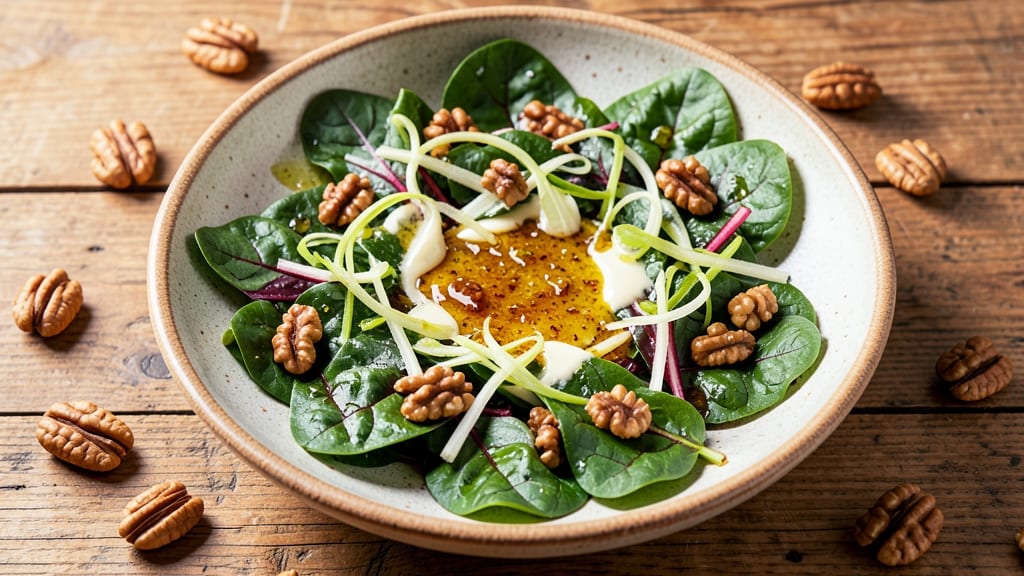
This beetroot leaves salad recipe transforms humble greens into a vibrant, nutrient-packed dish that rivals any restaurant salad. 💛 The secret lies in properly preparing the leaves—washing thoroughly to remove any dirt while preserving their delicate texture—and pairing them with a bright, nutty lemon vinaigrette that cuts through their earthy sweetness.
The beauty of beetroot leaves is their versatility—they work beautifully with complementary ingredients like toasted walnuts, shaved fennel, and crumbled goat cheese (or vegan alternatives). A simple massaging technique tenderizes the leaves, making them more digestible while enhancing their natural flavors.
This salad isn’t just healthy; it’s a flavor explosion that keeps every bite interesting.
What you’ll end up with is a salad that’s as visually stunning as it is delicious—deep purple leaves contrasted with bright citrus dressing and crunchy textures. The dressing ties everything together, balancing the salad’s earthy notes with a touch of sweetness and tang.
Perfect for a light lunch, side dish, or even a hearty vegan main when paired with grains or protein.
Ready in just 15 minutes, this salad requires minimal effort but delivers maximum impact. Whether you’re a seasoned cook or a beginner, this recipe proves that gourmet-quality meals can be both simple and satisfying. Let’s get started!
Ingredients for beetroot leaves salad
Earthy beetroot leaves meet bright citrus and nutty crunch in this vibrant vegan salad.
| Ingredient | Amount | Notes |
|---|---|---|
| Beetroot Leaves 🌿 | 8 cups | Fresh, stems removed, washed thoroughly |
| Extra-Virgin Olive Oil 🫒 | ½ cup | High quality, fruity variety |
| Fresh Lemon Juice 🍋 | 3 tbsp | Freshly squeezed, seeds strained |
| Maple Syrup 🍯 | 1 tbsp | Pure, grade B preferred |
| Toasted Walnuts 🥜 | ½ cup | Chopped, lightly toasted |
| Fennel Bulb 🧅 | ½ small | Shaved into fine ribbons |
| Vegan Goat Cheese Alternative 🧀 | ½ cup | Crumbled, almond-based preferred |
| Diamond Crystal Kosher Salt 🧂 | ½ tsp | Fine grain preferred |
| Freshly Ground Black Pepper 🌶️ | ¼ tsp | Freshly cracked peppercorns |
| Red Wine Vinegar 🍷 | 1 tbsp | Dry, bold variety |
| Fresh Thyme Leaves 🌿 | 1 tbsp | Finely chopped, stems removed |
| Flaxseeds 🌾 | 1 tbsp | Ground, for optional protein boost |
The beetroot leaves are the star—look for deep purple, vibrant leaves at specialty markets or organic sections. Whole Foods or local farmers markets often carry them in season. If you can't find fresh leaves, dried beet greens work in a pinch (rehydrate and massage well). The fennel should be crisp with no browning—shave it thinly for maximum texture contrast. For the walnuts, toast them in a dry pan until golden—about 5 minutes—to enhance their natural nuttiness. The vegan goat cheese alternative should be almond-based for creaminess, found in the vegan section of most grocery stores.
No fresh thyme? Dried thyme at one-third the amount works perfectly—just crush the leaves between your fingers first. Substituting the maple syrup? Agave nectar or date syrup keeps it vegan while maintaining sweetness. For the vinaigrette, if you're avoiding red wine vinegar, apple cider vinegar gives a similar tang. The olive oil must be extra-virgin—regular olive oil lacks the fruity depth needed to complement the earthy leaves. If you can't find vegan goat cheese, cashew cream (blend soaked cashews with lemon juice) makes an excellent substitute. The flaxseeds are optional but add a nice omega-3 boost—skip if you're avoiding seeds.
Store the dressing separately in a sealed jar for up to 5 days in the fridge. The beetroot leaves wilt quickly, so massage them with a pinch of salt right before serving to keep them crisp. The fennel and walnuts can be prepped ahead and stored in airtight containers for 3 days. For maximum freshness, assemble the salad just before serving—this ensures the leaves stay vibrant and the dressing doesn't overpower. If prepping for a crowd, portion the dressing separately and let everyone customize their own bowl.
Why You'll Love This Recipe
- No-Waste Win: I save money and guilt every time—those beetroot leaves? Often tossed, but here they shine. A handful of greens becomes a meal with just olive oil, lemon, and a drizzle of maple syrup.
- Sweet-Savory Magic: Between us, the maple syrup isn’t just for sweetness—it balances the earthy beet greens like nothing else. Toasted walnuts add crunch, and that lemon? It’s the secret that makes it ridiculously good.
- Lunchbox Hero: Pack it cold for work or school—it stays fresh for days. Honestly, I’ve sent this in jars with grilled chicken or just as-is, and no one complains. (Yes, even on a Tuesday night.)
- Budget Brightener: Fresh greens don’t get fresher or cheaper than beet leaves. A single bunch stretches into multiple servings, and you’re using every part. My wallet and my fridge thank me.
Step-by-step instructions for earthy beetroot leaf salad
Transform vibrant beetroot leaves into a sophisticated salad with this precise assembly method.
👨🍳 Step 1: Prep and Massage the Beetroot Leaves
Begin by laying all 8 cups of beetroot leaves on a clean work surface. I like to work in batches—start with half the leaves to avoid overcrowding. Using your fingertips, gently massage each leaf with the 0.5 teaspoon of Diamond Crystal kosher salt for about 2 minutes. You'll notice the leaves begin to soften and wilt slightly, releasing their natural juices. This process also helps tenderize the slightly fibrous texture, making them more palatable. Work quickly but deliberately—you want to distribute the salt evenly without tearing the leaves.
After massaging, transfer the leaves to a large mixing bowl. The leaves should look slightly more pliable and vibrant in color. This is your signal that the salt has begun to work its magic. If you notice any stubborn stems or thick veins, use a sharp knife to trim them away before proceeding. The goal is to create a uniform texture that will hold up well to the vinaigrette and toppings.
🍳 Step 2: Whisk Together the Nutty Lemon Vinaigrette
In a small bowl, combine the 0.5 cup of extra-virgin olive oil, 3 tablespoons of fresh lemon juice, 1 tablespoon of maple syrup, 1 tablespoon of red wine vinegar, and 1 tablespoon of finely chopped fresh thyme leaves. Whisk vigorously for about 30 seconds until the mixture begins to emulsify slightly. The lemon juice and vinegar will create a bright acidity that cuts through the richness of the olive oil.
Next, add the 0.25 teaspoon of freshly ground black pepper and whisk again until fully incorporated. The pepper adds a subtle heat that complements the earthy beetroot leaves beautifully. Taste the dressing at this stage—it should be tangy and slightly sweet, with a hint of herbal thyme. If it needs more balance, you can adjust by adding a touch more maple syrup for sweetness or lemon juice for acidity. Once satisfied with the flavor, set the dressing aside for now—it will come together perfectly with the salad components.
👨🍳 Step 3: Shave the Fennel and Toast the Walnuts
Using a mandoline or sharp chef's knife, carefully shave the 0.5 small fennel bulb into fine ribbons, about 1/8-inch thick. Fennel has a delicate anise-like flavor that pairs wonderfully with the earthy beetroot leaves. Place the shaved fennel in a small bowl and set aside. If you're using a mandoline, be cautious—fennel can be slippery, so work slowly and use the safety guard.
In a dry skillet over medium heat, toast the 0.5 cup of toasted walnuts for 3-4 minutes, stirring constantly until they turn a light golden brown and release their nutty aroma. You'll know they're ready when they're fragrant and slightly crisp. Immediately transfer the walnuts to a small plate to cool—they'll crisp up further as they cool, adding texture contrast to the salad. The residual heat will continue to develop their flavor, so don't rush this step. If you notice any walnuts burning, remove them promptly to avoid bitterness.
🥘 Step 4: Assemble the Salad with Crumbled Cheese and Flaxseeds
Return to your large mixing bowl with the massaged beetroot leaves. Add the shaved fennel ribbons, toasted walnuts, and 0.5 cup of vegan goat cheese alternative, crumbling it gently with your fingers. The cheese should distribute evenly throughout the leaves, adding a creamy, tangy element that balances the salad's earthy profile. Sprinkle the 1 tablespoon of ground flaxseeds over the top—they'll add a subtle nuttiness and a boost of plant-based protein.
Drizzle the prepared vinaigrette over the salad in a slow, steady stream while gently tossing with tongs. Start with about half the dressing and toss well to coat the leaves evenly. Taste a leaf—you want the flavors to be balanced, with the lemon and vinegar brightening the earthy beetroot. If the salad seems too dry, add the remaining dressing gradually until the leaves are evenly moistened but not soggy. The ideal consistency should be tender yet still hold its shape when tossed.
⏰ Step 5: Rest and Serve for Optimal Texture
Let the salad rest for 5-10 minutes before serving. This brief resting period allows the flavors to meld together and the leaves to absorb the dressing more evenly. During this time, you can also adjust the seasoning if needed—perhaps a pinch more salt or a squeeze of lemon juice to enhance the brightness.
Gently toss the salad one final time before serving to redistribute all the components. The beetroot leaves should be tender yet still retain some bite, the walnuts should be crisp, and the cheese should be evenly distributed. Serve immediately to enjoy the salad at its peak texture and flavor. This dish pairs beautifully with a crisp white wine or a light sparkling water with lemon. The contrast of temperatures and textures makes each bite even more satisfying.
Pro Tips For Making Beetroot Leaves Salad
- WILT LEAVES IN STAGES: Blanch the beetroot leaves in boiling water for 30 seconds, then immediately plunge into ice water—this keeps them vibrant and tender without turning to mush. I used to dump them all in at once, and half the batch ended up limp by the time I got to the last leaves.
- TOAST WALNUTS LOW: Toast the walnuts at 300°F (150°C) for 8-10 minutes, stirring every 2 minutes, until they’re golden and fragrant. After burning three batches at high heat, I learned patience pays off—no need to rush, or they’ll taste bitter.
- SALT THE LEMON JUICE: Add a pinch of salt to the lemon juice before mixing it with the olive oil and maple syrup—this balances the sweetness and cuts through the bitterness of the leaves. I skipped this once and the salad tasted flat, like something was missing.
- USE COLD MAPLE SYRUP: Chill the maple syrup in the fridge for 10 minutes before drizzling—it thickens slightly and clings better to the leaves, giving a cleaner finish. Warm syrup just pools at the bottom of the bowl, no matter how much you stir.
Storing and reheating your leftovers
Refrigerator Storage
Store your beetroot leaves salad in an airtight container with a paper towel pressed against the leaves to absorb excess moisture. Keep it refrigerated for up to 2 days—the massaged leaves will continue to soften slightly, but the dressing keeps them vibrant.
I like using glass containers with snap-on lids from Weck to maintain freshness. Separate the dressing in a small jar if possible to prevent sogginess. 💛
Freezer Prep Tips
While beetroot leaves don't freeze well long-term, you can prep components ahead. Toast the walnuts and shave the fennel, then store them separately in airtight containers for up to 3 months. The dressing freezes beautifully—whisk it after thawing to restore its emulsified texture.
For the leaves, blanch them in boiling water for 30 seconds, then plunge into ice water before freezing in a single layer on a tray before transferring to a bag. This preserves texture when used in cooked dishes later.
Reheating Dressing
If you've stored the dressing separately, gently reheat it in a small saucepan over low heat for 1-2 minutes—never microwave, as it breaks the emulsion. Add 1 teaspoon of lemon juice to restore brightness.
For the salad itself, I recommend making it fresh daily for optimal texture, but if reheating is necessary, warm the leaves in the microwave for 20 seconds with a damp paper towel covering them to retain moisture.
The massaged leaves will be softer but still delicious when paired with warm dressing.
Serving Leftovers
Transform leftover salad into a hearty grain bowl by adding cooked quinoa or farro and a fried egg on top. The residual dressing will create a flavorful sauce when combined with the grains.
For a warm twist, toss reheated leaves with toasted breadcrumbs and a drizzle of balsamic glaze—this works surprisingly well for breakfast salads. Always taste and adjust seasoning after reheating, as flavors concentrate during storage. ✨
Dressing Refresh
If your stored dressing has separated, simply whisk vigorously with 1/2 teaspoon of Dijon mustard to help re-emulsify it. For extra freshness, add a pinch of freshly ground black pepper and a squeeze of lemon juice.
I keep a small jar of this dressing in my fridge for quick salads—it lasts 5 days this way, ready to brighten any greens. The key is always to taste before using, as flavors evolve during storage. 💡
Nutrition facts
Frequently asked questions
Why do beetroot leaves need massaging with salt?
Massaging with salt tenderizes the slightly fibrous leaves and removes any dirt while enhancing their natural sweetness. The salt also helps break down the leaf structure, making them more digestible and allowing them to absorb the dressing better. This technique works wonders with other leafy greens too!
Can I use dried beet greens instead of fresh beetroot leaves?
Yes, but they require extra care! Rehydrate dried beet greens in warm water for 10 minutes, then drain and massage thoroughly with salt for 3-4 minutes to restore texture. They'll be less vibrant but still delicious. For best results, use them within 2 days of rehydration.
What if I don't have fennel for this salad?
No problem! Swap fennel for shaved apple (adds sweetness) or thinly sliced cucumber (for crunch). Both work beautifully with the earthy leaves. If you prefer more savory notes, try radish slices or celery ribbons instead.
How can I make this salad more protein-packed?
Add 1/2 cup of chickpeas (toasted for extra flavor) or 1/4 cup of pumpkin seeds for a nutty crunch. For a meat option, top with grilled chicken breast or seared shrimp. The salad's bright dressing will complement all these additions perfectly!
Can I make this salad ahead of time?
Prep all components separately and store them in airtight containers for up to 3 days. Keep the dressing separate until ready to serve to maintain crispness. Assemble just before eating—massage the leaves with salt again right before tossing with dressing for the best texture.