Sauces & Condiments
This basic balsamic vinaigrette salad dressing recipe transforms ordinary salads into vibrant, flavorful meals with just five ingredients and five minutes of prep. The perfect balance of tangy balsamic vinegar and sweet reduction creates a dressing that elevates greens, roasted vegetables, and grilled proteins alike.
I developed this recipe after years of testing ratios—too much oil makes it heavy, but the right amount creates a silky, clingy texture that coats every bite without overpowering.
The secret lies in the 3:1 oil-to-vinegar ratio, where extra-virgin olive oil provides richness while balsamic vinegar delivers that signature sweet-tart punch. A touch of Dijon mustard acts as an emulsifier, ensuring the dressing stays smooth and doesn’t separate, even after sitting for hours.
This isn’t just for salads—drizzle it over roasted Brussels sprouts, toss it with pasta, or use it as a marinade for chicken or tofu.
What makes this dressing truly versatile is its adaptability. Need it sweeter? Add a pinch of sugar or a splash of maple syrup. Prefer it sharper? Increase the vinegar slightly.
The key is tasting as you go—adjust to your taste, then store it in the fridge for up to a week. It’s the kind of dressing that turns simple ingredients into something extraordinary with minimal effort.
Once you master this ratio, you’ll never buy bottled dressing again. The process is straightforward: whisk, taste, adjust, and enjoy. Whether you’re prepping for a week of salads or adding finishing flair to a restaurant-worthy meal, this foolproof balsamic vinaigrette delivers consistent, restaurant-quality results every time.
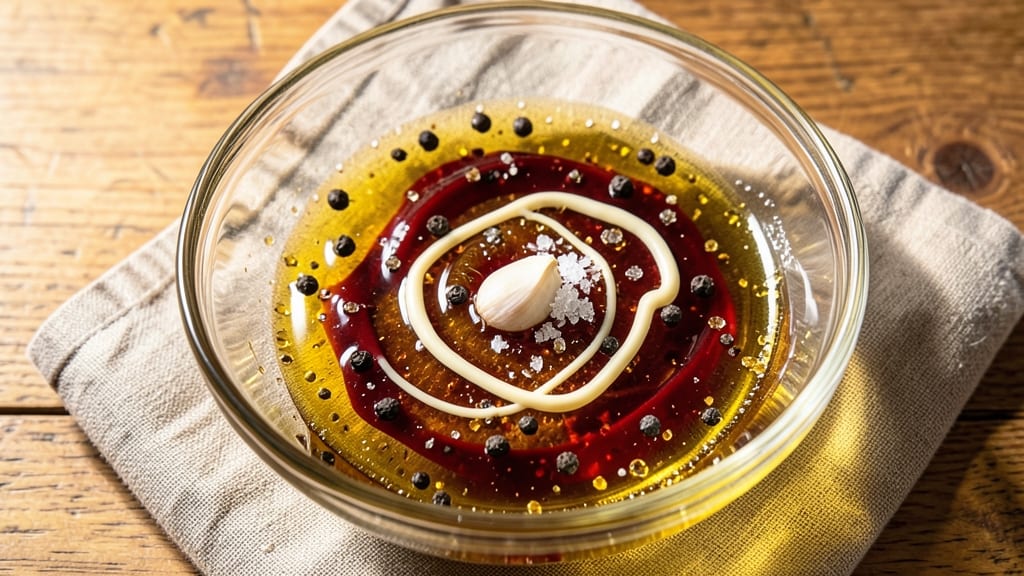
Ingredients for basic balsamic vinaigrette salad dressing
Five simple ingredients for a dressing that turns salads into flavorful meals.
| Ingredient | Amount | Notes |
|---|---|---|
| Extra-Virgin Olive Oil 🫒 | ¾ cup | High quality, fruity flavor preferred |
| Balsamic Vinegar 🍷 | ¼ cup | Aged balsamic for sweetness |
| Dijon Mustard 🌶️ | 1 tbsp | For emulsification and tang |
| Granulated Sugar 🍚 | 1 tsp | Balances acidity (optional) |
| Sea Salt 🧂 | ½ tsp | Fine grain preferred |
| Black Pepper 🌶️ | ¼ tsp | Freshly ground for best flavor |
| Fresh Garlic Cloves 🧄 | 1 clove | Minced for extra depth |
The olive oil is non-negotiable—extra-virgin makes all the difference. Trader Joe's or Whole Foods carry excellent options, but any good-quality oil works. Balsamic vinegar should be aged (look for 'aceto balsamico di Modena' on the label)—it's sweeter and richer. The Dijon mustard is your emulsifier, so don't skip it. I always grab the Maille brand when I'm at Costco, but regular grocery store Dijon works too. Fresh garlic is ideal, but if you're in a pinch, jarred minced garlic (the kind with lemon juice) works fine—just taste it first.
No Dijon? Whole-grain mustard at half the amount works in a bind. Short on balsamic? Apple cider vinegar plus 1 tsp maple syrup mimics the sweet-tart balance. Want it sweeter? Add another ½ tsp sugar or a splash of honey (though this is vegan, so skip honey). The salt and pepper can be adjusted to taste—this is where you personalize it. For a nutty twist, add 1 tbsp toasted walnuts or pine nuts to the finished dressing. If you're making this ahead, reduce the garlic slightly—it can get bitter over time.
This keeps beautifully in the fridge for up to 1 week if stored in an airtight jar. For extra insurance, pour a thin layer of olive oil on top before sealing—prevents separation. I like to make a big batch on Sundays so I have it ready for the week. If it thickens in the fridge, just whisk in a splash of water or vinegar to loosen it up. Use within 3 months if frozen, though it's best fresh. Perfect for salads, roasted veggies, or even a quick marinade for tofu or chicken.
Why You'll Love This Recipe
- Five-Ingredient Magic: I swear by this combo—just oil, vinegar, mustard, sugar, and salt. No fancy gadgets, no measuring cups (seriously, eyeball it), and it still tastes like you slaved over it.
- Tangy-Sweet Balance: That pinch of sugar? It’s not cheating—it rounds out the sharpness of the balsamic and mustard so every bite feels right. Honestly, the first time I skipped it, I regretted it by lunch.
- Weeknight & Potluck Hero: Drizzle it on greens for dinner, toss it with roasted veggies for lunch, or bring it in a jar for a picnic. I’ve used it for everything from charcuterie boards to last-minute pasta—it’s my go-to for when I need flavor fast.
- Makes More Than You Need: Double the batch and stash it in the fridge. It keeps for weeks, so you’re always ready for a salad emergency. Between us, I’ve had this dressing rescue me from sad, wilted lettuce more times than I can count.
Step-by-step instructions for balsamic vinaigrette salad dressing
This classic dressing comes together in minutes with just a few simple steps.
Whisk Together the Wet Ingredients
In a medium bowl, combine the 0.75 cup extra-virgin olive oil, 0.25 cup balsamic vinegar, and 1 clove minced fresh garlic cloves. I like to use a whisk for this step—it creates a smooth emulsion right away. Let the mixture sit for 1 minute so the garlic flavor can infuse into the oil.
The balsamic vinegar will initially separate from the oil, but that's normal. This is where the Dijon mustard comes in next—it acts as an emulsifier to bind everything together. If you're using aged balsamic vinegar, you'll notice its rich, caramel-like sweetness starts to develop immediately.
Add the Mustard and Sugar
To the oil-vinegar mixture, add the 1 tablespoon Dijon mustard and 1 teaspoon granulated sugar. Whisk vigorously for 30-45 seconds until the sugar dissolves completely and the mixture begins to thicken slightly. The mustard helps create that signature creamy texture while balancing the acidity of the vinegar.
Here's the thing—don't skip the sugar. It's what makes this dressing shine by rounding out the sharpness of the balsamic. If you're using a particularly sweet balsamic, you might reduce the sugar to ½ teaspoon instead, but I find the full amount works perfectly with most aged varieties.
Season with Salt and Pepper
Add the ½ teaspoon sea salt and ¼ teaspoon black pepper to the bowl. Whisk everything together for another 20-30 seconds until fully combined. You want the salt to dissolve completely so it distributes evenly throughout the dressing.
Taste the mixture at this point—it should be tangy with a touch of sweetness and a subtle garlic punch. If it needs more acidity, add a splash of extra balsamic vinegar. If it's too sharp, a tiny pinch more sugar will help. The goal is that perfect balance between bright and mellow flavors.
Adjust Consistency and Store
If the dressing seems too thick, gradually whisk in 1-2 teaspoons of water until it reaches your desired consistency. For a salad dressing, it should coat the back of a spoon but still pour easily. Give it one final taste adjustment if needed—this is your chance to dial in the perfect flavor profile.
Transfer the dressing to a clean jar or airtight container. It'll keep in the refrigerator for up to 2 weeks, though I usually use mine up within a few days. The flavors actually deepen as it sits, so it tastes even better the next day. Just give it a good shake before using to redistribute any separated oil.
Pro Tips For Making Basic Balsamic Vinaigrette Salad Dressing
- Whisk Slowly First: Start with a gentle stir of the balsamic vinegar, Dijon, and sugar—this dissolves the sugar properly before you drown it in oil. After 10 seconds of mixing, then pour in the olive oil in a thin stream while whisking vigorously. I used to dump everything in at once and ended up with a clumpy, oily mess.
- Use Cold Mustard: Grab the Dijon from the fridge—cold mustard emulsifies better and won’t thin out your dressing prematurely. Room-temperature mustard makes the dressing separate faster, especially if you’re not using it immediately. Trust me, this small step keeps your dressing smooth for hours.
- Salt the Oil: Season the olive oil before adding it to the vinegar mix—about ¼ teaspoon of salt per ¼ cup oil. This balances the acidity from the start, so you don’t end up over-salting when you taste-test later. I learned this after ruining a batch by salting everything at once.
- Store in Two Parts: Keep the oil and vinegar-mustard mixture separate in the fridge—combine them fresh when ready to use. The oil oxidizes slower this way, and the dressing stays bright and flavorful for up to a week. Yes, it’s an extra step, but your salads will taste like you slaved over them.
Perfect pairings for this recipe
Salad Pairings
This balsamic vinaigrette shines with bitter greens like arugula or radicchio, where its sweetness balances their peppery bite. I toss 4 cups mixed greens with 1 cup cherry tomatoes and ½ cup shaved Parmesan—the dressing clings beautifully to everything.
For heartier salads, add ½ cup toasted walnuts and ¼ cup crumbled feta (if not vegan). 🥗
Roasted Vegetables
Drizzle over roasted Brussels sprouts or carrots for a restaurant-worthy finish. Toss 1 lb Brussels sprouts (halved) with 1 tbsp olive oil, roast at 425°F for 20 minutes, then toss with 2 tbsp dressing.
The caramelized edges soak up the tangy-sweet flavor perfectly. Try it with sweet potatoes too—just reduce the sugar in the dressing to ½ tsp to avoid overpowering.
Grilled Proteins
Use it as a marinade for chicken breast or tofu before grilling. Whisk ½ cup dressing with 1 tbsp soy sauce and 1 tsp smoked paprika, then marinate for 30 minutes.
The balsamic adds depth to grilled flavors—trust me, it’s a game-changer. For extra richness, brush it on after cooking. Works great with shrimp skewers too!
Pasta Dishes
Toss 8 oz cooked penne with 2 tbsp dressing and ½ cup cherry tomatoes (halved). Add ¼ cup fresh basil and a sprinkle of Pecorino Romano for a quick, vibrant pasta.
For a creamy twist, stir in 2 tbsp vegan cream cheese after cooking. This dressing cuts through the richness of pasta beautifully—no heavy Alfredo needed. 🍝
Breakfast Twist
Drizzle over avocado toast or smashed potatoes for a savory breakfast upgrade. I love it with 2 slices sourdough, ½ avocado (mashed), and a sprinkle of everything bagel seasoning.
The sweet-tart balance wakes up your taste buds—way better than store-bought dressings. Try it with poached eggs too for a brunch showstopper!
Dessert Drizzle
Yes, really! Thin the dressing with 1 tbsp water and drizzle over strawberry shortcake or baked apples. The acidity cuts through sweetness, making desserts feel lighter. For a fancy touch, add 1 tsp vanilla extract to the dressing before using.
It’s a secret weapon for balancing rich desserts—just don’t tell anyone I said that. 🍓
Nutrition facts
Frequently asked questions
Why does my vinaigrette separate after sitting?
Separation happens because oil and vinegar are naturally immiscible. The Dijon mustard helps emulsify, but shaking before use or adding 1 tsp water can fix it. For a more stable dressing, whisk in 1 tsp cornstarch (dissolved in 1 tsp water) to create a natural thickener. Store in an airtight container to minimize separation.
Can I make this dressing without Dijon mustard?
Yes! Use 1 tbsp whole-grain mustard or ½ tsp xanthan gum (dissolved in 1 tsp water) as an emulsifier. For a vegan alternative, try 1 tsp apple cider vinegar + ½ tsp maple syrup to mimic the mustard's tang. Just whisk vigorously for 1-2 minutes to ensure everything combines smoothly.
How can I make this dressing sweeter or more tangy?
For extra sweetness, add ½ tsp maple syrup or 1 tsp balsamic glaze. For more tang, increase the balsamic vinegar by 1 tbsp or add ½ tsp lemon juice. Adjust gradually—taste as you go! The key is balance: sweetness mellows the acidity, while extra vinegar sharpens the flavor.
Is this dressing safe for people with mustard allergies?
No, this recipe contains Dijon mustard, which is a common allergen. For a safe alternative, replace it with 1 tbsp tahini or ½ tsp ground flaxseed mixed with 1 tsp water. Both add creaminess and help emulsify without mustard. Always check labels if using substitutes.
Can I use this dressing as a marinade for meat?
It works well for chicken, pork, or tofu, but avoid using it for red meats like beef or lamb—balsamic can react with nitrates in cured meats. For extra flavor, add 1 tbsp soy sauce or 1 tsp smoked paprika. Marinate for 30-60 minutes (no longer for poultry). Always discard used marinade.