
Salads
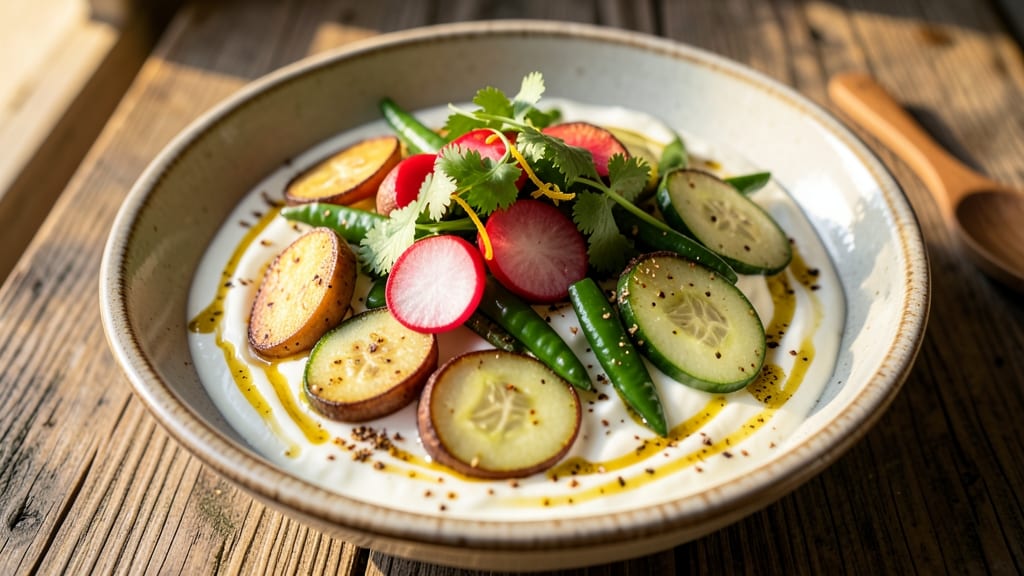
This Bangladeshi salad recipe transforms simple vegetables into a vibrant, tangy masterpiece that steals every meal. The secret lies in the marriage of yogurt's cool creaminess and mustard oil's bold crunch, a flavor combination that defines Bengali cuisine.
I first tasted this dish at a family gathering during Eid, where it was served alongside biryani—its bright acidity cutting through the rich spices perfectly.
What makes this salad special is how effortlessly it balances textures and flavors. Crisp cucumbers and radishes provide refreshing crunch, while boiled potatoes add heartiness, all bound together by a zesty yogurt dressing infused with mustard oil.
The dressing isn't just tangy—it's aromatic, with hints of cumin and green chilies that wake up every bite. This isn't just a side dish; it's a flavor experience that elevates any meal.
The best part? This salad comes together in 15 minutes with ingredients you likely already have. It's the kind of dish that works as a standalone meal with warm roti or as a refreshing accompaniment to grilled meats and rice.
The mustard oil, when used properly, adds a unique depth that's hard to replicate with other oils. Trust me, once you try this, your idea of a simple salad will change forever.
Traditionally served at festive occasions, this salad also makes a perfect lunchbox companion or picnic dish. The flavors develop beautifully when mixed ahead of time, allowing the dressing to penetrate every vegetable.
Whether you're hosting a dinner party or just craving something fresh, this recipe delivers restaurant-quality results with minimal effort. Let's get started!
Ingredients for bangladeshi salad
Simple vegetables meet bold flavors in this Bengali-inspired salad that transforms everyday ingredients into a restaurant-worthy dish.
| Ingredient | Amount | Notes |
|---|---|---|
| Plain Whole Milk Yogurt 🧀 | 1 cup | Unsweetened, full-fat preferred |
| Mustard Oil 🫒 | ¼ cup | Lightly toasted for aroma |
| Cucumber 🥒 | 1 medium | English or Persian, peeled |
| Red Radishes 🧅 | 1 medium | Thinly sliced, skin on |
| Russet Potatoes 🥔 | 2 medium | Boiled, peeled, diced |
| Green Chilies 🌶️ | 2 whole | Bird's eye or serrano, finely chopped |
| Ground Cumin 🌿 | ½ tsp | Toasted for deeper flavor |
| Salt 🧂 | 1 tsp | Diamond Crystal preferred |
| Fresh Cilantro 🌿 | ¼ cup | Chopped, stems removed |
| Lemon Juice 🍋 | 2 tbsp | Freshly squeezed |
| Sugar 🍬 | 1 tsp | White granulated |
| Garlic Cloves 🧄 | 3 cloves | Minced for dressing |
The mustard oil is non-negotiable here—look for pure, unrefined mustard oil at Indian grocery stores like Patel Brothers or Apna Bazaar. If you can't find it, toasted sesame oil works in a pinch, though it lacks that signature crunch. For the yogurt, full-fat plain yogurt gives the best creaminess—Greek yogurt works too, but it's thicker. The radishes should be firm and vibrant; red radishes have the perfect balance of sweetness and peppery bite. If you can't find them, daikon radish is a great substitute. The potatoes need to be boiled until tender but not mushy—about 15 minutes in salted water does the trick.
No mustard oil? Toasted sesame oil plus a pinch of ground mustard seed mimics the flavor, though it won't be identical. Swapping the radishes for thinly sliced jicama or turnips keeps the crunch. The green chilies can be adjusted to heat preference—remove seeds for less heat. For a milder version, use 1/2 teaspoon cayenne pepper instead. The dressing relies on the yogurt's tang, so if yours is too thick, thin with 1 tablespoon water. The sugar balances the acidity, but if you prefer it sweeter, add an extra 1/2 teaspoon. Cilantro haters? Swap for fresh mint or parsley—both work beautifully.
This salad tastes even better when prepped ahead—flavors meld for up to 2 days in the fridge. Store the dressing separately if making ahead to keep the vegetables crisp. The mustard oil can be stored at room temperature, but once opened, keep it in the fridge to preserve freshness. For a picnic, pack the dressing in a small container and mix just before serving. The potatoes soften over time, so add them last if serving as a side. Leftovers keep for 3 days in an airtight container, though the texture changes slightly after day 1.
Why You'll Love This Recipe
- No-Chop Chaos Works: I swear, this salad only needs three actual cuts—thin slices of potato, a quick chop of radish, and cucumber halves. The rest? Just tossing. Mustard oil does the heavy lifting with flavor, so you’re basically done in 15 minutes.
- Creamy Heat Balance: That whole milk yogurt base is everything—thick, tangy, and cool against the sharp mustard oil. The potatoes soak up the dressing like a sponge, giving you that perfect bite: crispy edges, creamy center. Honestly, I reach for this when I want something refreshing but still satisfying.
- Party in a Bowl: Between us, this is my go-to for potlucks, picnics, or just because. Serve it with biryani and you’ve got a full spread without the fuss. Even my picky-eating cousin asks for seconds—radishes add that peppery kick, cucumber keeps it light, and the yogurt ties it all together.
- Pantry Goldmine: Mustard oil? Check. Potatoes and radishes? Last forever. Yogurt? Versatile for days. The leftovers? Still taste fresh for three days if you store them right. And since it’s all budget-friendly staples, I make it weekly without guilt. (Yes, even on a Tuesday night.)
Step-by-step instructions for Bangladeshi yogurt salad with mustard oil crunch
This vibrant salad balances cooling yogurt, sharp mustard oil, and crisp vegetables for a refreshing bite.
Prepare the Yogurt Dressing
In a medium bowl, whisk together the 1 cup plain whole milk yogurt, 2 tablespoons lemon juice, 1 teaspoon sugar, and 1 teaspoon salt until completely smooth. This mixture should be thick but pourable, with no lumps remaining. The yogurt will serve as the creamy base that ties all the flavors together.
Next, gently fold in the 0.25 cup chopped fresh cilantro and 3 cloves minced garlic. Be careful not to overmix—just combine until evenly distributed. The cilantro adds freshness while the garlic provides a subtle depth that complements the mustard oil. Set this dressing aside while you prepare the vegetables.
Cook and Dice the Potatoes
Place the 2 medium russet potatoes in a pot of cold, salted water. Bring to a boil over medium-high heat and cook for 12-15 minutes until fork-tender. Drain thoroughly and let them cool slightly before peeling and dicing into ½-inch cubes. The potatoes need to be completely cool before adding them to the salad to prevent the yogurt from breaking.
For best texture, I like to spread the diced potatoes on a wire rack for 5 minutes to ensure they're completely dry. This step prevents a soggy salad and allows the mustard oil to crisp slightly when added later.
Thinly Slice Vegetables and Toast the Mustard Oil
Using a mandoline or sharp knife, thinly slice the 1 medium cucumber and 1 medium red radish into ⅛-inch rounds. The uniformity ensures even distribution in the salad and creates a satisfying crunch. Place both in a large bowl and set aside.
In a small saucepan, heat the 0.25 cup mustard oil over low heat until it begins to shimmer but not smoke—this should take about 2 minutes. Immediately remove from heat and let it cool for 5 minutes. The oil should be warm but not hot when added to prevent cooking the vegetables.
Combine All Ingredients
Add the cooled diced potatoes to the cucumber and radish mixture in the bowl. Pour the warm mustard oil over everything and gently toss to coat evenly. The oil will begin to crisp the potato edges slightly, adding texture while infusing flavor.
Finally, pour the yogurt dressing over the vegetables and toss again until everything is well combined. Sprinkle with 0.5 teaspoon ground cumin and 2 whole finely chopped green chilies, reserving a few for garnish. The cumin adds earthy warmth while the chilies bring a subtle heat that brightens the dish.
Chill and Serve
Cover the salad and refrigerate for at least 30 minutes before serving. This chilling time allows all the flavors to meld together while keeping the vegetables crisp. When ready to serve, garnish with the reserved chopped green chilies and an extra sprinkle of cilantro.
This salad holds well for 2-3 hours in the refrigerator, making it perfect for meal prep. Serve it as a refreshing side with grilled meats, biryani, or as a light lunch with warm naan bread.
Pro Tips For Making Bangladeshi Salad
- CHILL THE YOGURT: Skip the warm yogurt—this salad’s magic happens when the yogurt is cold. I used to toss it in straight from the fridge, but letting it sit at room temp for 10 minutes first makes the dressing cling better to the veggies. Trust me, the texture’s smoother and the flavors marry faster.
- PEEL POTATOES THIN: Don’t go full potato chip here. Thin, even slices (about ⅛-inch thick) cook faster and stay crispier when tossed with the oil. I learned this the hard way—thick slices turn gummy, and nobody wants mushy potatoes in their salad.
- DRAIN RADISHES WELL: After slicing, give those radishes a good rinse and pat them dry with a towel. Wet slices dilute the dressing and make the salad watery. I once skipped this and ended up with a soggy mess—now I double-check before mixing.
- USE ROOM-TEMP OIL: Warm the mustard oil to body temperature before drizzling—cold oil separates and looks unappetizing. Just hold the bottle in your hand for a minute or two. It blends better and coats the veggies evenly, so the flavor sticks. (Yes, even if you’re impatient like me.)
Pro cooking tips for bangladeshi salad
Mustard Oil Mastery
The key to authentic flavor lies in how you handle the mustard oil. Never heat it past smoking point—just warm it until it shimmers (2 minutes on low heat). Let it cool for 5 minutes before adding to the salad, or you'll overpower the delicate vegetables.
I've learned this the hard way: once, I added hot oil straight to the bowl, and the salad turned bitter. Pro tip: Use a small saucepan and a thermometer (aim for 160°F max) if you're nervous about burning it. 🌡️
Potato Texture Secrets
Boiled potatoes are the heart of this salad, but their texture makes or breaks it. Cook them until fork-tender (not mushy) in salted water, then dry them completely on a wire rack for 5 minutes. This prevents the yogurt dressing from turning watery.
I like to spread them in a single layer so no surface stays damp. For extra crunch, I sometimes lightly pan-fry the diced potatoes in 1 teaspoon mustard oil for 2 minutes before adding them to the salad. 🥔
Yogurt Dressing Perfection
Your yogurt dressing should be thick but pourable—like heavy cream. If it's too thick, whisk in 1 tablespoon water until smooth. The lemon juice is non-negotiable; it brightens the yogurt's tang and balances the richness of the mustard oil.
For extra depth, I add 1/2 teaspoon roasted cumin powder directly to the dressing. This step elevates the flavor from good to restaurant-quality. The dressing should coat the back of a spoon but still flow easily. 🧀
Chilling for Flavor Fusion
Never skip the 30-minute chill time—this is when the magic happens. The mustard oil infuses the vegetables, the yogurt mellows slightly, and the flavors meld into harmony.
I often make this salad the night before and let it sit overnight; the potatoes absorb the dressing beautifully, and the mustard oil's sharpness softens into a complex aroma. If you're short on time, 15 minutes in the fridge still works, but the texture won't be as refined. ❄️
Garnish Like a Pro
Save 2-3 finely chopped green chilies and a handful of cilantro for garnishing just before serving. This adds a visual pop and a fresh, spicy finish.
I also like to drizzle an extra 1/2 teaspoon mustard oil over the top right before eating—it releases the oil's signature aroma and makes the salad taste fresh. For a smoky touch, sprinkle toasted cumin seeds on top. The garnish isn't just decorative; it's the final flavor layer. 🌶️
Equipment Shortcuts
No mandoline? Use a sharp chef's knife—cut the cucumber and radish into ⅛-inch slices by rocking the knife back and forth while keeping the blade flat on the cutting board.
For the mustard oil, a small skillet works just as well as a saucepan—just keep the heat low and steady. If you don't have a wire rack, pat the potatoes dry with paper towels and spread them on a clean kitchen towel.
These small adjustments keep the recipe accessible without sacrificing quality. ✨
Nutrition facts
Frequently asked questions
Can I make this salad without mustard oil?
Yes, but the flavor will be different. Use toasted sesame oil plus 1/2 teaspoon ground mustard seeds for a similar effect. For a milder version, try olive oil with extra garlic and lemon juice to balance the flavors. The mustard oil gives that signature crunch and aroma, but these alternatives work in a pinch.
How spicy should the green chilies be?
Adjust based on your preference! For mild heat, use 1/2 teaspoon mild cayenne pepper instead of whole chilies. If you love spice, keep the seeds in and add an extra 1/2 green chili. The dressing already has a subtle kick from the mustard oil, so go easy unless you're a chili enthusiast.
Can I use Greek yogurt instead of regular yogurt?
Greek yogurt works well, but it's thicker, so you may need to thin it with 1-2 tablespoons water to achieve the right consistency. The tang will be more pronounced, which can be great if you prefer a sharper flavor. Just whisk it until completely smooth before adding to the salad.
What if I don’t have radishes? What can I substitute?
Try thinly sliced jicama, turnips, or even bell peppers for crunch. For a similar peppery bite, use daikon radish or extra cucumber. If you want to keep it traditional, omit the radishes entirely—the salad will still be delicious with just cucumber and potatoes.
How long can I store this salad in the fridge?
The salad stays fresh for 2-3 days in an airtight container, but the potatoes will soften over time. For best texture, store the dressing separately and mix just before serving. The mustard oil can be kept at room temperature, but once opened, store it in the fridge to preserve its freshness.