
Main Courses
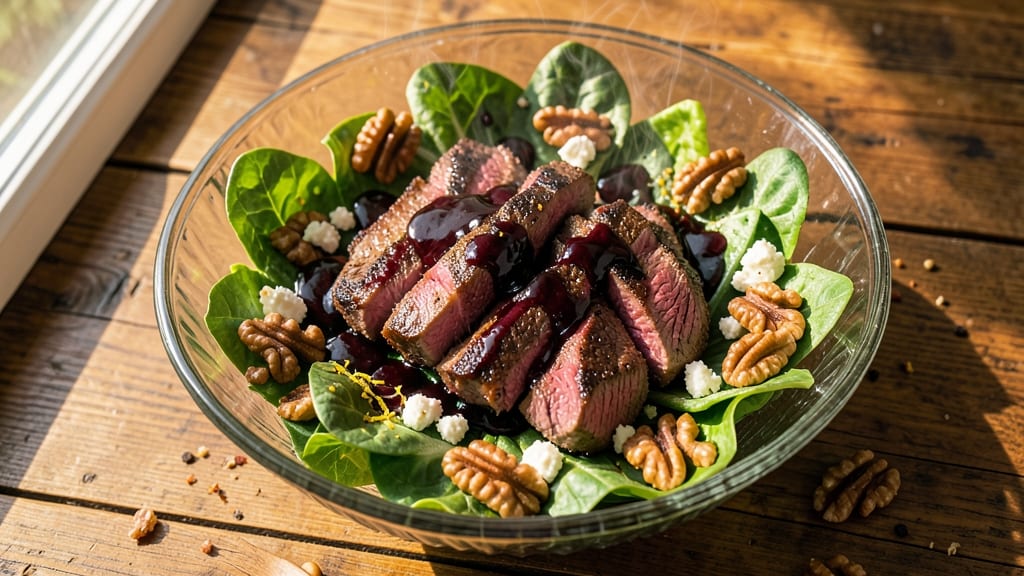
This balsamic steak salad recipe transforms a simple dinner into a restaurant-worthy masterpiece—juicy, crispy steak meets fresh greens with a tangy-sweet balsamic glaze that ties it all together.
The secret lies in high-heat searing for that perfect crust, followed by a quick balsamic reduction that adds depth without overpowering the steak's natural flavor. I developed this recipe after years of perfecting my steak technique, and the balsamic twist makes it feel unexpectedly elegant for a weeknight.
The beauty of this dish is its balance: tender, crispy steak strips hold up perfectly against crisp romaine, creamy goat cheese, and crunchy toasted nuts, all united by a bright vinaigrette.
The balsamic glaze doubles as both a marinade and finishing touch, infusing the steak with richness while adding a glossy sheen to the salad. What makes it truly special is how every component comes together—warm steak, cool greens, and that perfect bite of crunch—without requiring hours in the kitchen.
By the time you plate this salad, you'll have a dish that looks as impressive as it tastes: golden-brown steak slices fanned over crisp greens, drizzled with that glossy balsamic glaze.
The flavors play off each other beautifully—the smoky char of the steak, the tangy bite of the dressing, and the creamy contrast of the goat cheese. It's the kind of meal that feels like a celebration, even on a Tuesday night.
Ready in just 30 minutes, this recipe delivers restaurant-quality results with minimal effort. The steak cooks while you prep the salad, and the balsamic glaze comes together in minutes.
Serve immediately for the best texture and flavor—every bite is a perfect harmony of crispy, creamy, and tangy. Let's get cooking!
Ingredients for balsamic steak salad
These ingredients transform simple steak and greens into a restaurant-worthy masterpiece with crispy edges and tangy-sweet balance.
| Ingredient | Amount | Notes |
|---|---|---|
| Ribeye Steak 🥩 | 1 lb | Thinly sliced against grain |
| Romaine Lettuce 🥬 | 2 whole | Hearts separated into leaves |
| Balsamic Vinegar 🍷 | ½ cup | High-quality aged variety |
| Extra-Virgin Olive Oil 🫒 | ¼ cup | For searing and dressing |
| Goat Cheese 🧀 | 4 oz | Crumbled for creaminess |
| Walnuts 🥜 | ½ cup | Toasted for crunch |
| Garlic Cloves 🧄 | 4 cloves | Minced for marinade |
| Dijon Mustard 🍯 | 1 tbsp | For dressing depth |
| Honey 🍯 | 1 tbsp | Balances balsamic tang |
| Kosher Salt 🧂 | 1 ½ tsp | For seasoning and dressing |
| Freshly Ground Black Pepper 🌶️ | 1 tsp | Enhances steak flavor |
| Red Wine 🍷 | ½ cup | For balsamic reduction |
| Fresh Thyme Leaves 🌿 | ¼ cup | Optional garnish |
The ribeye is non-negotiable here—its marbling delivers that perfect crispy crust while staying tender. Costco or Whole Foods carry excellent cuts, but any butcher will trim it for you. Look for bright red color and good fat distribution. For the balsamic vinegar, aged balsamic glaze (not the regular kind) adds that caramelized depth—Giovanni Rossi is my go-to, but any Italian market will have great options. Fresh thyme and garlic? Trader Joe's sells pre-minced garlic in a jar (convenient for this recipe), but fresh is always better if you've got it.
No ribeye? Sirloin or flank steak work too—just slice thinly against the grain. Swap goat cheese for feta or blue cheese if you prefer, but goat's creamy tang is ideal. The balsamic reduction can be made with just vinegar and honey if you're in a rush, but adding red wine creates that restaurant-quality depth. For the dressing, if Dijon mustard feels too strong, yellow mustard at half the amount works. The walnuts can be subbed with pecans or almonds, but toast them first—that crunch is everything. And if you don't have fresh thyme, dried at one-third the amount is fine.
Prep the steak last—it stays best at room temperature for 30 minutes before cooking. The balsamic glaze keeps for 1 week in the fridge, so make extra for drizzling on toast or roasted veggies. Store the salad components separately until ready to assemble—romaine wilts fast, so keep it dry in the fridge. The goat cheese and nuts stay fresh for 5 days in airtight containers. Pro tip: Reheat leftover steak slices in a skillet for 10 seconds per side—they crisp up again like magic.
Why You'll Love This Recipe
- Steak in Minutes: That ribeye hits the pan in 10 minutes—no fancy searing skills needed. You’ll get that perfect crust without standing there like a line cook, and honestly? The balsamic glaze ties it all together while you toss the salad.
- Tangy Creamy Magic: The balsamic reduction drizzled over warm steak? It’s where things get good. Then you crumble that goat cheese right on top—suddenly, you’ve got a salad that tastes like a fancy bistro, not just greens.
- Lunch or Dinner: Make it for a lazy Sunday brunch or throw it together for a date night. The steak stays juicy cold, so leftovers? No problem. I’ve packed this for work and eaten it straight from the container—no judgment.
- Budget Power Move: Ribeye feels fancy, but a single steak feeds two with leftovers. That balsamic and olive oil stretch thin, and goat cheese? A little goes a long way. It’s the kind of meal that makes you feel like you splurged without actually breaking the bank.
Step-by-step instructions for balsamic steak salad
Here's how to create a restaurant-worthy steak salad with perfectly caramelized ribs and a tangy-sweet dressing.
Marinate and Slice the Ribeye
In a bowl, combine the 0.5 cup red wine, 1 tbsp Dijon mustard, 1 tbsp honey, 1.5 tsp kosher salt, and 1 tsp freshly ground black pepper. Whisk until fully blended. Add the 1 lb ribeye steak, ensuring it's completely coated. Cover and refrigerate for at least 1 hour (or up to 4 hours for deeper flavor).
When ready to cook, remove the steak from the marinade and pat it dry with paper towels. Using a sharp knife, slice the ribeye thinly against the grain into ¼-inch thick strips. This ensures each bite is tender and easy to eat. Keep the sliced steak on a plate while you prepare the salad base.
Create the Balsamic Reduction
In a small saucepan, combine the 0.5 cup balsamic vinegar and 0.25 cup extra-virgin olive oil. Place over medium-high heat and bring to a gentle simmer. Let it cook for 8-10 minutes, stirring occasionally, until it reduces by about half and becomes syrupy. You'll know it's ready when it coats the back of a spoon and has a deep, caramelized color.
Remove from heat and let it cool slightly. This reduction will add a rich, tangy sweetness that perfectly complements the steak. If it thickens too much while cooling, whisk in 1-2 teaspoons of water to loosen it slightly. Set aside for now.
Assemble the Salad Base
Separate the hearts of the 2 whole romaine lettuce into individual leaves. Arrange them on a large platter or individual plates to create a beautiful bed for the steak. In a small bowl, combine the 4 oz goat cheese and 0.5 cup walnuts. Toast the walnuts in a dry skillet over medium heat for 3-4 minutes until fragrant and lightly golden, then crumble the goat cheese over them. Sprinkle this mixture evenly over the lettuce leaves.
While the salad base cools, toast the 4 cloves garlic in the same skillet you used for the walnuts until fragrant and just beginning to color. Mince the garlic finely and set aside for the dressing. This adds an extra layer of flavor that ties everything together.
Sear the Steak and Assemble
Heat 0.25 cup extra-virgin olive oil in a large skillet over high heat until shimmering. Working in batches if needed, add the sliced ribeye and sear for 1-2 minutes per side until deep golden brown and just cooked through. The steak should be warm in the center but not overcooked. Transfer the seared steak to a plate and tent loosely with foil to keep warm.
Drizzle the warm steak with the cooled balsamic reduction, allowing it to coat the slices evenly. Arrange the seared steak strips over the romaine lettuce, ensuring each piece gets a generous drizzle of the reduction. Sprinkle the 0.25 cup fresh thyme leaves over the top for a pop of freshness and aroma.
Serve Immediately
Divide the salad among plates, ensuring each serving has a generous portion of steak, lettuce, goat cheese-walnut mixture, and thyme. The steak should be crispy on the outside with a tender interior, and the balsamic reduction should glaze the slices beautifully. Serve immediately while the steak is still warm and the dressing is glossy.
This dish is all about balance: the crispy, caramelized steak, the creamy goat cheese, the crunchy walnuts, and the tangy-sweet balsamic reduction. Every bite should deliver a perfect harmony of textures and flavors. Pair with a crisp white wine to complement the rich, savory elements of the salad.
Pro Tips For Making Balsamic Steak Salad
- SEAR THE STEAK HOT: Use a screaming-hot cast-iron or stainless steel pan—no need to preheat for more than 30 seconds. I learned this the hard way: a lukewarm pan means a steak that steams instead of sears, and you’ll end up with a sad, gray crust. Ribeye needs that initial shock of heat to lock in juices and build flavor.
- DRY THE LETTUCE WELL: Toss the Romaine in a salad spinner until it’s bone dry—no wet leaves clinging to the steak or goat cheese. I used to skip this, and the salad would turn soggy within 10 minutes. Even if you’re impatient (yes, even if you’re impatient like me), take the extra 10 seconds to wring it out.
- REST THE STEAK COVERED: After cooking, transfer the ribeye to a warm plate, tent loosely with foil, and let it rest for 5–10 minutes. I know, I know—you want to cut into it right away. But skipping this step means juices pooling on your plate instead of in the meat. Trust me, the wait makes the difference.
- SWEAT THE BALSAMIC: Don’t just drizzle—reduce the balsamic in a small pan over medium heat until it’s syrupy and glossy (about 3–4 minutes). This isn’t the prettiest method, but it works: the concentrated vinegar clings to the steak and goat cheese instead of pooling like water. Save the leftover reduction for drizzling later.
Common mistakes when making this dish
Overcooking the Steak
This is the #1 mistake I see—steak that's tough instead of tender. Since we're slicing thin strips, cook them just until they reach 130-135°F internal temperature (about 1-2 minutes per side in a screaming-hot skillet).
Any longer and you'll get shoe-leather texture. I use a meat thermometer for precision—ThermoWorks Smoke is my go-to. 🌡️
Skipping the Rest
After searing, let the steak rest for 5 minutes before slicing—this keeps it juicy. I know it's tempting to eat immediately, but those juices need time to redistribute. Slice against the grain into ¼-inch strips while warm for perfect texture.
Underreducing the Balsamic
The balsamic reduction needs to reduce by half—about 8-10 minutes on medium-high heat. If you rush it, you'll end up with a thin, vinegary drizzle instead of that rich, glossy glaze.
Stir occasionally to prevent burning, and test by coating the back of a spoon—it should be syrupy and deep in color.
Overcrowding the Skillet
Cook the steak in single layers—don't overcrowd your pan! This causes steaming instead of searing, leading to soggy strips. Work in batches if needed, and keep the skillet hot between additions. A 12-inch cast iron like Lodge handles this perfectly.
Using Old Balsamic Vinegar
For the reduction, use aged balsamic glaze—not regular balsamic vinegar. The aged version has that caramelized depth from slow reduction. Giovanni Rossi or Valentino are excellent choices. Regular balsamic vinegar lacks the complexity and will taste harsh when reduced.
Neglecting the Salad Base
Romaine wilts fast, so keep it dry and assemble the salad right before serving. If you prep it too early, the greens will turn limp. Also, toast your walnuts fresh—they lose crunch when stored.
I recommend toasting them in the same skillet you use for the steak to save on cleanup. 🥜
Nutrition facts
Frequently asked questions
Can I use flank steak instead of ribeye?
Flank steak works beautifully—just slice it thinly against the grain (about ¼-inch strips) for maximum tenderness. It has a slightly beefier flavor that pairs wonderfully with the balsamic glaze. For best results, marinate it for at least 2 hours since it's leaner than ribeye.
How do I make this salad ahead of time?
Prep the salad components separately: marinate the steak (up to 4 hours ahead), toast the walnuts, and crumble the goat cheese. Store them in airtight containers. Assemble the salad right before serving to keep the romaine crisp. The balsamic reduction can be made 1 day ahead and reheated gently.
What if I don't have goat cheese?
No problem! Swap it for feta, blue cheese, or even creamy avocado for a different flavor profile. If using feta, reduce the amount to 3 oz since it's saltier. For a dairy-free option, try marinated artichoke hearts or sun-dried tomatoes. The key is that creamy contrast against the crispy steak.
Can I make this dish vegetarian?
Yes! Replace the steak with grilled portobello mushrooms or marinated tofu (pressed and sliced thin). Sear them in the same way, using extra balsamic glaze for moisture. For extra protein, add chickpeas or white beans to the salad base. The balsamic reduction still works perfectly as the glaze!
How do I store leftovers?
Store the steak and salad components separately in airtight containers for up to 2 days. Reheat the steak in a skillet for 10 seconds per side to restore crispiness. Keep the romaine dry and add fresh greens when reheating. The balsamic reduction can be reheated gently and used as a drizzle for toast or roasted veggies.