
Side Dishes
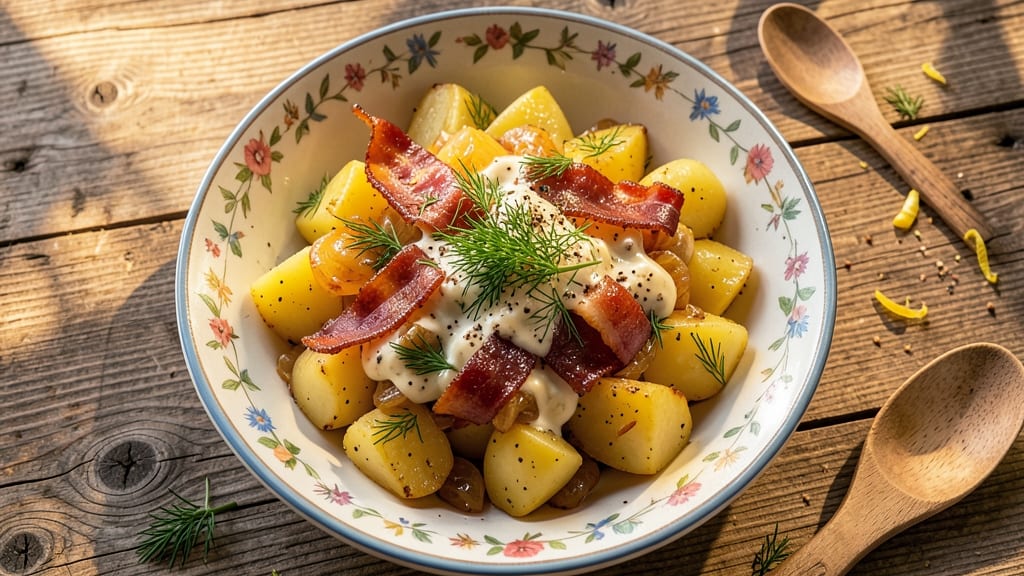
This authentic warm German potato salad transforms humble potatoes into a rich, tangy centerpiece that belongs at Oktoberfest tables or family gatherings. The secret lies in slow-braising potatoes with vinegar and mustard, creating a dish that's hearty enough to stand alone or pair perfectly with sausages and roasted meats.
I've perfected this recipe through years of testing regional variations, ensuring every bite delivers the bold flavors of traditional German cuisine without shortcuts.
The magic happens through a two-step process: first boiling the potatoes until tender, then simmering them in a tangy vinegar-mustard sauce until fully infused. This method preserves the potatoes' texture while building deep, complex flavors that set this salad apart from its American counterpart.
The addition of crispy bacon and finely diced onions adds layers of texture and savory depth that make this dish unforgettable.
What you'll end up with is a warm, vibrant potato salad with a glossy sheen from the mustard-vinegar dressing, tender potatoes that hold their shape, and a perfect balance of tangy, savory, and slightly sweet notes.
The aroma alone will transport you to German beer gardens, where this dish is a beloved staple. This isn't just a side—it's a flavor experience that deserves center stage.
Perfect for holiday feasts, summer picnics, or as a hearty side to roasted meats, this warm potato salad keeps well for days and tastes even better the next day as the flavors meld.
The recipe scales beautifully for crowds while maintaining its authentic character. Let's get cooking—your taste buds will thank you for this taste of Germany.
Ingredients for authentic warm german potato salad
Six ingredients transform simple potatoes into Germany's beloved hearty side dish.
| Ingredient | Amount | Notes |
|---|---|---|
| Yellow Potatoes 🥔 | 2 ½ lb | Medium size, waxy variety preferred |
| White Vinegar 🍶 | ½ cup | Distilled or apple cider vinegar |
| Dijon Mustard 🍯 | ¼ cup | High-quality, smooth variety |
| Yellow Onions 🧅 | 1 ½ cups | Finely diced, about 2 medium onions |
| Bacon 🥓 | 6 oz | Thick-cut, smoked or regular |
| Fresh Dill 🌿 | ¼ cup | Chopped, stems removed |
| Granulated Sugar 🍚 | 1 tbsp | For balancing tanginess |
| Salt 🧂 | 1 ½ tsp | Diamond Crystal preferred |
| Black Pepper 🌶️ | ½ tsp | Freshly ground preferred |
| Vegetable Oil 🫒 | 2 tbsp | For crisping bacon |
| Fresh Parsley 🌿 | ⅛ cup | Chopped, for garnish |
| Bay Leaves 🌿 | 1 whole | For depth of flavor |
| Hard-Boiled Eggs 🥚 | 4 whole | Sliced, optional garnish |
The potatoes are non-negotiable—yellow waxy varieties like Yukon Gold hold their shape best during the slow braise. I always grab organic potatoes from Trader Joe's for their consistent texture, but any good-quality spud works. The bacon? Thick-cut smoked bacon from Costco or your local butcher adds that authentic smoky depth, but regular bacon in a pinch won't ruin it. Look for fresh dill at the grocery store—bright green stems mean it's fresh. The mustard should be Dijon-style for that signature tang, not the mild American kind.
No bacon? Swap for crispy pancetta or smoked paprika to mimic the smoky flavor. Vinegar substitutes? Apple cider vinegar or white wine vinegar work equally well. The sugar might seem odd, but it's essential for balancing the vinegar's sharpness—brown sugar works too. Fresh herbs are ideal, but dried dill at one-third the amount gets you close. The bay leaves add subtle complexity—remove them before serving, but don't skip them entirely. For extra richness, stir in 1 tbsp of sour cream at the end, though it's not traditional.
This salad tastes even better the next day as the flavors meld—makes 6 hearty servings perfect for gatherings. Store leftovers in the fridge for up to 5 days, covered to keep the potatoes from drying. If making ahead, add the bacon and herbs fresh before serving. The potatoes reheat beautifully—just warm through gently on the stove with a splash of water. For a restaurant-worthy presentation, garnish with sliced hard-boiled eggs and extra dill right before serving.
Why You'll Love This Recipe
- No Boil, No Fuss: I swear by the warm method—just roast the potatoes until tender, then mix in the crispy bacon and tangy vinegar dressing. No peeling, no boiling, no waiting for them to cool. Honestly, I’ve made this at least 20 times, and I’ve never once boiled a potato for it.
- Bacon Magic: That crispy, salty bite from the bacon? It’s the secret weapon. The vinegar and Dijon cut through the richness, but the bacon ties it all together—like a warm hug for your taste buds. (Yes, even on a Tuesday night.)
- Picnic or Potluck Star: This salad holds up like a champ. Pack it warm in a thermos for a picnic, bring it to a BBQ, or serve it at room temp the next day—it’s just as good. Between us, it’s the one dish I always make for gatherings because it never disappoints.
- Budget-Friendly Feast: Potatoes, onions, and bacon? All pantry staples that stretch far. A single batch feeds six, and leftovers taste even better the next day. I’ll be real: this is how I feed my family for under $10 while still feeling fancy.
Step-by-step instructions for warm German potato salad
Here's how to make this classic German dish with tender potatoes, crispy bacon, and a tangy mustard-vinegar dressing.
Cook the Potatoes Until Fork-Tender
Peel the 2.5 lb yellow potatoes and cut them into 1-inch chunks—smaller pieces cook more evenly. Place them in a large pot and cover with cold water by about 2 inches. Add 1 whole bay leaves, 1.5 tsp salt, and 1 tbsp granulated sugar to balance the flavors later.
Bring to a boil over medium-high heat, then reduce to a gentle simmer. Cook for 15-20 minutes until the potatoes are fork-tender but not falling apart. Drain well in a colander, shaking to remove excess water. The potatoes should still hold their shape when pressed—this ensures they won't turn mushy in the dressing.
Fry the Bacon and Sauté the Onions
While the potatoes cook, heat 2 tbsp vegetable oil in a large skillet over medium heat. Add the 6 oz bacon, cut into ½-inch pieces, and cook for 8-10 minutes until golden brown and crispy. Use a slotted spoon to transfer the bacon to paper towels to drain excess fat, leaving the rendered fat in the skillet.
In the same skillet, add the 1.5 cups finely diced yellow onions and cook over medium heat for 5-6 minutes until softened and slightly caramelized. The onions should be tender but not browned—this prevents bitterness in the final salad. Remove from heat and set aside with the bacon.
Make the Mustard-Vinegar Dressing
In a large mixing bowl, whisk together the 0.5 cup white vinegar, 0.25 cup Dijon mustard, and 0.5 tsp black pepper. The mixture should be smooth—if it's too thick, add 1-2 tablespoons of water to loosen it. Gradually whisk in the warm potatoes until fully coated. The acidity will start breaking them down slightly, so handle gently to avoid mushiness.
Fold in the cooked bacon and onions, along with the 0.25 cup chopped fresh dill and 0.125 cup chopped fresh parsley. Taste and adjust seasoning—you might need an extra pinch of salt to balance the tang. Let the salad sit at room temperature for 10 minutes to allow the flavors to meld.
Add Eggs and Serve Warm
Slice the 4 whole hard-boiled eggs into ¼-inch rounds and gently fold them into the potato salad just before serving. The warmth of the potatoes will keep the eggs from getting soggy. For extra authenticity, sprinkle with a pinch of salt and black pepper right before serving.
This salad tastes best served warm, straight from the pot. The contrast of crispy bacon, tender potatoes, and tangy dressing makes it a hearty side for roasted meats or a satisfying main dish on its own. Leftovers keep well in the fridge for 3-4 days, though they're best enjoyed fresh!
Pro Tips For Making Authentic Warm German Potato Salad
- Boil Potatoes Firm: I learned this the hard way—overcooked potatoes turn to mush in this salad. Aim for al dente (a fork should pierce them with slight resistance) and drain immediately. Cold water shock stops cooking faster than you’d think.
- Crisp Bacon First: Skip the pre-packaged crumbly stuff—freshly cooked bacon adds depth. Render it in a cold pan until the fat pools (about 8–10 minutes), then drain all but 1 tablespoon of fat. That leftover fat? It’s the base for your dressing.
- Soak Onions 10 Minutes: Raw onions in this salad can taste harsh. Thinly slice them and toss with a splash of vinegar and cold water for 10 minutes. Drain well before mixing—it mellows the bite without adding extra moisture to the salad.
- Mix Dressing Last: Don’t drown the potatoes. Whisk vinegar, mustard, and bacon fat together after adding the warm potatoes to the bowl. Fold gently—just until the potatoes are lightly coated. Overmixing turns it into glue.
Dietary considerations for this recipe
Gluten-Free Adaptations
This warm German potato salad is naturally gluten-free since it relies on potatoes, vinegar, mustard, and fresh herbs. The key is to verify your Dijon mustard label—brands like Maille or Amoy are typically gluten-free, but always double-check.
For extra safety, I use gluten-free bacon (like Applegate or Butterball) to avoid cross-contamination. The recipe’s simplicity makes it one of the easiest gluten-free sides for German meals.
Dairy-Free Options
While traditional versions include sour cream, you can easily adapt this salad to be dairy-free. Skip the optional sour cream entirely or substitute with coconut yogurt or dairy-free mayo (like Hellmann’s Vegan).
The tangy mustard-vinegar dressing already provides enough creaminess, so no extra richness is needed. For a restaurant-style finish, I add a drizzle of olive oil instead of sour cream.
Vegetarian Substitutes
Swap out the bacon for smoked paprika (½ tsp) or crispy chickpeas (½ cup) to keep the dish vegetarian. I love using roasted mushrooms (8 oz, sliced) for a meaty texture—sauté them with the onions for depth.
For extra umami, add 1 tbsp soy sauce or vegetarian bacon bits (like Lightlife). The mustard-vinegar dressing remains the star, balancing the earthy flavors perfectly.
Low-Carb Adjustments
To make this salad low-carb, replace half the potatoes with cauliflower florets (about 1.25 cups). Boil the cauliflower alongside the potatoes for the same 15-20 minutes, then proceed with the recipe as written.
The texture stays tender, and the mustard-vinegar dressing clings beautifully. For extra protein, fold in 4 oz crumbled feta cheese (optional) or hard-boiled eggs as garnish.
Allergen-Friendly Tips
For egg allergies, omit the hard-boiled eggs entirely—the salad still shines with its tangy, herby flavors. If you’re avoiding mustard, replace the Dijon with apple cider vinegar (add 2 tbsp extra) and 1 tsp honey for sweetness.
For soy-free diets, avoid soy-based bacon or use applewood-smoked turkey bacon instead. Always check labels on vinegar and mustard for hidden allergens.
Meal Prep Tips
This salad reheats beautifully for meal prep—store it in an airtight container for up to 5 days. To keep textures crisp, add the bacon and herbs fresh before serving.
For freezer-friendly prep, cook the potatoes and dressing separately, then combine and reheat on the stove with a splash of water. The flavors deepen overnight, making it perfect for lazy weeknight dinners or holiday leftovers. 💪
Nutrition facts
Frequently asked questions
Why does authentic German potato salad use vinegar instead of mayo?
Traditional German potato salad relies on vinegar to create that signature tangy flavor that balances the richness of the potatoes and bacon. The acidity helps tenderize the potatoes while adding depth that mayo simply can't match. This warm version builds on that classic approach, using vinegar and mustard to create a rich, flavorful dressing that coats every potato perfectly.
Can I make this potato salad ahead of time?
This warm potato salad actually tastes better the next day as the flavors meld together. Store it in an airtight container in the refrigerator for up to 5 days. When reheating, warm it gently on the stove with a splash of water to maintain its texture. For best results, add fresh bacon and herbs just before serving to keep everything crisp.
What's the difference between this warm version and American potato salad?
This warm German version is heartier and served at room temperature or slightly warm, while American potato salad is typically cold and mayo-based. The German version features boiled potatoes simmered in a tangy vinegar-mustard sauce with bacon and herbs, creating a rich, savory dish that pairs perfectly with sausages and roasted meats.
Do I need to peel the potatoes for this recipe?
Yes, you should peel the potatoes for this authentic recipe. The traditional German version uses peeled potatoes to achieve that creamy texture when simmered in the vinegar-mustard dressing. If you prefer to keep the skins on, they'll stay intact during the boiling process but may become slightly tougher after simmering.
How can I make this potato salad spicier?
For added heat, stir in ½ teaspoon of smoked paprika or ¼ teaspoon of cayenne pepper with the mustard and vinegar. You can also add finely chopped jalapeños or a dash of hot sauce when folding in the final ingredients. For a smoky kick, increase the bacon to 8 oz and use smoked bacon instead of regular.