
Salads
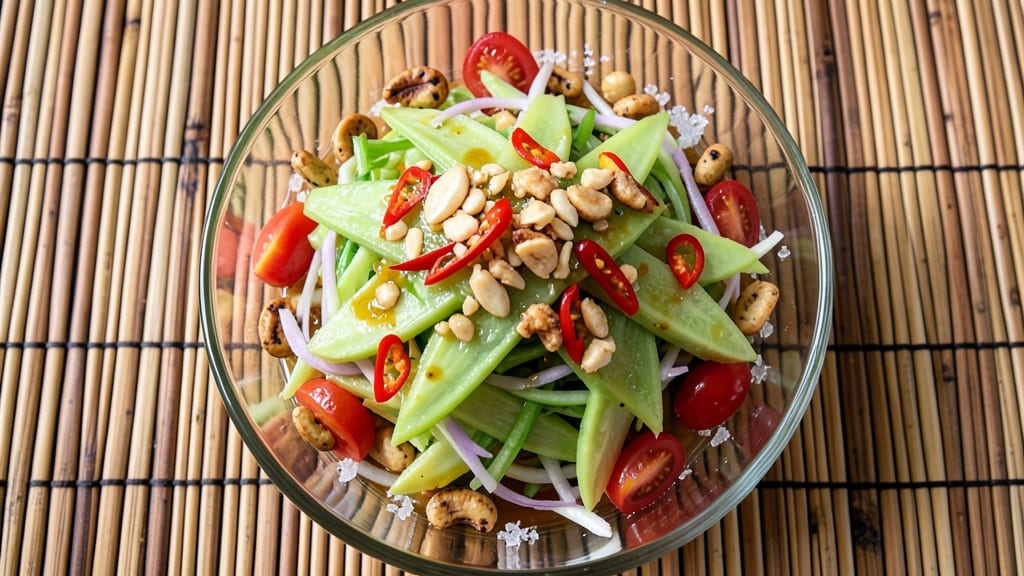
This authentic Thai green papaya salad recipe delivers the perfect balance of spicy, tangy, and crunchy flavors that define Som Tum. The secret lies in the traditional technique of pounding ingredients together—a method that releases natural juices and creates a vibrant, textured salad.
I've adapted this classic dish to be vegetarian-friendly while keeping the bold, refreshing essence that makes it a Thai street food staple.
The recipe begins with fresh green papaya, which must be shredded into thin, julienne strips for that signature crunch. A mortar and pestle bring the ingredients together, blending garlic, chili, lime, and palm sugar into a harmonious paste.
This technique not only infuses flavor but also creates the perfect balance of heat, sweetness, and acidity that defines this dish.
What you'll end up with is a salad that's as visually striking as it is delicious—bright green papaya, fiery red chilies, and crunchy peanuts all tossed together in a tangy, slightly sweet dressing.
The flavors are complex yet balanced, with each bite offering a mix of textures and tastes that keep you reaching for more.
Perfect for a quick lunch, a spicy appetizer, or even a refreshing side dish, this recipe captures the essence of Thai street food in just 15 minutes.
Whether you're serving it at a gathering or enjoying it as a solo meal, the authentic flavors will transport you straight to the bustling markets of Thailand.
Ingredients for authentic thai green papaya salad
These vibrant ingredients bring the bold, refreshing flavors of Thai street food right to your kitchen.
| Ingredient | Amount | Notes |
|---|---|---|
| Green Papaya 🥒 | 4 cups | Shredded into thin strips |
| Lime Juice 🍋 | ½ cup | Freshly squeezed |
| Palm Sugar 🍯 | ¼ cup | Or substitute brown sugar |
| Garlic Cloves 🧄 | 6 cloves | Peeled and smashed |
| Bird's Eye Chilies 🌶️ | 4 whole | Stems removed, lightly crushed |
| Fish Sauce 🍶 | 2 tbsp | Vegetarian alternative: soy sauce |
| Dried Shrimp 🦐 | ¼ cup | Vegetarian alternative: omit or use tofu |
| Roasted Peanuts 🥜 | ½ cup | Crushed for texture |
| Fresh Cilantro 🌿 | ¼ cup | Chopped, stems removed |
| Vegetable Oil 🫒 | 1 tbsp | For pounding ingredients |
| Salt 🧂 | ½ tsp | To taste |
| Lime Zest 🍋 | 1 tbsp | For garnish |
The green papaya is non-negotiable—look for firm, unblemished fruit at Asian markets or well-stocked grocery stores. The palm sugar adds that authentic sweetness, but brown sugar works in a pinch if you can't find it. For the bird's eye chilies, wear gloves if you're sensitive to heat—they pack a serious punch. I always grab Thai Kitchen brand dried shrimp at Costco for convenience, but you can omit it entirely for a fully vegetarian version. The peanuts should be roasted and slightly salty—Planters or 365 brand are my go-tos.
No fish sauce? Soy sauce or coconut aminos work beautifully—just use half the amount since they're less salty. Running out of dried shrimp? Crumbled tofu or extra peanuts add protein without compromising texture. The lime juice should be freshly squeezed—bottled just doesn't cut it. For extra crunch, toasted cashews make a great substitute for peanuts. And if you're worried about the heat, reduce the chilies to 2-3—you can always add more later. The garlic and cilantro should be fresh, but if you're in a bind, dried cilantro (used at half the amount) and garlic powder will do.
This salad is best enjoyed fresh, but it keeps for up to 2 days in the fridge if stored in an airtight container. The peanuts and cilantro will lose some crunch, so add them fresh when serving. For meal prep, store the dressing and papaya separately and toss just before eating. The flavors actually improve after sitting for 10-15 minutes, so don't rush it. If you're serving a crowd, double the recipe—it disappears fast!
Why You'll Love This Recipe
- I’ll be honest: shredding green papaya is intimidating until you try this trick—just slice it into thick strips, then chop them crosswise like you’re hacking through a pile of kindling. No mandoline, no tears, just satisfying crunch in minutes.
- No-Sharp-Knife Needed: I’ll be honest: shredding green papaya is intimidating until you try this trick—just slice it into thick strips, then chop them crosswise like you’re hacking through a pile of kindling. No mandoline, no tears, just satisfying crunch in minutes.
- Tangy Crunch Magic: That first bite? The lime juice hits first—bright, sharp, like a wake-up call—then the garlic and chilies sneak up with heat, while the palm sugar rounds out the chaos. It’s the kind of flavor that makes you eat it straight from the bowl, no plates required.
- Lunchbox Superstar: Pack it in a container for work, and it’ll still taste fresh hours later. My kids take it in their lunches (they call it “weird salad”), and I bring it to potlucks because it’s the only dish that won’t wilt or get soggy. Bonus: it’s vegan, gluten-free, and somehow still feels indulgent.
Step-by-step instructions for authentic Thai green papaya salad
Here's how to make this vibrant, crunchy salad with perfect balance of spice and tang.
Prepare the Green Papaya
Start by cutting the green papaya lengthwise into quarters, then slice each quarter into ¼-inch thick half-moons. Lay the slices flat on a cutting board and carefully slice them into thin, even strips about ¼-inch wide using a sharp chef's knife. You should end up with all 4 cups of shredded papaya.
Place the shredded papaya in a large mixing bowl. Immediately sprinkle with the 0.5 teaspoon salt and gently toss to distribute evenly. Let it sit for 5 minutes while you prepare the remaining ingredients. This salting step draws out excess moisture, ensuring your salad stays crisp rather than soggy.
Pound the Aromatic Base
In a mortar and pestle, combine the 6 smashed garlic cloves, 4 lightly crushed bird's eye chilies, 0.25 cup palm sugar, and 2 tablespoons fish sauce. Pound everything together vigorously for 2-3 minutes until the mixture becomes a thick, fragrant paste. You'll notice the sugar starts to dissolve and the chilies release their fiery oils.
If you don't have a mortar and pestle, use a small bowl and the back of a wooden spoon to mash everything thoroughly. The goal is to create a cohesive paste that will evenly distribute throughout the salad. This aromatic base forms the flavor foundation of your dish.
Combine All Ingredients
Add the pounded paste to the bowl with the salted papaya. Pour in the 0.5 cup freshly squeezed lime juice and gently fold everything together using your hands or a large spoon. The acidity will immediately brighten the flavors and help tenderize the papaya slightly.
Next, fold in the 0.25 cup dried shrimp (if using) and the 0.5 cup crushed roasted peanuts. The peanuts add satisfying crunch while the shrimp contributes umami depth. Mix gently to avoid breaking the peanuts into dust. The salad should look vibrant green with red and brown speckles from the chilies and shrimp.
Finish and Garnish
Taste the salad and adjust seasoning if needed. You might want to add a bit more palm sugar for sweetness or another splash of lime juice for acidity. The balance should be tangy, spicy, sweet, and savory all at once.
Transfer the salad to a serving platter and sprinkle with the 0.25 cup chopped fresh cilantro and 1 tablespoon lime zest. The cilantro adds freshness while the lime zest enhances the citrus aroma. Serve immediately while still crisp and vibrant. This salad keeps well for up to 2 hours in the refrigerator, though it's best enjoyed fresh.
Pro Tips For Making Authentic Thai Green Papaya Salad
- SHRED COLD, NOT WARM: I learned this the hard way—shredding papaya straight from the fridge makes it crispier and easier to handle. Warm papaya gets mushy fast, and your salad will turn into a sad, soggy mess. Plus, chilled papaya shreds cleaner with less sticking.
- MINCE GARLIC FINE: Skip the rough chop—mince those garlic cloves until they’re almost pasty. Too many visible chunks means you’ll taste them instead of the balanced, smooth flavor of the dressing. A knife or mortar works, but don’t rush it.
- SALT THE CHILIES FIRST: Toss bird’s eye chilies with a pinch of salt before blending—they’ll soften just enough to release more heat and oil into the dressing. No salt? They’ll taste raw and sharp, like someone forgot the seasoning.
- DRESSING IN STAGES: Mix lime juice, palm sugar, and a splash of water first, then add the shredded papaya and other ingredients. Adding everything at once drowns the papaya in liquid and kills the texture. Start light, then toss gently.
Regional styles of these flavors
Central Thai Style
This is the classic version you'll find at Bangkok street markets, where vendors pound ingredients in a mortar and pestle for that authentic texture. The Central Thai approach uses bird's eye chilies for maximum heat and palm sugar for authentic sweetness.
I always look for green papaya with firm, unblemished skin—the key to perfect crunch. In Central Thailand, they often add dried shrimp for umami, but I've included a vegetarian alternative using tofu or extra peanuts. The lime juice should be freshly squeezed—I can't stress that enough! 🍋
Northern Thai Adaptation
Up in Chiang Mai, they take their Som Tum with a slightly different approach, often including fermented soybean paste (tao jiew) for depth. The Northern version tends to be less sweet and more savory, with a focus on garlic and shallots instead of just garlic.
I've seen vendors there use less palm sugar and more fish sauce for that umami punch. For a Northern-inspired twist, add 1 tablespoon of fermented soybean paste to your pounded base. The texture remains the same, but the flavor profile shifts to something earthier and more complex.
Southern Thai Variation
Down in the south, particularly in Phuket and Krabi, they love their Som Tum with a sweeter, fruitier profile. Southern cooks often add mango powder or extra palm sugar to balance the heat. They also incorporate more herbs like Thai basil alongside the cilantro.
For a Southern-style version, mix 1 teaspoon of mango powder into your pounded base. The result is a salad that's still tangy and spicy but with a subtle sweetness that reminds me of tropical fruit. This version pairs beautifully with grilled seafood or coconut-based curries.
Isaan Regional Twist
In the Isaan region of Northeast Thailand, they make their Som Tum with dried shrimp as the star ingredient, often using more than the standard ¼ cup. The Isaan version also incorporates dried long beans for extra crunch and texture.
For an Isaan-inspired salad, increase your dried shrimp to ⅓ cup and add ¼ cup of dried long beans (soaked in warm water for 10 minutes first). The result is a heartier, more protein-packed salad that's perfect for those who love bold flavors.
This version is especially popular with sticky rice as a side.
Modern Bangkok Fusion
Today's Bangkok street food scene has embraced fusion versions of Som Tum, often blending traditional techniques with modern ingredients. One popular twist is adding avocado for creaminess or pomegranate seeds for a sweet-tart contrast.
For a fusion version, fold in ½ cup of diced avocado just before serving to keep it creamy. Another modern take is using coconut aminos instead of fish sauce for a gluten-free option.
These versions keep the traditional pounding method but introduce ingredients that appeal to contemporary palates while maintaining that signature Thai flavor balance. 🌟
Nutrition facts
Frequently asked questions
Why does authentic Thai green papaya salad need to be pounded?
The pounding technique releases natural juices from garlic, chilies, and palm sugar, creating a vibrant paste that evenly coats the papaya. This method also tenderizes the ingredients slightly while building intense flavors through friction. Without pounding, the salad would lack that signature cohesive texture and depth of taste.
Can I make this salad without a mortar and pestle?
Use a small bowl with the back of a wooden spoon to mash the garlic, chilies, sugar, and fish sauce until you get a thick paste. For extra efficiency, pulse them in a food processor, but avoid over-processing to maintain texture. The key is achieving a smooth, fragrant base that blends well with the papaya.
How do I adjust the spice level for sensitive eaters?
Start with just 2 bird's eye chilies (seeds removed) instead of 4, or use milder Thai chilies. For extra control, remove chili seeds before crushing. You can always add more later if needed, but you can't take out the heat once it's mixed in.
What's the best way to store leftover green papaya salad?
Store the dressing and papaya separately in airtight containers for up to 2 days. Recombine just before serving to preserve crunch. The peanuts and cilantro should be added fresh when ready to eat. For best texture, enjoy within 2 hours of making to maintain that signature crispness.
Why does my salad taste too sweet or sour?
Balance is key! If it's too sweet, add more lime juice (start with 1 tablespoon) or a pinch of salt. For excessive sourness, stir in more palm sugar or a splash of fish sauce (or soy sauce for vegetarian). Taste as you go—the perfect salad should have all four flavors (sweet, sour, salty, spicy) working together.