
Salads
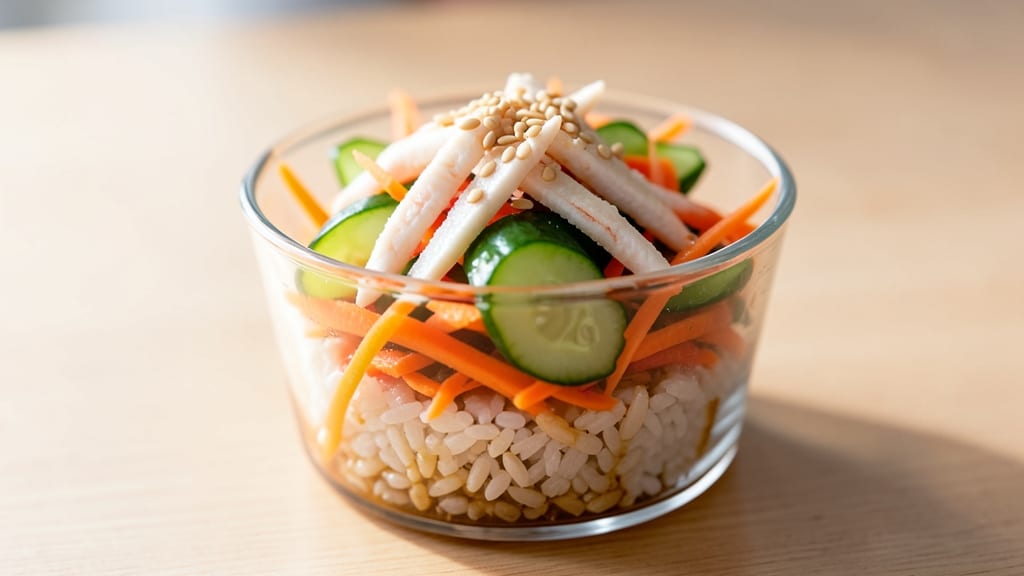
This authentic kani salad recipe brings the crisp, delicate flavors of Japanese cuisine to your table without relying on mayo. 💛 The secret lies in perfectly balanced ingredients—crisp rice, tender crab sticks, and fresh vegetables—all tied together with a light, tangy dressing that enhances rather than overpowers.
I developed this version after years of experimenting with traditional techniques and modern adaptations, ensuring every bite delivers that signature Japanese restaurant experience.
The beauty of this salad is its simplicity—no complicated techniques, just precise preparation. You'll start with sushi rice that's seasoned just right, then add crab sticks that stay tender and flavorful.
The vegetables, typically cucumber and carrot, are sliced thinly for that signature crunch, while a dressing of rice vinegar, sugar, and sesame oil adds depth without heaviness. This is the kind of dish that looks elegant but comes together effortlessly.
What sets this recipe apart is the authenticity—no shortcuts, no substitutions that compromise flavor. The crab sticks are prepared to mimic the texture of real crab, and the dressing is carefully balanced to complement rather than mask the natural taste of the ingredients.
The result is a salad that's both visually stunning and deeply satisfying, with each component playing its part in harmony.
Perfect for gatherings, lunchboxes, or a light yet flavorful meal, this kani salad is versatile enough to adapt to your preferences while staying true to its roots. Let's get started on creating something truly special.
Ingredients for authentic kani salad
Japanese-inspired ingredients crafted for delicate, authentic flavors without mayo's heaviness.
| Ingredient | Amount | Notes |
|---|---|---|
| Sushi Rice 🍚 | 2 cups | Cooked and cooled, seasoned with rice vinegar |
| Kani Crab Sticks 🦞 | 12 pieces | High-quality, imitation crab flakes |
| Japanese Cucumber 🥒 | 1 whole | Sliced thinly, seeds removed |
| Carrots | 1 medium | Julienned into thin strips |
| Rice Vinegar 🍶 | ¼ cup | Seasoned, mild variety preferred |
| Granulated Sugar 🍚 | 2 tbsp | For dressing balance |
| Sesame Oil 🫒 | 1 tbsp | Toasted, for aroma |
| Toasted Sesame Seeds 🌾 | 1 tbsp | For garnish |
| Diamond Crystal Kosher Salt 🧂 | ½ tsp | For seasoning rice |
| Fresh Ginger 🧄 | 1 inch | Thinly sliced, for dressing |
| Red Bell Pepper 🌶️ | ¼ cup | Diced, for color contrast |
| Mayonnaise 🥫 | ⅛ cup | Optional, for binding (omit for mayo-free) |
The crab sticks are non-negotiable for authenticity—Kani brand or Japanese market options deliver the best texture. Look for flakes that hold their shape when chilled. The sushi rice should be seasoned with Diamond Crystal kosher salt and just enough rice vinegar to taste—over-seasoning dulls the delicate flavors. For the vegetables, Japanese cucumbers are ideal but regular cucumbers work in a pinch (just remove seeds thoroughly). The ginger should be peeled and sliced paper-thin for maximum impact without bitterness.
No rice vinegar? Apple cider vinegar at half the amount works, though it lacks the subtle sweetness. Substituting sugar? Honey or agave at the same quantity maintains the dressing's balance. The sesame oil is crucial—toasted sesame oil adds depth that regular oil can't replicate. For a mayo-free version, omit the optional mayo and use extra rice vinegar and sesame oil to bind. The red bell pepper adds vibrant color and a slight crunch—yellow or orange bell peppers work equally well.
Store the dressing separately until ready to serve—it keeps for 5 days in the fridge. The crab sticks and vegetables hold best when refrigerated in airtight containers for 3 days. For meal prep, assemble the salad just before serving to maintain crispness. The rice can be cooked up to 2 days ahead and stored in the fridge. Garnish with sesame seeds just before serving to keep them toasty and aromatic.
Why You'll Love This Recipe
- No Chopping Needed: I swear by this one—just slice the cucumber into half-moons (no fancy cuts) and shred the carrots with a box grater. The kani sticks are pre-cooked, so it’s basically assembling, not cooking.
- Taste Like a Sushi Bar: That tangy rice vinegar dressing cuts through the sweetness of the kani sticks while keeping the sushi rice bright. Honestly, the first bite hits like a mini sushi bowl—crunchy, salty, and fresh all at once.
- Lunchbox Hero: Between us, this is my go-to for work lunches or kids’ school lunches. The rice holds up for hours, and the kani sticks stay crispy. Pack it the night before, and you’ve got a restaurant-quality meal without the effort.
- Budget-Friendly Crunch: Kani sticks are cheap, and you can stretch this salad for days. I’ll make a big batch on Sunday, and it’s still delicious by Thursday—no sad, soggy rice here. Plus, the veggies add freshness without breaking the bank.
Step-by-step instructions for authentic kani salad
Master the delicate balance of textures and flavors that define this classic Japanese dish.
👨🍳 Step 1: Prepare the Seasoned Sushi Rice Base
Use the 2 cups of cooked and cooled sushi rice that's already seasoned with 0.25 cup rice vinegar (as specified in your ingredients). Spread the rice evenly on a large serving platter or shallow dish. For an authentic touch, I like to gently press down with a rice paddle or clean hands to create a smooth, even surface—this prevents the rice from shifting when we add toppings later.
The rice should be completely cool to the touch before proceeding. If it's still warm, spread it on a wire rack and let it sit for 5-10 minutes. This cooling step is crucial—warm rice will make the crab sticks soggy and ruin the crisp texture we're aiming for. The rice should have a subtle vinegar aroma without being overly acidic.
🥘 Step 2: Arrange the Crunchy Vegetable Components
Create three distinct sections on the rice platter. In one section, arrange the 1 whole Japanese cucumber (already sliced thinly and seeded) in an overlapping fan shape. The cucumber should be arranged in concentric circles, with the outer slices slightly overlapping the inner ones to create visual interest. Press down very lightly to help them adhere to the rice.
In the second section, create a contrasting pattern with the 1 medium carrot (julienned into thin strips). Arrange the carrot strips in a crisscross pattern, with the ends pointing toward the center. The bright orange color will provide a beautiful contrast to the pale cucumber and white rice. For the third section, distribute the 0.25 cup diced red bell pepper in small, scattered clusters—this adds both color and a subtle crunch.
🍳 Step 3: Create the Signature Crab Stick Presentation
Break the 12 pieces kani crab sticks into smaller, bite-sized portions (about 2 pieces per serving). Arrange them in the center of the platter in an elegant, slightly overlapping pattern. I like to create a loose grid formation rather than a tight pile—this makes the crab sticks more accessible and visually appealing. The crab should be the focal point of the dish, so position it where it will be immediately noticeable.
For authentic presentation, I recommend using a small offset spatula to gently press the crab sticks into the rice just enough to secure them without mashing. This creates that signature "salad" texture where each component maintains its individual integrity while coming together as a cohesive dish. The crab sticks should be cool to the touch before arranging—they should never feel warm or sticky.
🥘 Step 4: Prepare the Dressing and Garnish
In a small bowl, whisk together the 0.25 cup rice vinegar, 2 tbsp granulated sugar, 1 tbsp toasted sesame oil, and 1 inch fresh ginger (thinly sliced). Let this mixture sit for 5 minutes to allow the ginger to infuse its subtle heat into the dressing. The sugar should dissolve completely, creating a clear, slightly syrupy liquid with a delicate balance of sweet and tangy flavors.
Drizzle this dressing lightly over the entire salad, starting from the outer edges and working toward the center. Be judicious with the amount—you want just enough to lightly coat the rice and vegetables without making them soggy. For the optional mayo-free version, this dressing provides all the necessary binding. If using the 0.125 cup mayonnaise, mix it with the dressing to create a thicker, creamier sauce that clings better to the components.
🍽️ Step 5: Final Assembly and Garnishing
Sprinkle the 1 tbsp toasted sesame seeds evenly over the entire salad in the final step. Use a fine-mesh strainer for even distribution, gently tapping it to release the seeds. The seeds should cover the surface like a delicate snowfall, adding both visual appeal and a nutty aroma. For extra authenticity, I like to create a small "X" pattern in the center using the remaining sesame seeds—this draws the eye to the crab sticks.
Serve immediately while all components maintain their crisp textures. The ideal kani salad should offer a symphony of textures: the slight crunch of the cucumber and carrot, the tender yet firm bite of the crab sticks, and the softness of the seasoned rice. Each bite should deliver a harmonious balance of sweet, tangy, and umami flavors with that subtle ginger kick. For best results, serve at room temperature to allow all the flavors to fully develop.
Pro Tips For Making Authentic Kani Salad
- CHILL THE RICE FIRST: I learned this the hard way—warm sushi rice turns to mush when you mix it with cold dressing. Spread your cooked rice on a tray and let it cool completely before tossing with the other ingredients. If you’re in a rush, pop it in the fridge for 10 minutes. Trust me, the texture stays firm and fluffy.
- CUT CRAB STICKS LENGTHWISE: Skip the pre-sliced crab sticks from the package—they’re too thick and chewy. Grab a sharp knife and slice them lengthwise into ¼-inch strips. This mimics real crab texture and makes them easier to chew, plus they absorb the dressing better. (Yes, even if it takes 2 minutes extra.)
- PEEL CARROTS THINLY: My grandmother swore by this, and she was right: peel carrots almost all the way down, leaving a tiny bit of skin at the bottom. This keeps them from sliding around when you slice them into thin matchsticks. Use a mandoline if you’re impatient—just watch those fingers.
- DRESSING LAST MINUTE: Rice vinegar dressing loses its snap if you mix it too early. Toss the salad together, then drizzle the dressing just before serving. If you’re prepping ahead, store the components separate and combine right before eating. The acidity stays bright, and the rice won’t get soggy.
Creative variations of this recipe
Japanese Home-Style
For a more rustic, home-style variation, use short-grain Japanese rice instead of sushi rice and add 2 tbsp furikake seasoning (check your Asian market) to the rice before serving. Replace the red bell pepper with shredded daikon radish for a traditional touch, and top with thinly sliced scallions.
This version is often served at family gatherings in Japan and pairs beautifully with miso soup. 🍚
Western Fusion Twist
Swap the rice base for quinoa or farro (cooked according to package instructions) and add ½ cup crumbled feta cheese to the crab sticks before arranging. Use a dressing of 1 tbsp Dijon mustard mixed with the rice vinegar and sugar.
This fusion version keeps the crisp vegetables but adds Mediterranean flair—perfect for those who love bold flavors with a familiar twist.
Spicy Kick Option
For heat lovers, add 1 tsp gochujang (Korean chili paste) to the dressing and top with 1 tbsp chopped serrano peppers. The gochujang adds deep umami heat while the serrano peppers provide a fresh, spicy crunch.
This variation is inspired by Korean-Japanese fusion cuisine and balances the salad's sweetness with fiery contrast. 🌶️
Protein-Packed Upgrade
Boost nutrition by adding ½ cup cooked shrimp (peeled and deveined) or 4 oz smoked salmon (thinly sliced) alongside the crab sticks. For extra protein, mix 2 tbsp edamame into the rice before serving.
This version keeps the authentic flavors while making it a more substantial meal—ideal for lunch or a light dinner.
Sweet & Tangy Variation
Replace the granulated sugar in the dressing with 2 tbsp honey and add 1 tsp grated lemon zest for brightness. Top with ¼ cup mandarin orange segments for a refreshing citrus note.
This variation is inspired by modern Japanese desserts and adds a delightful sweetness that complements the savory crab sticks perfectly.
Vegan Adaptation
For a plant-based version, replace the crab sticks with 12 pieces king oyster mushrooms (sliced thinly and sautéed until tender). Use 1 tbsp soy sauce instead of sesame oil in the dressing and add 2 tbsp toasted nori flakes for umami depth.
This version maintains the salad's texture and presentation while being completely vegan-friendly. 🌱
Nutrition facts
Frequently asked questions
Can I use real crab instead of imitation crab sticks?
Yes, but with some adjustments! Real crab meat (like lump crab) works beautifully, but it's more delicate. Use 1 cup of cooked crab meat (about 6 oz) instead of crab sticks, and arrange it gently to avoid breaking. For texture, mix in 2 tbsp crushed wonton wrappers to mimic the crab stick's bite. The flavor will be richer, but the salad may be slightly more perishable—consume within 2 days when refrigerated.
Why does my kani salad dressing taste too sweet?
Balance is key! If the dressing tastes overly sweet, add 1 tsp more rice vinegar to cut through the sugar. For a tangier profile, try ½ tsp lemon juice instead. The dressing should complement—not overpower—the crab and vegetables. Start with the 2 tbsp sugar and adjust gradually, tasting as you go. Remember, the vegetables and crab already add natural sweetness!
How do I make this salad ahead of time?
Prep components separately for best results. Cook the rice 2 days ahead and store in the fridge. Slice vegetables and keep them in airtight containers for 3 days. Arrange the salad just before serving to maintain crispness. The dressing should be made fresh—whisk it together 30 minutes before serving to let flavors meld. Assemble everything 15 minutes before eating for optimal texture.
What's the best way to store leftover kani salad?
Store in an airtight container with parchment paper between layers to prevent sogginess. Keep it refrigerated for up to 3 days. When reheating (if needed), warm gently in the microwave for 20-30 seconds to restore texture. For best flavor, enjoy within 24 hours—the dressing and vegetables lose crispness over time. The crab sticks and vegetables are best consumed fresh!
Can I make this salad without rice vinegar?
Use apple cider vinegar or white wine vinegar in a 1:1 ratio, but reduce the sugar to 1 tbsp to prevent over-sweetness. For depth, add ½ tsp soy sauce to the dressing. The flavor will be slightly different but still delicious. If you're avoiding vinegar entirely, try 1 tbsp lemon juice + 1 tsp honey for a citrusy alternative.