
Side Dishes
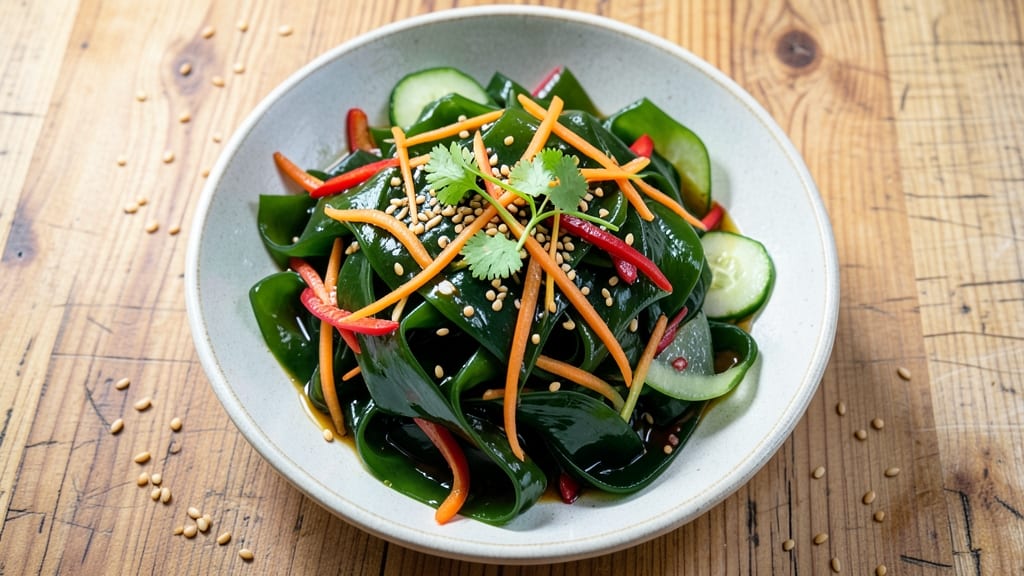
This Asian seaweed salad recipe delivers a perfect balance of umami-packed crunch and bright citrus zing that transforms a simple side into a flavor-packed centerpiece. The secret lies in toasting sesame seeds for nutty depth while keeping the seaweed crisp—no soggy textures here.
This isn't just another salad; it's a symphony of textures and flavors that will elevate any meal from ordinary to extraordinary.
What makes this recipe special is the careful balance of traditional techniques with modern twists. We'll start with properly prepared seaweed—whether you're using dried sheets or fresh nori—that maintains its signature snap.
The dressing combines classic soy sauce with fresh citrus and a touch of chili for complexity, while toasted sesame seeds and crunchy vegetables add layers of texture that keep every bite exciting.
The result is a salad that's vibrant, satisfying, and packed with flavor—perfect for pairing with grilled proteins or sushi, or serving as a standalone vegan dish. The umami-rich seaweed pairs beautifully with the bright citrus and nutty sesame, creating a harmony that's both familiar and fresh.
This is the kind of salad that makes people reach for seconds.
Ready in just 15 minutes, this recipe is perfect for meal prep or last-minute gatherings. The ingredients are simple, but the flavor impact is anything but basic. Let's create a seaweed salad that will impress even the most discerning palates while keeping the preparation straightforward and enjoyable.
Ingredients for asian seaweed salad
Umami-packed seaweed meets citrusy zing—just 14 ingredients for a showstopping salad.
| Ingredient | Amount | Notes |
|---|---|---|
| Dried Seaweed Sheets 🌿 | 4 pieces | Dried wakame or nori sheets |
| Sesame Seeds 🥜 | ¼ cup | Toasted for nutty depth |
| Red Bell Pepper 🌶️ | 1 whole | Thinly sliced, seeds removed |
| Carrot 🥕 | 1 whole | Julienned into thin strips |
| Cucumber 🥒 | ½ whole | Thinly sliced, peeled |
| Scallions 🧅 | 3 whole | Thinly sliced, white and green |
| Fresh Lime Juice 🍋 | ¼ cup | Freshly squeezed |
| Rice Vinegar 💧 | ¼ cup | Seasoned preferred |
| Soy Sauce 🍶 | 2 tbsp | Low-sodium preferred |
| Sesame Oil 🫒 | 1 tbsp | Toasted sesame oil |
| Chili Flakes 🔥 | ½ tsp | Adjust for heat preference |
| Maple Syrup 🍯 | 1 tbsp | For subtle sweetness |
| Salt 🧂 | ½ tsp | Sea salt preferred |
| Black Pepper 🌶️ | ¼ tsp | Freshly ground |
The seaweed is the star, so pick good quality dried sheets—wakame or nori both work. I grab mine from Asian markets in bulk, but the dried packs at Trader Joe's are perfect for beginners. Toast the sesame seeds in a dry pan until golden—that nutty aroma is what makes this salad sing. For the veggies, julienne everything thinly—carrots, bell pepper, cucumber—so they stay crisp. If you're short on time, pre-cut veggies from the salad bar work in a pinch, just drain them well.
No sesame oil? Toasted peanut oil gives a similar depth. Ran out of rice vinegar? Apple cider vinegar works, but add a pinch of sugar to balance. For heat lovers, swap chili flakes for gochujang (Korean chili paste)—it adds a whole new layer. The maple syrup might seem odd, but it balances the saltiness beautifully. Fresh lime juice is non-negotiable though—bottled just won't cut it. If you're using nori sheets, soak them for 5 minutes max—any longer and they'll turn mushy.
This salad keeps for 3 days in the fridge, but the seaweed gets softer over time. To keep it crisp, store dressing separately and toss just before serving. For meal prep, portion the veggies and seaweed in containers—add dressing when ready to eat. The toasted sesame seeds? Store them in a sealed jar and add fresh ones to each serving so they stay crunchy. Freezing isn't recommended—seaweed gets rubbery when thawed.
Why You'll Love This Recipe
- I swear by this trick: just toss the dried seaweed sheets in warm water for five minutes, and they’re ready. No fancy tools, no waiting hours—just crispy, ready-to-eat texture in the time it takes to boil water.
- Five-Minute Soak: I swear by this trick: just toss the dried seaweed sheets in warm water for five minutes, and they’re ready. No fancy tools, no waiting hours—just crispy, ready-to-eat texture in the time it takes to boil water.
- Umami-Packed Crunch: That first bite of toasted sesame seeds on the still-slightly-salty seaweed? Honestly, it’s the kind of flavor that makes you pause mid-bite. The red bell pepper adds this bright, almost citrusy snap that cuts through the richness—like a little surprise in every mouthful.
- Lunchbox Magic: Between us, this salad is my go-to for packed lunches. The cucumber stays crisp, the carrots add chew, and the whole thing holds up for days in the fridge. I’ll be real: my kids used to complain about "weird salads," but now they fight over who gets the extra seaweed sheets.
Step-by-step instructions for Asian seaweed salad
This vibrant salad comes together in minutes with bold flavors that balance crisp textures and tangy zing.
Rehydrate and Prepare the Seaweed
Place the 4 pieces dried seaweed sheets in a bowl and cover with hot water (about 1 cup). Let them soak for 5-7 minutes until they soften and expand to about 2-3 times their original size. Drain thoroughly, then gently squeeze out excess water using your hands.
While the seaweed hydrates, thinly slice the red bell pepper (remove seeds and membranes first) and julienne the carrot into ¼-inch strips using a peeler or mandoline. For the cucumber, peel and slice into ⅛-inch rounds, then pat dry with a paper towel to remove excess moisture. This step prevents a watery salad later.
Toast the Sesame Seeds and Prep Vegetables
Heat a dry skillet over medium heat and toast the ¼ cup sesame seeds for 2-3 minutes, stirring constantly, until they turn golden brown and release a nutty aroma. Transfer them immediately to a plate to cool—this prevents them from burning. The toasted seeds add depth that raw seeds can't match.
Meanwhile, thinly slice the 3 whole scallions (white and green parts separated) and set aside. The white parts will add a sharper bite, while the greens will contribute a milder, fresh finish. This separation lets you adjust flavor balance later if needed.
Whisk the Dressing to Perfection
In a small bowl, combine the ¼ cup fresh lime juice, ¼ cup rice vinegar, 2 tbsp soy sauce, 1 tbsp maple syrup, ½ tsp chili flakes, ½ tsp salt, and ¼ tsp black pepper. Whisk vigorously until fully integrated—this ensures even distribution of flavors. Taste and adjust seasoning: add more lime for brightness, soy sauce for umami, or chili flakes for heat.
Slowly drizzle in the 1 tbsp sesame oil while whisking continuously. The oil should emulsify into the dressing, creating a silky texture. If the mixture separates, whisk more vigorously or add 1 tsp warm water to help bind it. This dressing is the heart of your salad—don't skip the emulsification step.
Assemble and Toss the Salad
In a large bowl, combine the hydrated seaweed, sliced red bell pepper, julienned carrot, cucumber, and scallions. Pour the dressing over the vegetables and toss gently but thoroughly with your hands or tongs. Let the salad sit for 5 minutes to allow flavors to meld—this is when the seaweed absorbs the dressing and softens slightly.
Before serving, sprinkle the toasted sesame seeds evenly over the top. The contrast of crisp vegetables, tender seaweed, and nutty seeds creates a perfect textural experience. Serve immediately while the seaweed is still crisp and the dressing is vibrant—this salad doesn't improve with time.
Pro Tips For Making Asian Seaweed Salad
- SOAK SEAWEED UNTIL SOFT: Dried sheets need 5-7 minutes in warm water—not boiling—to plump up without turning mushy. I learned this the hard way when I used cold water and ended up with chewy, uneven pieces.
- JULIENNE VEGGIES FAST: Use a mandoline for carrot and cucumber—saves time and keeps cuts uniform. Skip the peeling on carrots; the skin adds texture and nutrients, and it looks more rustic.
- DRESS IT LAST: Toss the salad with dressing right before serving—not ahead of time. The seaweed absorbs liquid fast, and cucumbers get soggy. Add sesame seeds last too; they stick better when fresh.
- SALT THE CUCUMBER: Pat dry cucumber slices and sprinkle with a pinch of salt for 10 minutes before rinsing. This pulls out excess water so your salad stays crisp instead of watery. (Yes, even if you’re impatient like me.)
Wine and beer pairings for asian seaweed salad
Crisp White Wine
For this bright, umami-rich salad, I reach for a dry Riesling or Sauvignon Blanc—both wines cut through the seaweed's intensity while complementing the citrus notes. A 2019 Dr. Loosen Blue Slate Riesling from Germany is my go-to; its crisp acidity and subtle mineral notes mirror the salad's freshness.
Serve chilled to enhance the lime and vinegar flavors without overwhelming the delicate seaweed. 🍷
Light-Bodied Beer
A Japanese lager like Asahi Super Dry or Sapporo pairs beautifully with the salad's crisp textures and tangy dressing. The beer's clean finish and subtle hop bitterness balance the umami without competing.
For a local option, try a crisp American wheat beer like Blue Moon—its citrusy notes enhance the lime and chili flakes. Serve slightly chilled for the best experience.
Sparkling Wine
If you're celebrating, a Prosecco or Cava adds a festive touch while cleansing the palate between bites. The bubbles help reset your taste buds, making each mouthful of seaweed and sesame pop with freshness.
I love La Marca Prosecco for its bright acidity and floral notes, which harmonize with the salad's citrus and umami profile. Keep it well-chilled for optimal enjoyment.
Sake Pairing
For an authentic Asian touch, serve dry sake like Dassai 23 or Kubota Junmai. The sake's clean, slightly nutty profile complements the toasted sesame seeds and enhances the seaweed's umami without overpowering it.
Serve it chilled to highlight its crisp finish. If you prefer something sweeter, a Nigori sake adds a subtle sweetness that pairs well with the maple syrup in the dressing.
Non-Alcoholic Options
Don't drink? No problem. A sparkling yuzu soda or ginger beer like Feather's adds effervescence and zing that mimics wine's cleansing effect. For something herbal, try hibiscus iced tea—its tartness echoes the lime in the dressing while adding a floral contrast.
Serve over ice for a refreshing match to the crisp salad. ✨
Nutrition facts
Frequently asked questions
Can I use fresh nori instead of dried seaweed sheets?
Fresh nori works beautifully, but you'll need 8-10 sheets (about 1 oz) to match the texture of 4 dried sheets. Simply rinse and pat dry before slicing thinly. Fresh nori has a more delicate flavor, so you might want to add an extra ½ tsp salt to the dressing to enhance umami. Store-bought fresh nori often comes pre-washed, making prep even easier!
How do I keep the seaweed crisp instead of soggy?
Drain the seaweed thoroughly after soaking and squeeze out excess water with your hands. For extra crispiness, pat the vegetables dry with paper towels before tossing with dressing. Another pro tip: Add the dressing just before serving rather than mixing it in advance. The key is minimal moisture—seaweed absorbs liquid quickly, so work efficiently!
Can I make this salad ahead of time?
Yes, but store the dressing and seaweed separately. Combine everything 15-20 minutes before serving to maintain crispness. For meal prep, portion the vegetables and seaweed in containers, then toss with dressing when ready to eat. The toasted sesame seeds should be added fresh to keep their crunch—store them in a sealed container and sprinkle just before serving.
What are some creative variations for this recipe?
Try adding avocado slices for creaminess or edamame for extra protein. For heat lovers, swap chili flakes for gochujang (Korean chili paste)—it adds a sweet-spicy depth. Vegetarians can boost flavor with miso paste (½ tsp) in the dressing. For a tropical twist, add mango chunks—the sweetness pairs perfectly with the citrusy dressing!
Is this salad gluten-free?
Mostly! Check your soy sauce and sesame oil labels—opt for tamari if gluten is a concern. The recipe is naturally gluten-free otherwise, but always verify ingredient sources. For extra safety, use coconut aminos instead of soy sauce. The flavor remains rich and umami-packed while being completely gluten-free!