
Salads
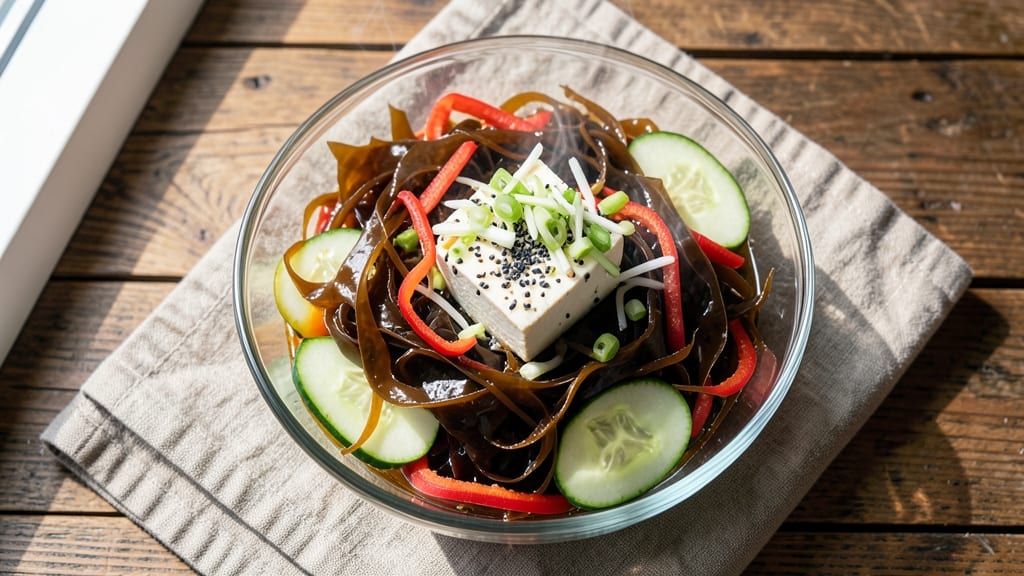
This arame seaweed salad delivers restaurant-quality umami in every crisp bite, perfect for health-conscious eaters craving vibrant flavors. The secret lies in rehydrating the delicate seaweed strands until they transform into tender, tree-like textures that hold up beautifully in salads.
I developed this recipe after discovering how arame's natural sweetness and mineral-rich profile elevate simple vegetables into something extraordinary.
The salad combines fresh ingredients like cucumber, bell pepper, and scallions with the briny depth of arame, all tossed in a light sesame-soy dressing that enhances rather than overpowers.
What makes this recipe special is its balance—packed with flavor yet remarkably low in calories, making it ideal for meal prep or elegant gatherings. The preparation is straightforward, requiring just 15 minutes of active time before chilling to let flavors meld.
By the time you're done, you'll have a visually stunning dish with layers of texture: crisp vegetables, tender seaweed, and a glossy dressing that clings perfectly. The umami-rich arame provides a satisfying crunch while delivering essential minerals, while the bright vegetables keep the salad fresh and inviting.
This is the kind of salad that transforms ordinary meals into memorable dining experiences.
Serve it as a standalone dish or pair with grilled fish or tofu for a complete meal. The recipe scales effortlessly, making it perfect for both individual servings and crowd-pleasing platters. Here's everything you need to create this vibrant, umami-packed salad at home.
Ingredients for arame seaweed salad
Vibrant umami meets crisp freshness in this meticulously balanced seaweed salad.
| Ingredient | Amount | Notes |
|---|---|---|
| Dried Arame Seaweed 🌿 | 2 oz | Rehydrated in hot water |
| Persian Cucumber 🥒 | 1 whole | Seedless, thinly sliced |
| Red Bell Pepper 🌶️ | 1 whole | Thinly sliced, seeds removed |
| Scallions 🧅 | 4 whole | Thinly sliced, white and green parts |
| Extra-Firm Tofu 🍳 | 4 oz | Diced, pressed for 15 minutes |
| Sesame Seeds 🥜 | 1 tbsp | Toasted for enhanced flavor |
| Tahini 🥄 | 2 tbsp | High-quality, sesame paste |
| Rice Vinegar 🍶 | 1 ½ tbsp | Unseasoned, light flavor |
| Low-Sodium Soy Sauce 🥢 | 1 ½ tbsp | For umami depth |
| Maple Syrup 🍯 | 1 tsp | Pure, grade A |
| Toasted Sesame Oil 🫒 | 1 tsp | For aromatic finish |
| Fresh Ginger 🧄 | 1 tsp | Finely grated, fresh |
| Diamond Crystal Kosher Salt 🧂 | ½ tsp | For seasoning balance |
| Black Pepper 🌶️ | ¼ tsp | Freshly ground |
The arame seaweed is the heart of this dish—look for dried strands at specialty Asian markets or high-quality health food stores like Whole Foods. Marukyu brand is my go-to for consistent quality, but any reputable dried seaweed will work. Rehydrating properly is key: use hot water (not boiling) for 5-7 minutes until tender but still holding its shape. The cucumber and bell pepper should be organic if possible—their crispness contrasts beautifully with the tender seaweed. For extra crunch, I often add thinly sliced jicama if available, though it's not required.
No arame on hand? Wakame or kombu can substitute at the same quantity, though flavor profiles differ slightly. The tofu adds protein without overpowering—extra-firm holds shape best when pressed. For a nutty depth, swap sesame seeds for toasted pumpkin seeds. The tahini is non-negotiable for creaminess, but if you're avoiding sesame, almond butter at half the amount works. The dressing components must balance: reduce soy sauce slightly if you prefer less saltiness, and adjust maple syrup to taste—some brands are sweeter than others. Always taste before tossing with vegetables.
Store rehydrated arame in airtight containers with water for up to 5 days in the fridge—it keeps surprisingly well. Prepped vegetables should be stored separately in sealed containers for 3 days maximum to preserve crispness. The dressing keeps for 1 week in the fridge, but the sesame oil should be added fresh before serving for optimal flavor. This salad tastes even better the next day as flavors meld—double the batch for meal prep, as it reheats beautifully when gently warmed. For serving, I recommend chilled glass bowls to maintain crisp textures.
Why You'll Love This Recipe
- I’ll be real: this costs way less than takeout, but it feels like a fancy dish. Tofu’s cheap, seaweed lasts forever, and the veggies stretch across multiple meals without breaking the bank. Plus, it’s one of those recipes where leftovers taste better the next day.
- No-Soaking Required: Honestly, I love that dried arame just clicks into place—no pre-soaking, no fuss. Toss it straight from the bag into boiling water for 5 minutes, and it’s ready to transform into that perfect chewy, ocean-fresh base.
- Umami Bomb: Between us, that arame has a flavor profile that’s next-level—briny, sweet, and just a little funky. Pair it with the crisp Persian cucumber and the slight heat from red bell pepper, and suddenly, you’ve got a salad that tastes like a vacation in every bite.
- Lunchbox Hero: Here’s what sold me—this salad holds up perfectly for days. Pack it in a jar, and the layers stay crisp. My kids actually eat their veggies now, and I don’t have to hear the "I’m bored" complaint by noon.
Step-by-step instructions for arame seaweed salad
This umami-rich salad delivers vibrant texture and balanced flavors with precise technique.
Rehydrate the Arame Seaweed
Place the 2 oz dried arame seaweed in a heatproof bowl and pour 2 cups hot water (just off boil) over it. Let it soak for 10 minutes until fully softened and expanded—it should triple in volume. Drain thoroughly using a fine-mesh strainer, pressing gently to remove excess water. The seaweed should be pliable but not soggy; this ensures proper texture in the final salad.
Real talk: Don't skip the draining step. Excess moisture makes the salad limp rather than crisp. Spread the drained seaweed on a clean towel to evaporate any lingering water droplets while you prepare the remaining ingredients.
Prepare the Crunchy Vegetable Base
Using a mandoline or sharp knife, slice the 1 whole Persian cucumber into ⅛-inch thick rounds and remove any seeds. Thinly slice the 1 whole red bell pepper lengthwise, then cut into ¼-inch strips, removing seeds and membranes. Thinly slice the 4 whole scallions on the bias, separating white and green parts. Combine all vegetables in a large mixing bowl.
The reason for precise slicing is texture contrast—the crisp cucumber and bell pepper should provide satisfying bite against the tender seaweed. I like to slice the scallions last to prevent them from wilting while waiting for other components.
Press and Dice the Tofu
Wrap the 4 oz extra-firm tofu in a clean kitchen towel and place a heavy object (like a cast-iron skillet) on top for 15 minutes. This pressing step removes excess moisture for better texture. After pressing, cut the tofu into ½-inch cubes. The cubes should hold their shape when gently squeezed—this indicates proper pressing.
Don't skip pressing—wet tofu will make your salad soggy. For best results, use tofu that's been refrigerated for at least 24 hours before pressing, as it holds together better after cold storage.
Create the Tahini Dressing
In a small bowl, whisk together the 2 tbsp tahini, 1.5 tbsp rice vinegar, 1.5 tbsp low-sodium soy sauce, 1 tsp maple syrup, 1 tsp toasted sesame oil, and 1 tsp finely grated fresh ginger. Gradually add 2 tablespoons water while whisking until the dressing reaches a smooth, pourable consistency. Season with 0.5 tsp Diamond Crystal kosher salt and 0.25 tsp black pepper. The dressing should coat the back of a spoon without being overly thick.
Here's the thing—tahini can be stubborn. If it separates, simply whisk vigorously for another 30 seconds to re-emulsify. The dressing should have a rich, nutty aroma with bright acidity from the vinegar and ginger.
Assemble and Finish the Salad
Add the pressed tofu cubes and drained arame seaweed to the vegetable mixture. Pour the tahini dressing over everything and gently toss with two forks or clean hands until evenly coated. Sprinkle with 1 tbsp toasted sesame seeds just before serving to add final texture contrast. Let the salad sit for 5 minutes before serving to allow flavors to meld.
For optimal presentation, mound the salad on a platter and garnish with additional sesame seeds and a drizzle of extra toasted sesame oil. The final dish should have vibrant colors with crisp textures throughout—each bite should deliver the satisfying crunch of vegetables, tender seaweed, and creamy tofu.
Pro Tips For Making Arame Seaweed Salad
- SOAK ARAMÉ LONGER THAN YOU THINK: Dried aramé needs at least 20 minutes in warm water to soften properly—don’t skimp. I used to cut it after 10, and it stayed chewy no matter how much I chopped. Warm water (not boiling) works faster and keeps the texture tender.
- PEEL PERSIAN CUCUMBERS HALFWAY: Persian cucumbers have thin skins, but the seeds near the stem stay bitter if left whole. Slice them lengthwise, scoop out the seeds, then cut into sticks—it’s faster than peeling and wastes less. (Yes, even if you’re impatient like me.)
- DRIP-DRY TOFU AFTER PRESSING: After pressing extra-firm tofu, let it sit uncovered on a rack for 10 minutes. This prevents soggy cubes later. I learned this the hard way when my salad turned into a watery mess—no one wants tofu that’s basically a sponge.
- SAUTE SCALLIONS UNTIL SOFT: Crisp scallions add texture, but softened ones release more flavor. Cook them in the same pan you use for tofu until just wilted—about 2 minutes. It’s the thing that makes the salad taste deeper, not just fresher.
Essential equipment for perfect results
Mandoline Slicer
This is my most-used tool for creating the perfect crisp texture in this salad. A high-quality mandoline like the OXO Good Grips ensures uniform ⅛-inch thick slices of cucumber and ¼-inch strips of bell pepper every time.
The precision prevents uneven cooking and maintains the satisfying crunch. I prefer the non-slip base version for safety, especially when working with slippery vegetables. 🥒
Fine-Mesh Strainer
For rehydrating the arame seaweed, a fine-mesh strainer (like the OXO Good Grips Collapsible) is essential to remove excess water without breaking the delicate strands. I press the seaweed gently with a silicone spatula to extract moisture while preserving its tender texture.
A regular colander won't give you the same control—look for one with holes smaller than 1mm for optimal drainage.
Kitchen Scale
Precision matters when measuring dried arame—using a digital kitchen scale (I recommend the Escali Primo) ensures you get exactly 2 oz for the perfect texture. For the tahini dressing, accurate measurements of 2 tbsp tahini and 1.5 tbsp soy sauce are crucial to balance flavors.
A scale also helps when doubling recipes for meal prep. The 0.1oz precision ensures consistency every time.
Tofu Press
The OXO Good Grips Tofu Press is a game-changer for achieving perfectly pressed tofu cubes. I press 4 oz extra-firm tofu for 15 minutes to remove excess moisture before dicing. Without proper pressing, your tofu will turn mushy in the salad. If you don't have a press, use a heavy object like a cast-iron skillet with a clean towel—just
A Ballarini Heritage whisk (or any high-quality whisk) is perfect for emulsifying the tahini dressing smoothly. I use a small glass bowl for mixing because it lets me see the color changes as I incorporate ingredients. The whisk's angled wires help break up tahini clumps, while the bowl's transparency helps me judge the dressing's consistency. A silicone spatula comes in handy for scraping every last bit from the bowl. For meal prep, I use glass Pyrex containers with airtight lids to store the salad components separately. The arame keeps well for 5 days in its rehydrated water, while vegetables stay crisp for 3 days when stored in sealed containers. The dressing lasts 1 week**, but I always add sesame oil fresh before serving for maximum flavor. Glass containers are dishwasher-safe and won't absorb odors like plastic.Whisk and Small Bowl
Storage Containers
Nutrition facts
Frequently asked questions about arame seaweed salad
Can I use fresh seaweed instead of dried arame?
Fresh seaweed won't work for this recipe—it's too delicate and lacks the concentrated umami flavor of dried arame. The drying process preserves the seaweed's nutrients and intensifies its natural taste. If you must substitute, try dried wakame or kombu, but adjust the rehydration time to 5-7 minutes instead of 10 minutes since they're often thicker.
How do I prevent the tofu from getting soggy?
Pressing is the secret! Wrap the tofu in a clean towel and place a heavy object (like a cast-iron skillet) on top for 15 minutes before dicing. For extra insurance, pat the cubes dry with paper towels after pressing. Also, add the tofu to the salad just before serving—it absorbs dressing quickly. If you're prepping ahead, store tofu separately until the last minute.
Can I make this salad without tahini?
Yes, but the dressing will lose its creamy richness. Try 2 tbsp almond butter or 1 tbsp cashew butter mixed with 1 extra tbsp water to thin it out. For a dairy option, use 2 tbsp Greek yogurt (reduce soy sauce to 1 tbsp) or 1 tbsp mayo (skip the maple syrup). The flavor will be lighter but still delicious.
Why does my arame turn slimy after rehydrating?
Over-soaking is the usual culprit! Use hot water (not boiling) and soak for exactly 10 minutes. Drain thoroughly and press gently with a strainer to remove excess water. If it's still slimy, rinse the rehydrated arame with cold water and pat dry with a paper towel. Store it in airtight containers with minimal water to prevent further softening.
What's the best way to serve this salad for a party?
Keep components separate until serving: store rehydrated arame in one container, vegetables in another, and dressing separately. When ready to serve, toss everything together and garnish with toasted sesame seeds. For presentation, use chilled glass bowls and arrange the salad in a circular pattern. Serve with extra sesame oil on the side for guests to drizzle. This keeps textures crisp and lets everyone customize their portion.