
Appetizers
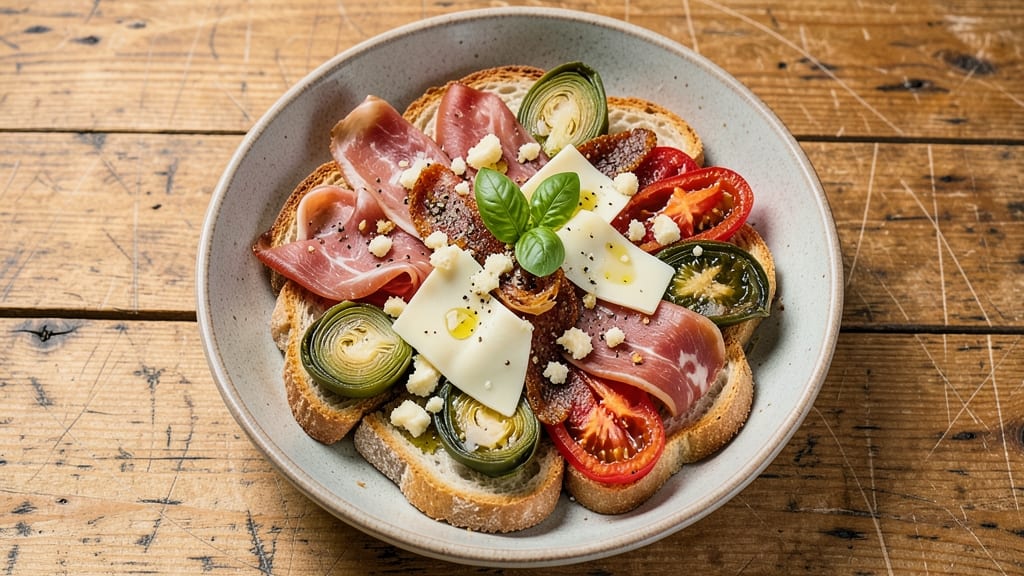
This antipasto salad platter recipe transforms Italian-inspired bites into a no-fuss, restaurant-worthy spread that comes together in under 30 minutes. The secret lies in balancing textures—crispy, creamy, and chewy—while keeping prep simple with store-bought shortcuts and strategic assembly.
I’ve perfected this platter for gatherings where you want elegant bites without the stress of cooking individual components.
The foundation starts with a mix of cured meats (like prosciutto or salami), aged cheeses (think provolone or pecorino), and marinated vegetables (artichokes, roasted peppers, and pickled onions) that add vibrant pops of color.
For extra flair, I include toasted baguette slices and olives—classic antipasto staples that elevate the platter’s visual appeal. Optional proteins like grilled shrimp or skewered vegetables add a modern twist for those who want more substance.
What makes this platter shine is the arrangement: layering ingredients in a way that highlights their individual textures and flavors while creating a cohesive, bite-sized experience. The result is a spread that’s as beautiful as it is delicious—crispy, tangy, and rich all at once—without requiring advanced cooking skills.
Perfect for holidays, game days, or any occasion where you want to impress without slaving in the kitchen.
Serve with a side of garlic aioli or balsamic reduction for dipping, and garnish with fresh basil or parsley for a touch of freshness. This platter is designed to be customizable, so swap in vegan cheeses or plant-based proteins to suit dietary needs.
The key is balance—let the flavors and textures speak for themselves.
Ingredients for antipasto salad platter
Italian-inspired bites that come together faster than you can say 'antipasto'—no cooking required.
| Ingredient | Amount | Notes |
|---|---|---|
| Prosciutto 🥓 | 8 oz | Thinly sliced, store-bought preferred |
| Salami 🥓 | 8 oz | Assorted flavors like spicy or classic |
| Provolone Cheese 🧀 | 1 lb | Aged, thinly sliced with a deli slicer |
| Pecorino Romano Cheese 🧀 | ½ cup | Freshly grated, vibrant color |
| Marinated Artichoke Hearts 🍆 | 1 cup | Packed in oil, drained slightly |
| Roasted Red Peppers 🌶️ | 1 cup | Jarred, sliced into strips |
| Pickled Onions 🧅 | ½ cup | Sliced, brine drained |
| Kalamata Olives 🫒 | 1 cup | Pitted, whole or sliced |
| Baguette Slices 🍞 | 12 pieces | Toasted until crispy |
| Fresh Basil Leaves 🌿 | ¼ cup | Torn for garnish |
| Fresh Parsley Leaves 🌿 | ¼ cup | Chopped for garnish |
| Garlic Aioli 🧄 | ½ cup | Store-bought or homemade |
| Balsamic Glaze 🍷 | ¼ cup | Reduction for drizzling |
| Extra-Virgin Olive Oil 🫒 | ½ cup | For drizzling, high quality |
The cured meats and cheeses are where this platter shines. Prosciutto and salami from Whole Foods or local delis have the best texture—look for slices that are still slightly pliable, not brittle. For the cheeses, Provolone should be aged at least 30 days for that perfect balance of tang and creaminess. Pecorino Romano is non-negotiable for that sharp, salty bite—buy it in a wedge and grate it yourself. The jarred marinated vegetables (artichokes, peppers, onions) are the ultimate shortcut, but if you want to elevate, Trader Joe's has fantastic pre-marinated options that cut prep time in half. For the olives, Kalamata
No prosciutto? Dry-cured coppa or soppressata works just as well. Cheese hater? Marinated sun-dried tomatoes or pickled jalapeños add a tangy crunch without dairy. The baguette slices can be pre-toasted from the bakery section—Breads like Brioche or Ciabatta work too if you want something fancier. Short on time? Pre-sliced baguette rounds from the grocery store are a lifesaver. For the aioli, store-bought garlic aioli from Trader Joe's or Whole Foods is a game-changer—no cooking required. Want to make your own? Just mayo, minced garlic, lemon juice, and a pinch of salt. The balsamic glaze? Reduction from a bottle is fine, but if you're feeling fancy, simmer balsamic vinegar in a saucepan until it thickens. This platter stays fresh for 3-4 days in the fridge, but the baguette gets stale after 2 days, so toast it fresh before serving. Store everything in airtight containers—glass is best—with parchment paper between layers to prevent sogginess. The garlic aioli and balsamic glaze keep for 1 week in the fridge, but add a thin layer of olive oil to the aioli to preserve freshness. For serving, arrange ingredients in mixed batches on a large platter—alternate meats, cheeses, and veggies for visual appeal. Garnish with fresh herbs right before serving to keep them vibrant.
Why You'll Love This Recipe
- No-Cook Magic: I swear by this—just arrange the cured meats, slice the cheeses, and toss in those jarred artichokes. The only work is opening packages, and honestly? That’s my kind of cooking.
- Salty, Tangy, Creamy Trifecta: That first bite of salty prosciutto with the sharp crunch of pecorino? It’s like a party in your mouth. The marinated artichokes add a briny punch that ties everything together—no fancy dressing needed.
- Game for Any Gathering: Bring it to a picnic, set it out at game night, or let it be your lazy Sunday brunch. It’s fancy enough for company but zero-stress for when you’re just feeding yourself after a long week.
Step-by-step instructions for assembling your Italian antipasto salad platter
Here's how to create a visually stunning, no-fuss antipasto spread that brings Italian flavors to life.
Toast the Baguette Slices for Crispy Bases
Preheat your oven to 375°F and line a baking sheet with parchment paper. Arrange the 12 pieces of baguette slices in a single layer, slightly overlapping if needed. Brush each slice generously with 2 tablespoons of extra-virgin olive oil—this ensures they toast evenly and develop that perfect golden crust.
Toast for 8-10 minutes until the edges turn deep golden brown and the bread feels crispy to the touch. Watch closely after the first 5 minutes—they can go from perfect to burnt quickly. Remove from the oven and let cool on a wire rack for 5 minutes before assembling. The residual heat will help them stay crispy when you layer everything on top.
Arrange the Charcuterie and Cheese Components
Create a visual focal point by arranging the 8 oz prosciutto and 8 oz salami in overlapping folds across the center of your platter or serving board. I like to fan the prosciutto out slightly to show off its delicate curls, while the salami adds a bold contrast with its denser texture. Next, scatter the 1 lb provolone cheese slices around the charcuterie—arrange some whole and others cut into triangles for variety.
Here's where it gets fun: sprinkle the 0.5 cup freshly grated Pecorino Romano cheese over the platter in a loose, uneven pattern. The vibrant color creates visual interest while adding that signature sharp, salty flavor. Don't be afraid to get creative with placement—this is where your antipasto becomes truly personal.
Distribute the Vegetable and Olive Elements
Drain the 1 cup marinated artichoke hearts thoroughly on paper towels to remove excess oil, then arrange them in small clusters around the platter. Follow with the 1 cup roasted red peppers, slicing any whole peppers into strips if needed. The deep red color contrasts beautifully with the white cheese and cured meats.
Add the 0.5 cup pickled onions next, scattering them throughout the arrangement. Their bright purple hue and tangy crunch balance the richness of the cured meats perfectly. Finally, distribute the 1 cup Kalamata olives in small piles—whole olives add texture, while halved ones reveal their meaty centers. This step creates that classic antipasto texture contrast that makes every bite exciting.
Add the Fresh Herbs and Dipping Sauces
Tear the 0.25 cup fresh basil leaves into rough pieces and scatter them over the platter just before serving. The bright green leaves add freshness and a pop of color that ties everything together. Similarly, sprinkle the 0.25 cup chopped fresh parsley leaves throughout—parsley's slightly bitter note complements all the rich flavors.
Create small wells in the arrangement for the dipping sauces. Place dollops of the 0.5 cup garlic aioli around the edges and drizzle the 0.25 cup balsamic glaze in elegant zigzags across the platter. The aioli offers creamy contrast to the salty cured meats, while the balsamic glaze adds a sweet-tart finish that elevates every bite.
Final Touches and Presentation
Drizzle the remaining 0.25 cup extra-virgin olive oil lightly over the entire platter in an artistic pattern. This adds both visual appeal and a subtle olive oil aroma that enhances all the components. I like to finish with a final sprinkle of the Pecorino Romano cheese over the fresh herbs—this creates that signature Italian antipasto look you see in trattorias.
For serving, I recommend using a large wooden board or slate platter—it provides the perfect rustic backdrop that lets all the colors shine. Arrange your guests with small plates and let everyone create their own combinations. The beauty of antipasto is that there's no wrong way to assemble it—just follow your instincts and enjoy the process!
Pro Tips For Making Antipasto Salad Platter
- REST THE MEAT: Lay prosciutto and salami flat on a plate and cover loosely with plastic wrap for 30 minutes before slicing—this softens the fibers so they don’t tear when you cut. I used to skip this and ended up with ragged edges that looked like a butcher’s reject.
- DRY THE CHEESE: Pat provolone slices with a paper towel to remove excess moisture before arranging them on the platter—wet cheese slides off boards and makes a mess. Pecorino Romano? Grate it fresh and leave it at room temp for 10 minutes first; it’ll shatter better and taste sharper.
- CHILL ARTICHOKES: Drain marinated artichoke hearts and pat them very dry, then refrigerate for 15 minutes before arranging. Cold artichokes hold their shape better and won’t turn your platter into a soggy disaster by bleeding marinade everywhere.
- SLICE THIN, STACK HIGH: Cut prosciutto and salami paper-thin—a sharp knife and steady hand make all the difference. Stack slices vertically (like a tower) instead of overlapping them flat; it looks fancier and keeps more slices visible without wasting space. (Yes, it takes practice, but your guests will think you’re a pro.)
Essential equipment for antipasto salad platter
Platter Presentation Tools
Start with a large wooden board or slate platter—these provide the perfect rustic backdrop that makes your antipasto shine. I love using a 12-inch x 18-inch board from Williams Sonoma because it gives plenty of space for arranging ingredients while keeping everything cohesive.
For a more modern look, a marble slab from Sur La Table adds elegance and keeps components chilled naturally. 🌿
For serving smaller groups, individual slate plates (like those from Pottery Barn) work beautifully—they make the platter look even more intentional. If you're hosting a crowd, consider a two-tiered serving tray to maximize surface area without overwhelming guests.
The key is choosing a surface that complements the colors of your ingredients while keeping everything accessible.
Prep Station Essentials
A large mixing bowl (at least 3-quart capacity) is perfect for organizing your ingredients before plating. I use a stainless steel bowl from Ozeri because it's durable and easy to clean.
For draining excess oil from marinated vegetables, keep paper towels and a wire rack nearby—this prevents soggy textures. A small offset spatula helps transfer delicate items like prosciutto without tearing.
For precise cutting, a sharp chef's knife (like the Wüsthof Ikon) and a deli slicer (if you're slicing provolone yourself) are game-changers. If you're grilling shrimp or veggies as optional additions, a grill basket keeps them intact.
Don't forget a measuring spoon set for portioning dipping sauces like the garlic aioli and balsamic glaze—accuracy here ensures balanced flavors.
Serving Accessories
Small ceramic dipping bowls (like those from Le Creuset) elevate the presentation of your sauces. I place 3-4 mini bowls around the platter for the aioli and balsamic glaze, along with toothpicks for easy serving.
For guests who prefer utensils, wooden skewers or small forks work well—just arrange them in a glass jar on the side of the platter.
Garnishing tools like a pair of kitchen shears (for trimming herbs) and a fine-mesh strainer (for draining olives) streamline the process. If you're using fresh basil or parsley, a small bowl of water keeps the stems fresh while you work.
For a final touch, a spray bottle with water helps revive wilted herbs right before serving—this keeps your platter looking vibrant.
Storage Containers
Store components in airtight glass containers to maintain freshness. I use Pyrex storage containers with snap-on lids for the cured meats, cheeses, and marinated vegetables—they keep everything separated and prevent cross-contamination.
For the baguette slices, a bread bag or aluminum foil preserves crispness for up to 2 days in the fridge.
Label containers with masking tape and a marker to track what’s inside—this is especially helpful if you’re prepping ahead. The garlic aioli and balsamic glaze can be stored in small mason jars with a thin layer of olive oil on top to extend freshness.
For longer storage (up to 1 week), freeze the aioli in ice cube trays and thaw as needed—this keeps it from absorbing fridge odors.
Nutrition facts
Frequently asked questions
Can I make this antipasto platter vegetarian?
Swap the cured meats for marinated white beans, grilled halloumi, or roasted eggplant slices. Add vegan mozzarella or marinated mushrooms for cheesy texture. Keep the olives, cheeses, and marinated veggies—they’re already plant-based staples!
How do I keep the baguette slices crispy for hours?
Toast them fresh before serving and store in an airtight container with a paper towel underneath to absorb moisture. For extra crunch, reheat slices in a 200°F oven for 5-7 minutes just before serving. The key is toasting them golden brown initially—this locks in crispness.
What’s the best way to arrange the platter for maximum visual appeal?
Create a color gradient: Start with dark elements (olives, roasted peppers) at the back, then lighter cheeses and meats in the middle, and fresh herbs on top. Arrange cured meats in overlapping folds and cheeses in triangles for dimension. Use the baguette slices as edging to frame the platter.
Can I prep this ahead of time?
Yes! Store all components in airtight containers separately (meats, cheeses, veggies) for up to 3 days. Assemble the platter 1-2 hours before serving—this lets flavors meld. Keep the baguette slices separate until the last minute to maintain crispness. Dipping sauces can be prepped 1 week ahead and stored in the fridge.
What if I don’t have Pecorino Romano?
Use Parmesan or Asiago cheese as substitutes—they offer similar sharp, salty notes. For a milder option, feta cheese works in a pinch (just reduce quantity by half). The key is a salty, aged cheese to balance the richness of the cured meats.